
Matte, Gloss, Glass or Metal? How Lamp Material Affects Light
-
Author
Izabela Seliga -
Date added
- 1915 views
It looked perfect in the photo. A beautiful colour, an interesting shape, and a size that suited the interior. It is only in the evening, once the lamp has been installed, that a surprise may appear: the light is more focused than expected, the bulb is more visible, or the shade creates a completely different effect from the one we had imagined.
The light source is not always to blame. The fixture itself often plays a decisive role, especially the material it is made of and the type of finish – glossy or matte.
That is why, when choosing a lamp, it is worth asking one more question: what do we want the light to do when we switch it on?
How do the material and finish of a lamp affect light?
When light hits a lampshade, it can be transmitted, reflected, absorbed or diffused. Clear glass transmits a significant amount of light and does not conceal the light source. Opal glass acts as a diffuser, allowing the shade to glow more evenly. Metal is opaque, so light escapes primarily through the open parts of the fixture or is reflected from its interior.
Texture also matters. Smooth, polished finishes promote more directional reflection, while matte surfaces scatter light more broadly. This is why two lamps with similar bulbs can look completely different once switched on.
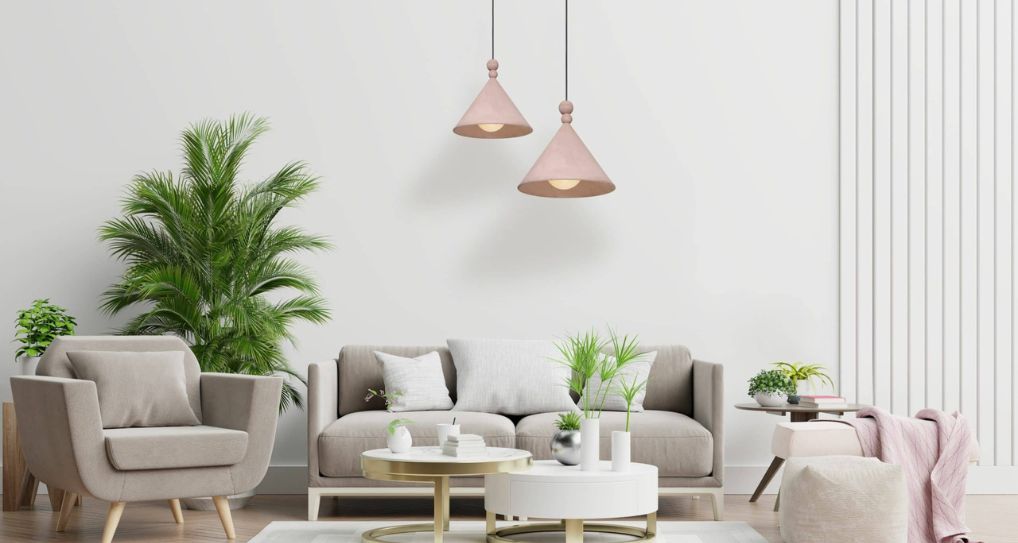
Matte lamps: how does a matte finish change light reflection?
Matte surfaces do not create reflections as distinct as polished ones. Light is reflected from them in a more diffused way, so the surface produces fewer pronounced highlights.
However, matte should not automatically be associated with soft light. If a metal shade is open only at the bottom, it can still direct most of the light towards a worktop or table. Matte primarily affects how light interacts with the surface, while the direction of the light is largely determined by the construction of the fixture itself.
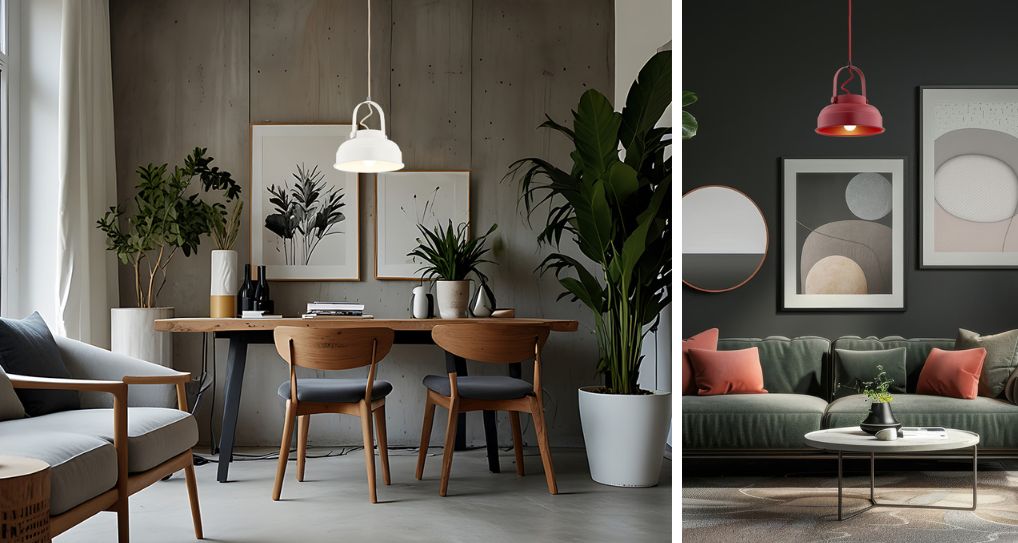
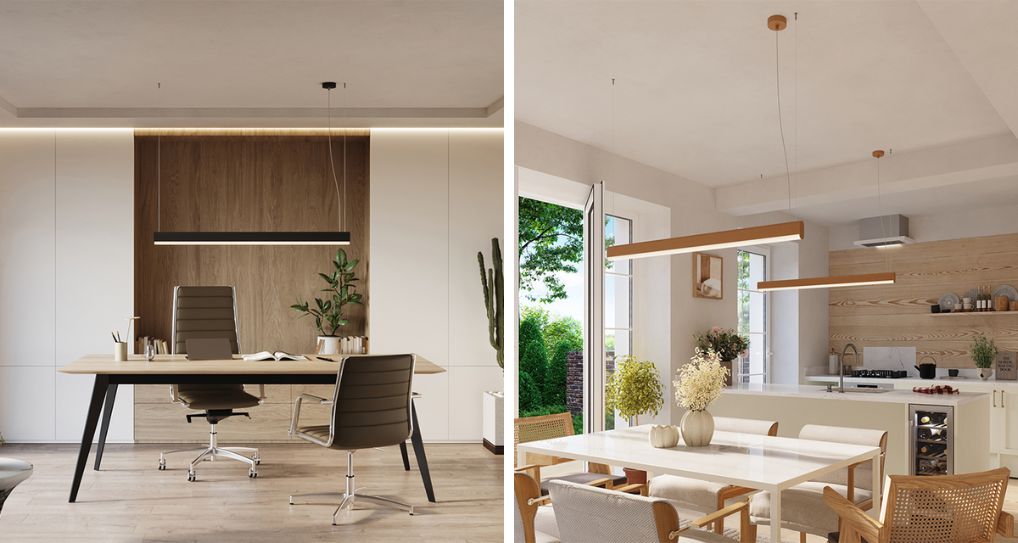
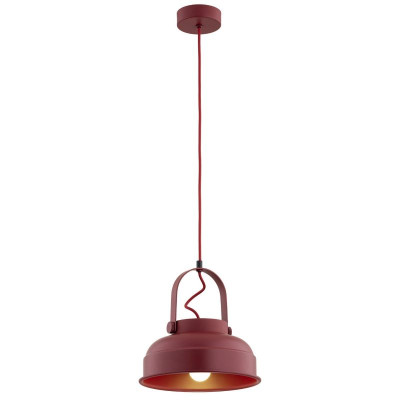
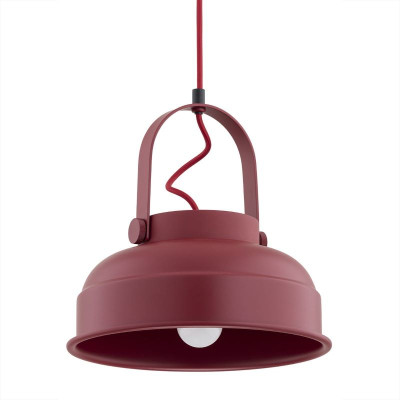
This is best illustrated by different types of lamps. The Loft Medivo collection by Kolorowe Kable and Dakota by Argon use a wide metal shade. Konko by Loftlight features a simple metal or concrete form, while Farge by Thoro is equipped with an elongated LED module that balances the matte base. This type of lighting is a good choice for interiors where the form of the lamp is meant to stand out without the finish reflecting too much light.
Satin-finish lamps: how do they differ from matte and glossy ones?
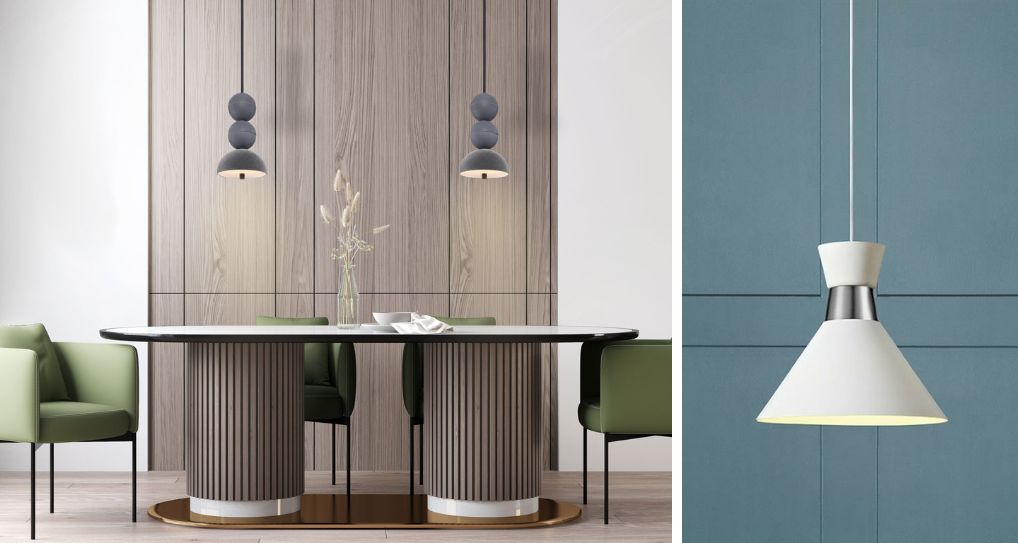
Satin sits between matte and gloss. It does not create a mirror-like reflection, but it reacts to light more noticeably than a matte surface. A satin finish subtly emphasises the texture and shape of a lamp without creating strong, concentrated reflections.
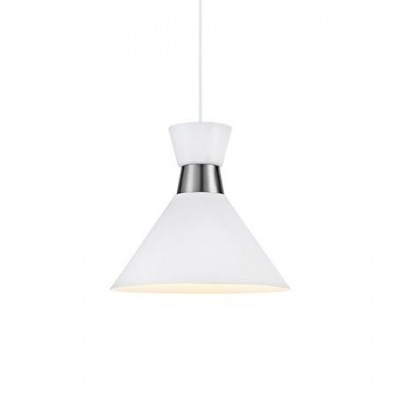
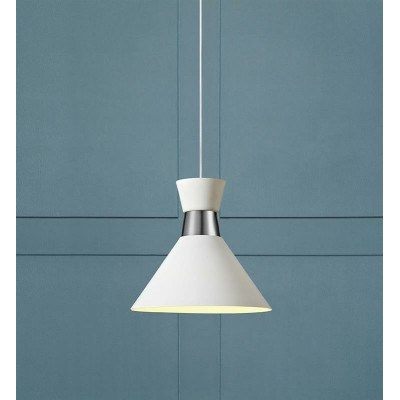
Good examples of how satin finishes interact with light in different ways are the Bosfor collection by LoftLight and Waist by Markslöjd. In Bosfor, the integrated LED source beneath sandblasted glass diffuses the light, reducing the visibility of a single, intense point of light. In Waist, the solid metal shade directs light primarily through the open lower part of the fixture, making it well suited for use above a table or kitchen island.
Glossy lamps: how does a polished surface affect light?
A glossy finish makes the surface of the fixture react more strongly to light. More distinct reflections appear on it, emphasising the shape of the lamp and changing its appearance depending on the lighting in the room.
This does not mean, however, that a glossy lamp automatically provides more light. A polished surface can reflect it effectively, but where the light ultimately falls is still determined by the shape of the shade and the construction of the lamp.
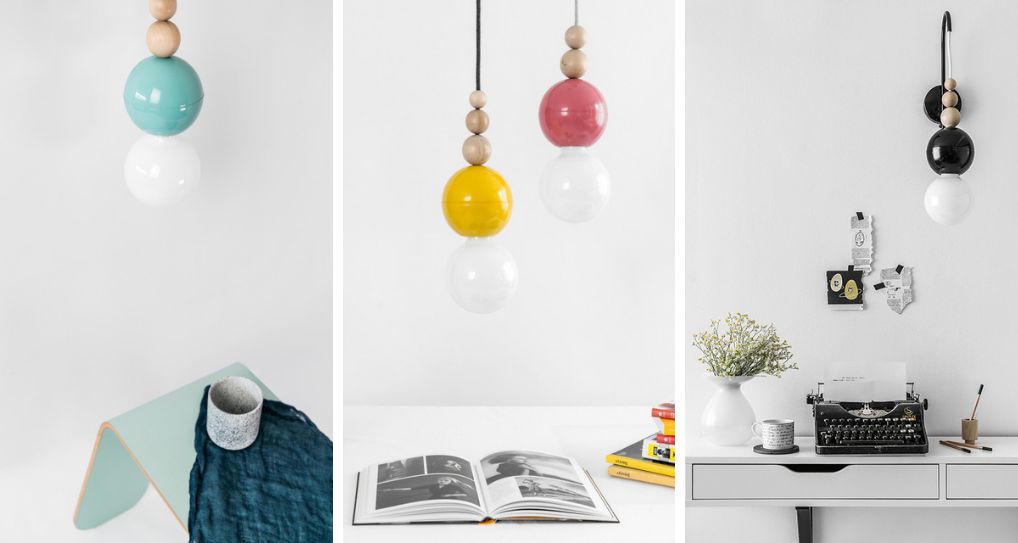
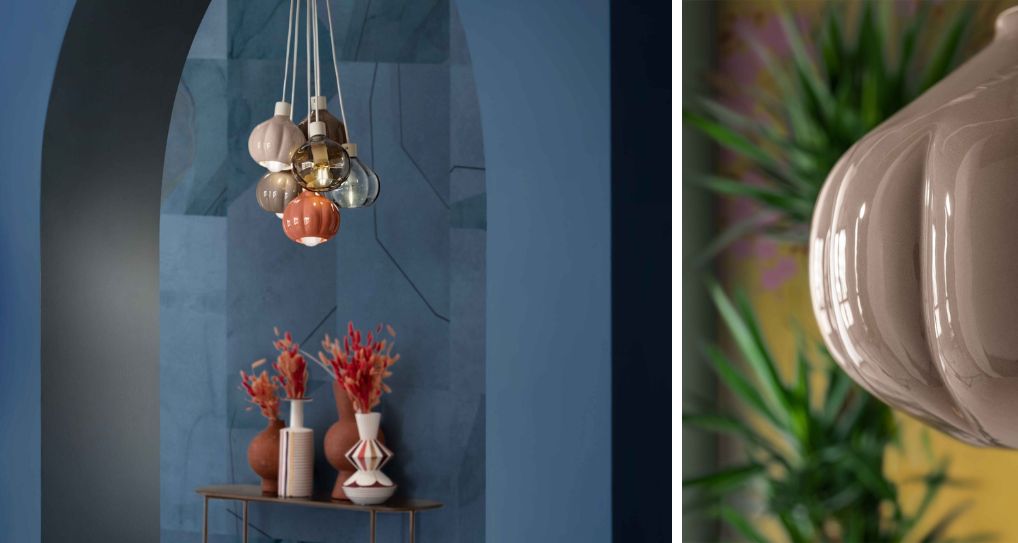
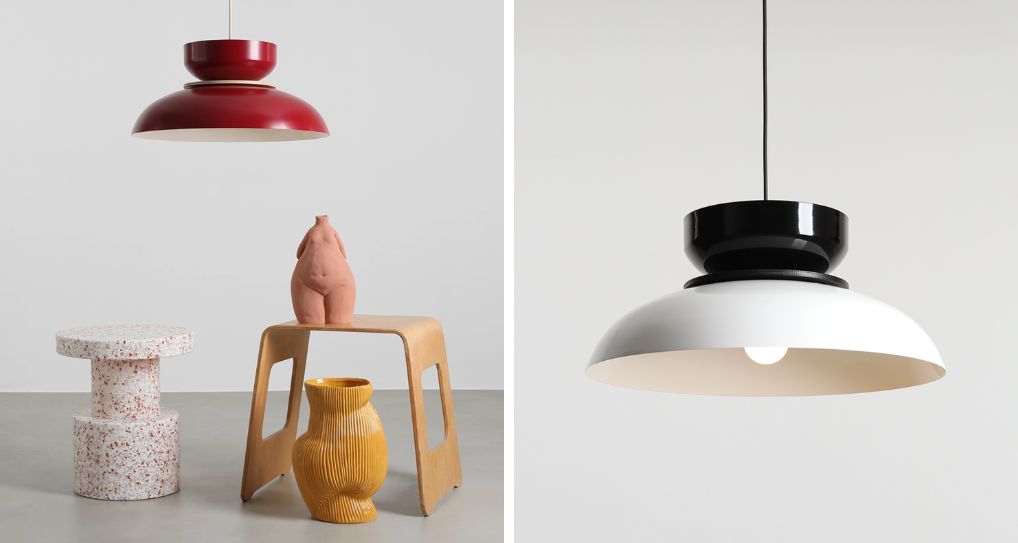
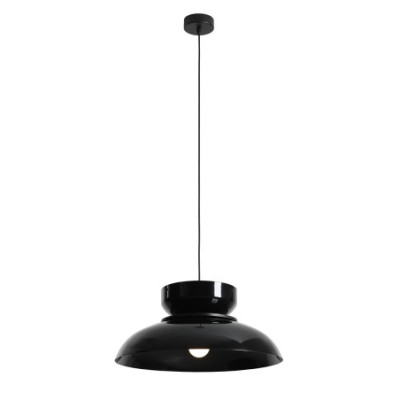
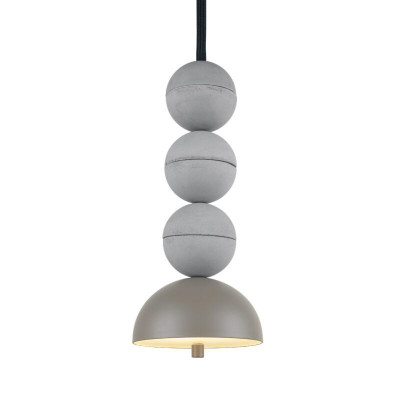
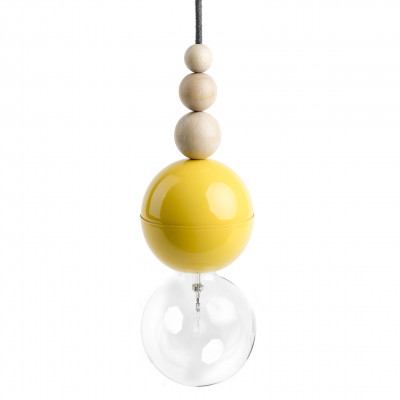
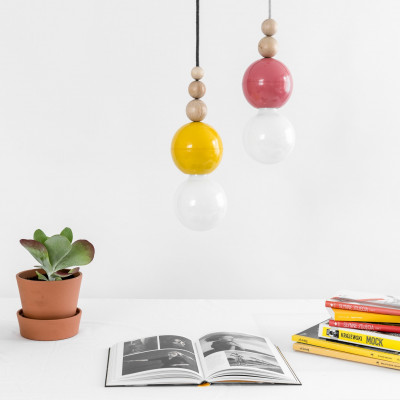
In the Loft Bala collection by Kolorowe Kable (in glossy variants), the shiny finish appears on metal elements, while the bulb itself remains exposed, so the gloss primarily affects the appearance of the fixture itself. In the AFOXÉ collection by Ferroluce, the gloss covers ceramic shades with sculptural, three-dimensional forms. Smooth, glossy surfaces reflect light from elements positioned at different angles, allowing the reflections to further emphasise the cuts, folds and three-dimensional character of the form.
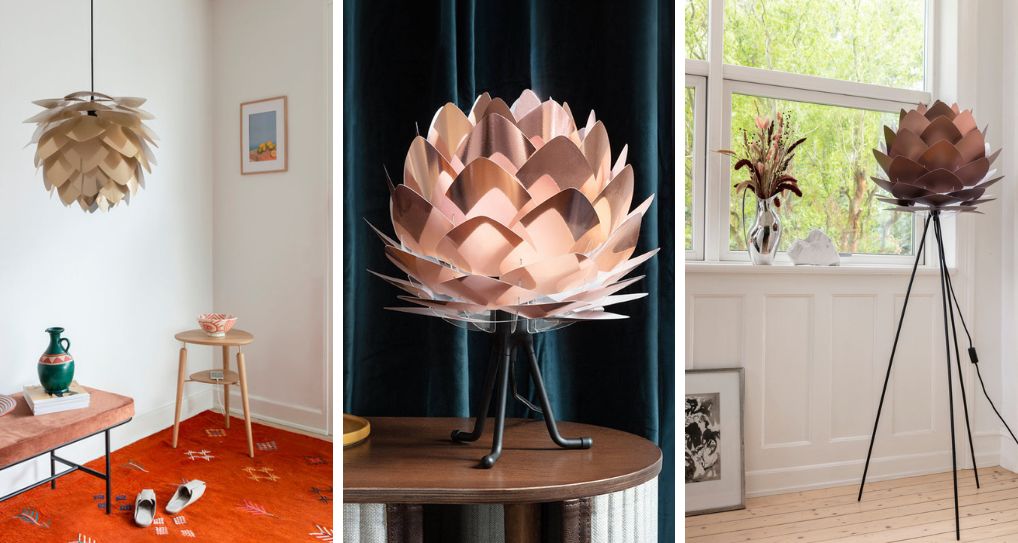
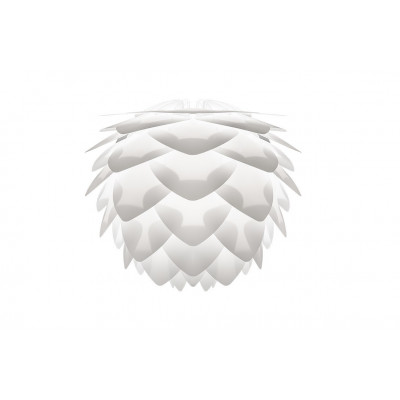
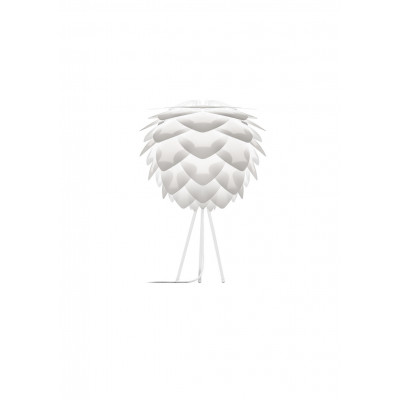
In Aldo by Artera, the glossy finish covers large metal elements of the shade, and thanks to the larger reflective surface, the reflections are more visible and can additionally emphasise the lamp’s layered, geometric form. Silvia by UMAGE, available among others in the Copper variant, uses its surface in yet another way. The lampshade consists of numerous overlapping elements, so light is reflected from multiple surfaces positioned at different angles, creating a more complex interplay of light.
Opal glass lamps: when is this type of shade worth choosing?
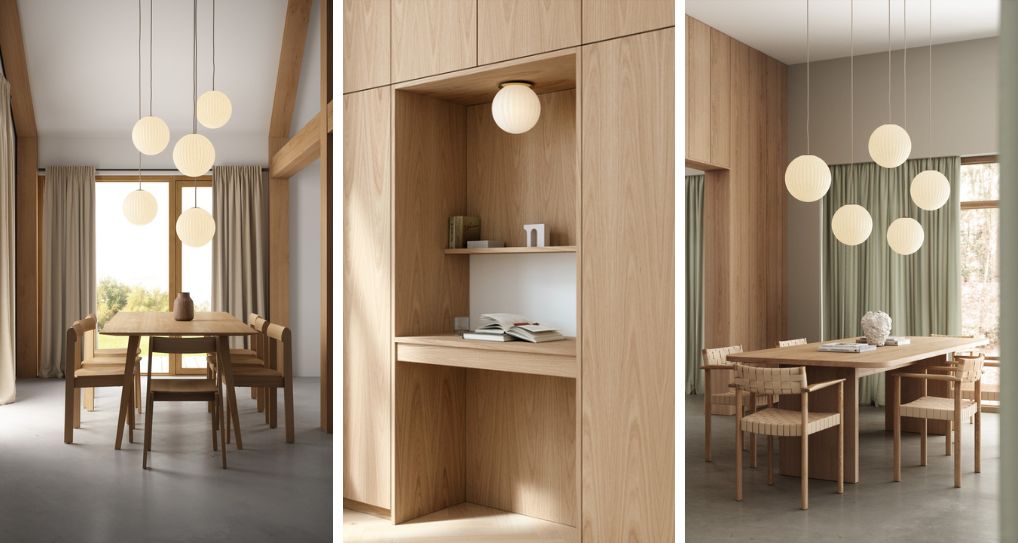
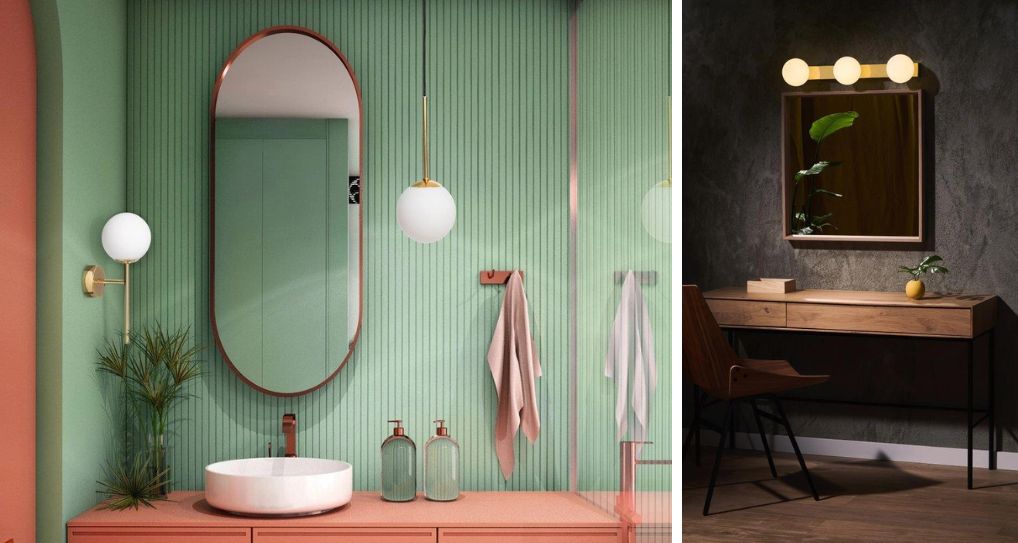
If you do not want to look directly at the bulb, opal glass is an excellent solution. It diffuses the light passing through it, so instead of a distinct point of light, we see the illuminated surface of the shade. This effect works particularly well for general and decorative lighting when the lamp should not visually dominate the entire arrangement.
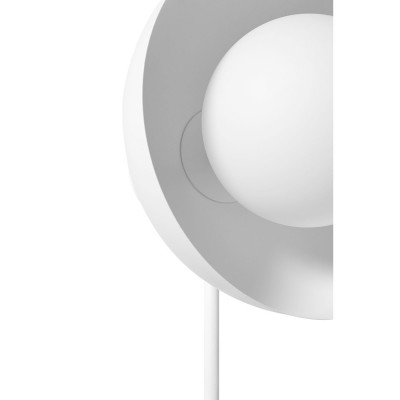
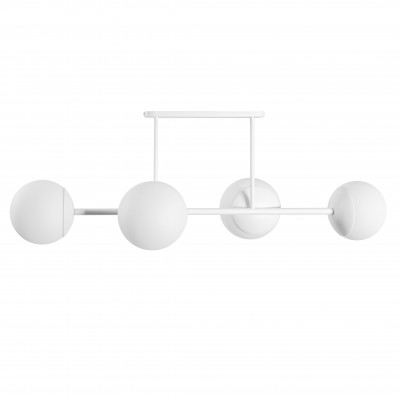
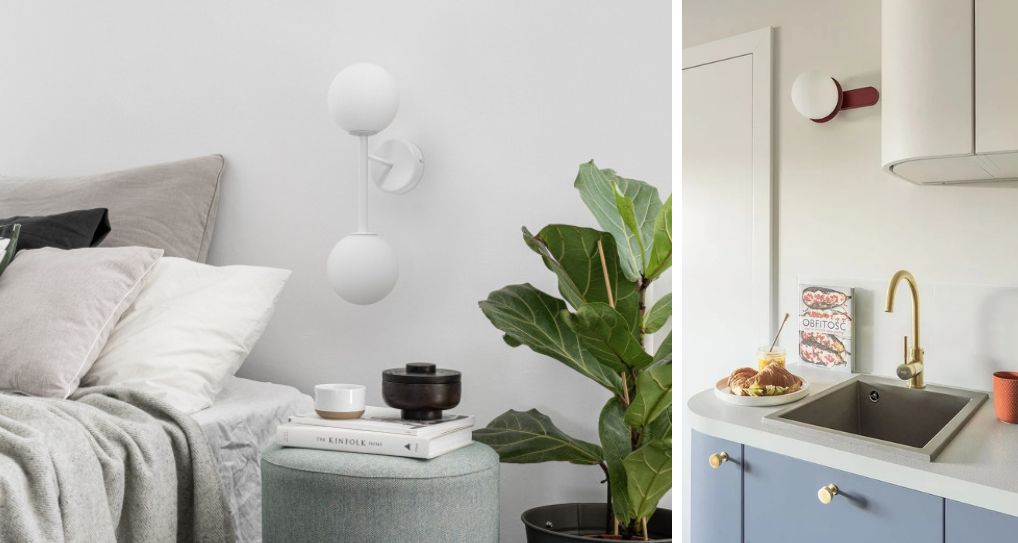
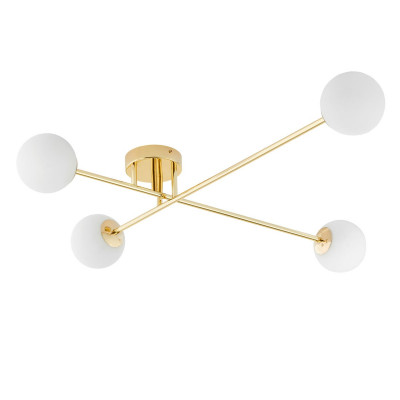
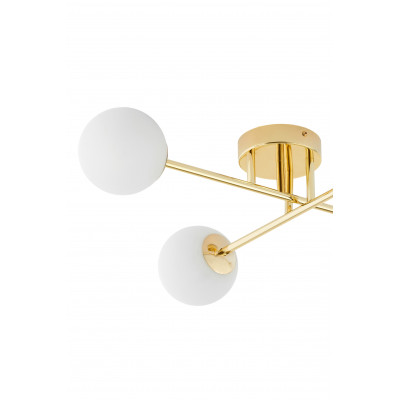
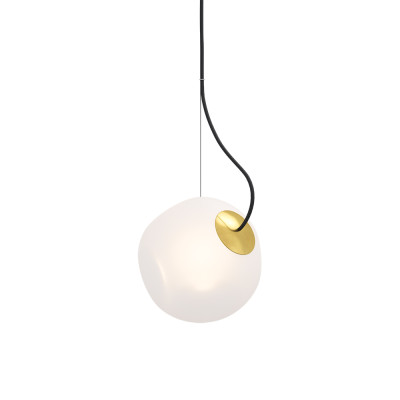
Opal glass is one of the signature features of UMMO Lighting lamps, as demonstrated by collections such as KUUL, KOP and HANEA. The white shades reduce direct visibility of the light source and allow the light to spread across the entire surface of the glass sphere. A similar mechanism is used in the Astra and Mija lamps by Kaspa, although each collection uses it in a slightly different way. In Astra, several opal spherical shades are arranged on asymmetrical arms, so instead of one central point of light, several diffused light sources are positioned in different parts of the fixture. In the Mija collection, the shade is more prominently displayed as the main element of the lamp. Bright Barocco by Nordic Tales works differently in the interior. Here, the opal glass has an irregular, organic surface that also becomes a decorative feature of the lamp.
Clear glass: when is it worth exposing the light source?
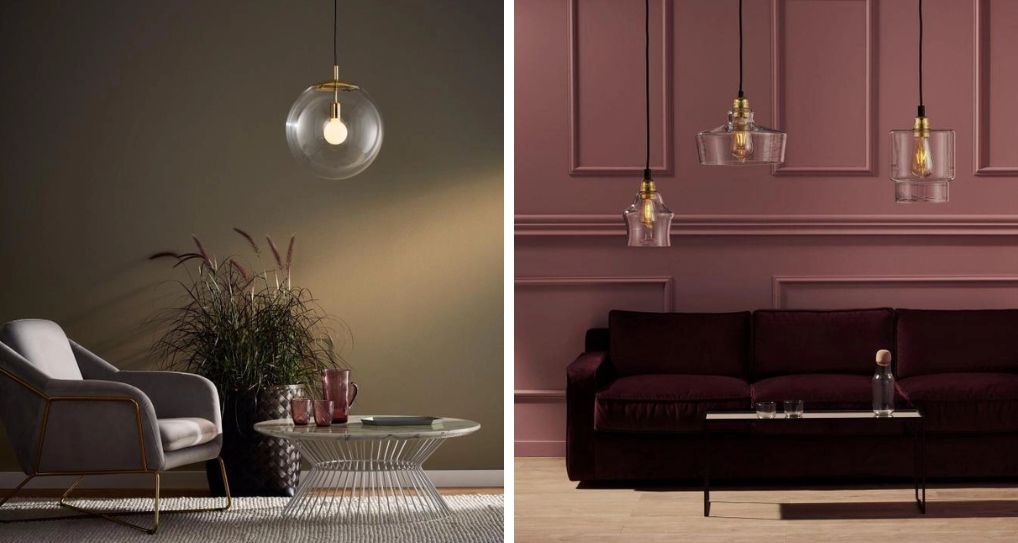
A transparent shade creates the opposite effect to an opal one. It does not conceal the bulb, so its shape and appearance become important to the overall composition. Light passes through the glass without such intense diffusion, while additional reflections appear on the surface of the shade.
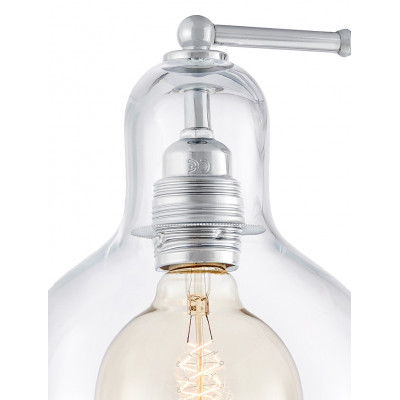
Clear glass works well when the light source is meant to be deliberately exposed. In the Alur collection by Kaspa, transparent, rounded shades surround the bulb with a large glass surface without concealing it. The bulb remains clearly visible, while additional highlights appear on the curved surface of the shade. In the Longis collection, clear glass also leaves the bulb visible, but the effect is more decorative thanks to the varied, more slender shapes of the shades. Individual variants differ in shape and proportions, so the light is viewed through a slightly different glass form each time. Transparent shades also appear in ceramic fixtures by Zangra. Their example shows that the material of the fixture and the shade do not have to perform the same function: ceramic defines the form, while glass affects the diffusion of light.
Smoked and coloured glass: how does it change the character of light?
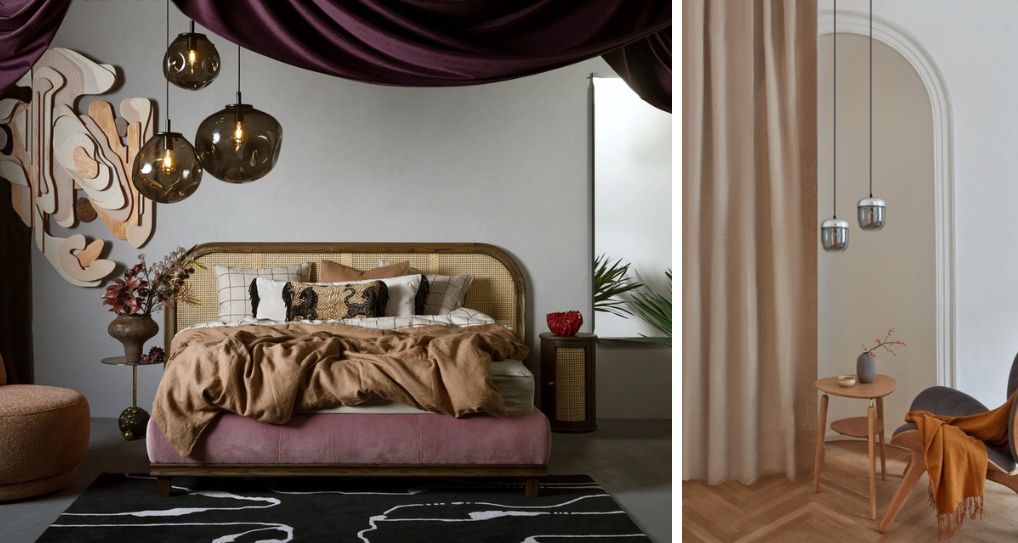
Smoked or coloured glass partially modifies the light passing through the shade, affecting its intensity and visual perception. It still transmits light, but it can reduce the amount that passes through and alter the way we perceive its colour and intensity.
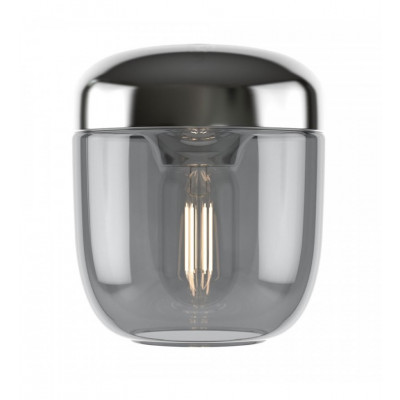
During the day, smoked glass primarily serves as a decorative element of the fixture, while once the light is switched on, its transparency, colour and texture become more pronounced. A great example is the Avia collection by Kaspa, whose smoked shades have an irregular surface. As a result, the light passing through the shade not only reveals the visible source inside but also emphasises the indentations, asymmetries and varying thickness of the glass surface. A different effect is created by Acorn Smoked by UMAGE. The shade consists of a smooth outer glass shell and a metallic-finish element placed inside. In the Smoked Steel version, the smoked glass partially reveals the metallic “core”, so once the light is switched on, both the transparency of the shade and the reflections appearing on the metal inside become important.
It is worth remembering that smoked glass does not behave in exactly the same way as clear glass. If the lamp is primarily intended to provide strong illumination, it is also worth paying attention to the specifications of the light source.
Metal lamps: what determines where the light falls?
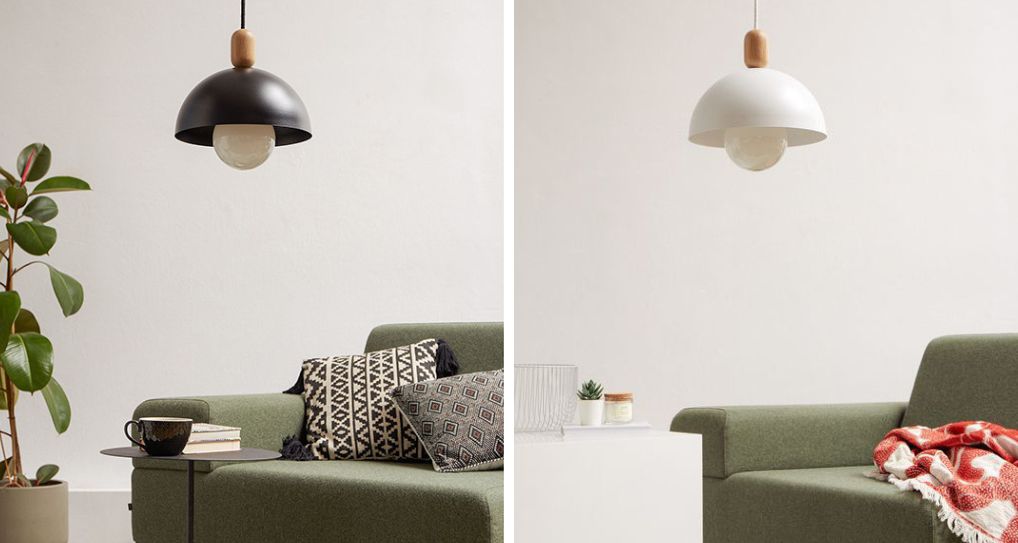
Metal does not allow light to pass through its walls, which makes the construction of the shade particularly important. Light can escape through openings or perforations, or be reflected from the inside of the shade.
A shade that is open at the bottom will usually direct light onto a table, kitchen island or worktop. If it is also open at the top, some of the light can be directed towards the ceiling.
The colour of the inside of the fixture also matters. A light-coloured surface will usually reflect more light, while a dark one can make the shade itself appear more visually subdued. This is why, when choosing a metal lamp, it is worth looking not only at its exterior colour but also at the interior and the direction in which the shade opens.
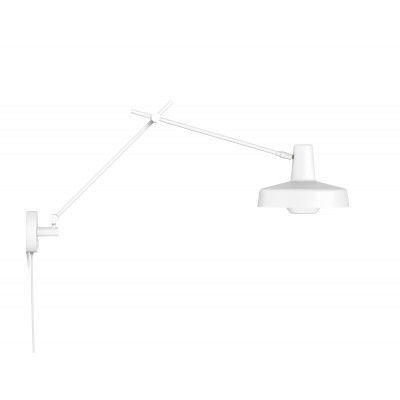
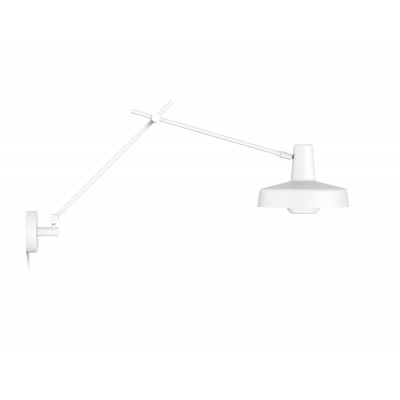
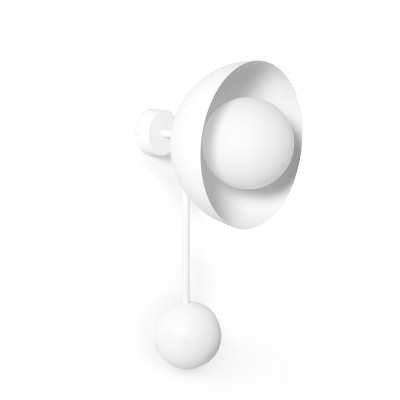
The Arigato collection by Grupa Products makes deliberate use of a metal shade. The aluminium shade can be rotated, while the adjustable construction allows the direction of the light to be changed depending on the need. An element shielding the bulb is also used inside to reduce glare and distribute the light more evenly. Metal interacts with light somewhat differently in Kello lamps by UMMO Lighting. The metal shields part of the source, while the white glass diffuses the light in the exposed section of the fixture and reduces direct visibility of the bulb. Clava Dine by UMAGE demonstrates yet another way of using metal. The solid shade directs a significant amount of light downwards, while its characteristic perforations allow some of the rays to pass through the surface as well. As a result, the light is not limited solely to the area directly below the lamp – the small openings create additional, subtle points of light around the shade.
Matte, gloss or glass? How to choose the lamp material for the desired effect?
When choosing a lamp, consider not only its form but also the material and its finish. Matte surfaces reduce pronounced reflections, glass can diffuse the light or expose the source, while metal can help direct the light rays.
At KoloroweKable.pl, you will find lamps made from a variety of materials, textures and finishes. Explore the available models and choose lighting that suits not only the style of your interior but also the lighting effect you want to achieve.
Related products
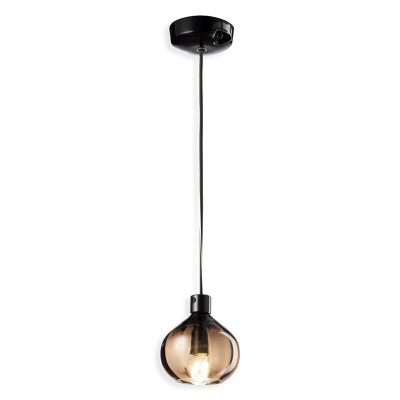
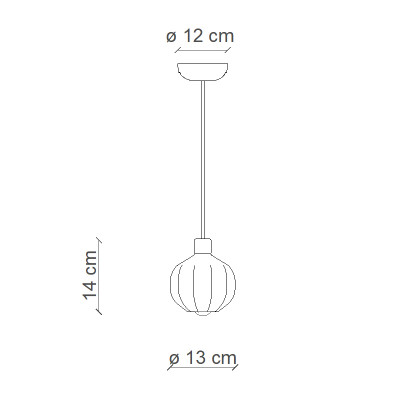
AFOXÈ Bronzo 13cm black ceramic hanging lamp with a transparent and brown lampshade Ferroluce
- On sale!
- -20%
Loft Bala yellow pendant lamp – Kolorowe Kable
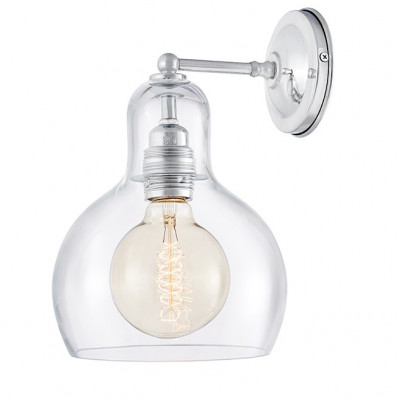
Longis I Wall Lamp / Sconce – KASPA

Red DAKOTA pendant lamp 8286 Argon
SILVIA white lampshade – UMAGE