

Materials in restaurant lighting – how to choose the right lamps?
-
Author
Izabela Seliga -
Date added
- 614 views
A guest walks into a restaurant and, even before sitting down at the table, already knows whether they want to stay. Not because of the menu, not even because of the scent, but because of the atmosphere. In this article, we show which materials work best in restaurant and hospitality lighting – both in terms of aesthetics and everyday functionality. You will learn how different solutions vary, how they influence the ambiance, and how to match them to the character of your space.
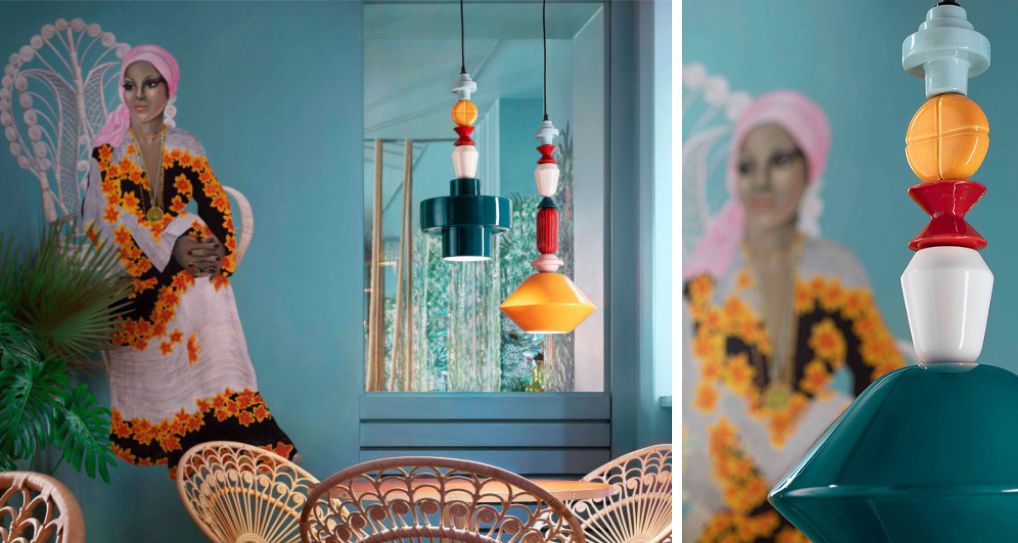
Why does the material of lamps matter in restaurant lighting?
Atmospheric lighting creates the first impression. But in hospitality, it’s not just about visual effect. Restaurant lighting should not only build ambiance but also be durable and easy to maintain. That’s why the materials used in lamps play a key role in the design. They determine not only whether a space feels raw, cozy, or elegant, but also ensure comfort of use and maintenance.
A restaurant is a demanding environment. High temperatures, humidity, grease vapors, and intensive use mean that lighting must be durable and easy to maintain. Materials that work well at home may not perform in hospitality settings. Here, durability matters, but so does ease of cleaning, resistance to dirt, and structural stability.
The lighting effect is equally important. Light behaves differently in a metal fixture, differently in a glass shade, and differently in fabric. The material affects how light is perceived, its softness, and direction. These nuances play a crucial role in shaping the atmosphere of a space.
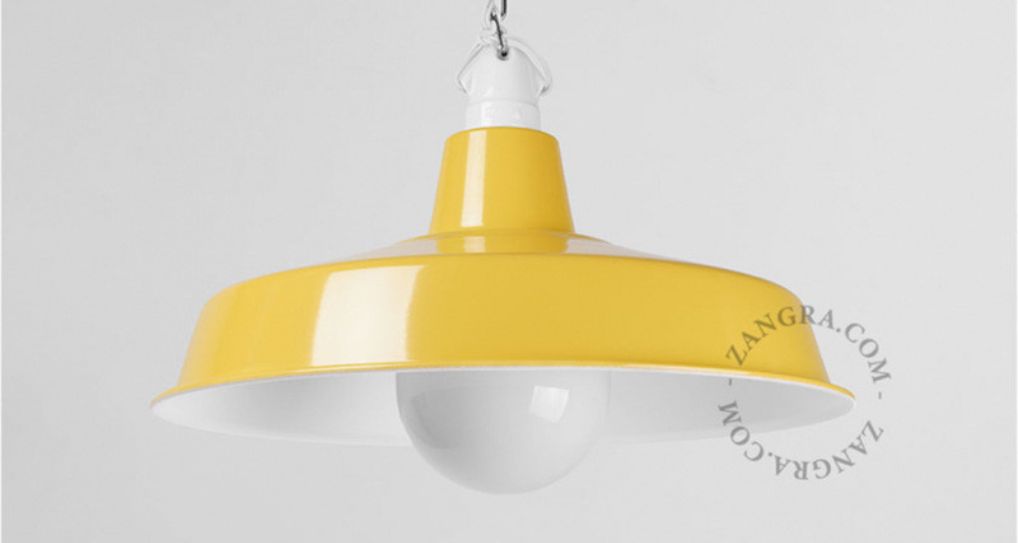
Which lamp materials work best in restaurants and hospitality spaces?
Choosing materials is a balance between functionality and aesthetics. In well-designed interiors, there is rarely just one solution. Most often, the key lies in combining different types of lighting consciously.
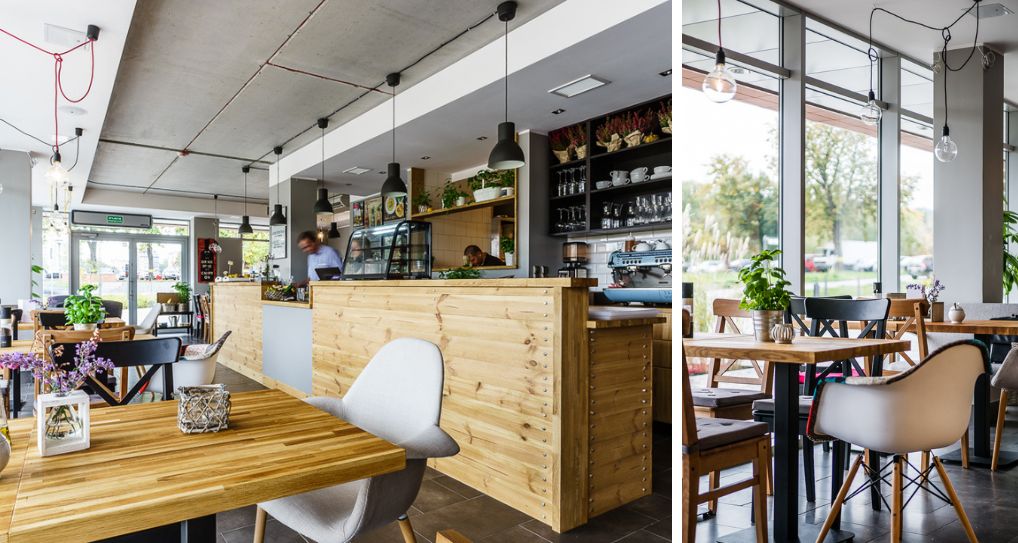
Metal in restaurant lighting – durability and industrial character
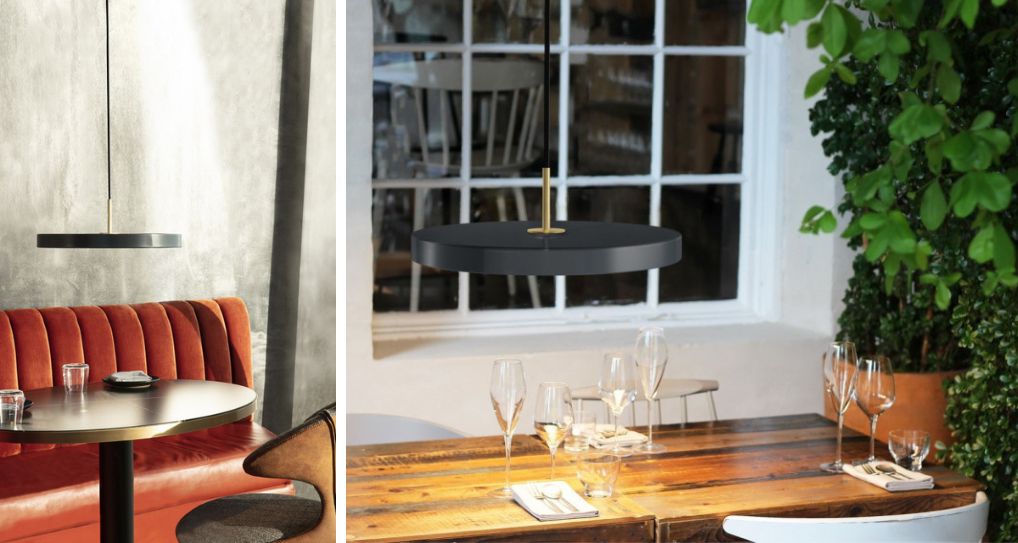
Metal is one of the most reliable materials in hospitality. It is resistant to damage, handles intensive use well, and is easy to clean.
It introduces a loft-style character to interiors, especially in black, graphite, or brushed finishes. It naturally fits into industrial and modern spaces, but also works well as a contrast in more classic interiors.
It works perfectly above tables, at the bar, or in track lighting systems where precise illumination of selected areas is essential.
On the market, you will find both minimalist, raw forms and more decorative models. For example, our Loft Bala collection lamps combine metal with wooden elements and vibrant colors, adding warmth to the interior.
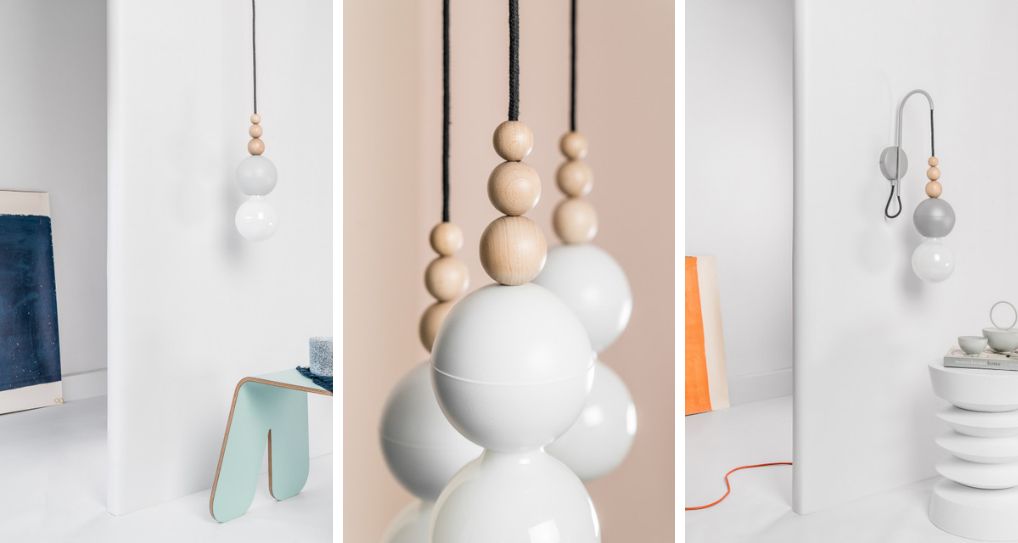
If you’re looking for a more minimalist, Bauhaus-inspired form, consider Apolin by KASPA. Another noteworthy option is the modern Asteria LED fixtures by UMAGE, available in various variants and colors.
Glass in restaurant lighting – timeless elegance
Glass offers great flexibility in working with light. It can diffuse, soften, or emphasize its direction.
Transparent shades expose the light source and add lightness, frosted glass creates a more subtle, diffused effect, while tinted versions build mood and depth.
Glass is often found in restaurants that focus on aesthetics and timeless details. However, it requires regular maintenance, as every touch and residue is visible.
In such interiors, both simple geometric forms and more decorative designs work well. Examples include KUUL collection lamps by UMMO Lighting or the more decorative Bright Barocco models by Nordic Tales.
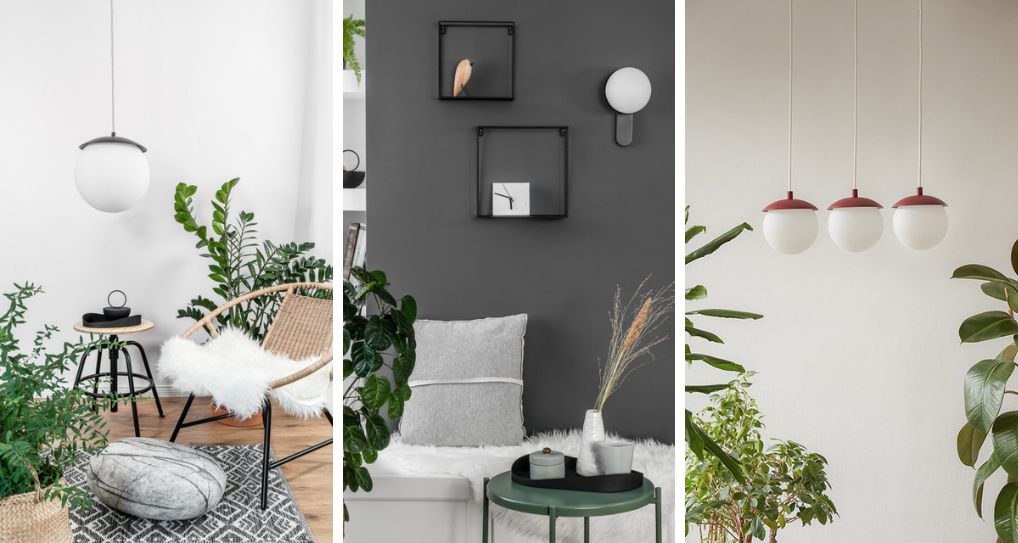
Also worth noting are decorative Smoky G-Line LED bulbs by Bebulbs, which can serve as a full-fledged lighting solution.

Wood in hospitality lighting – warmth and natural balance
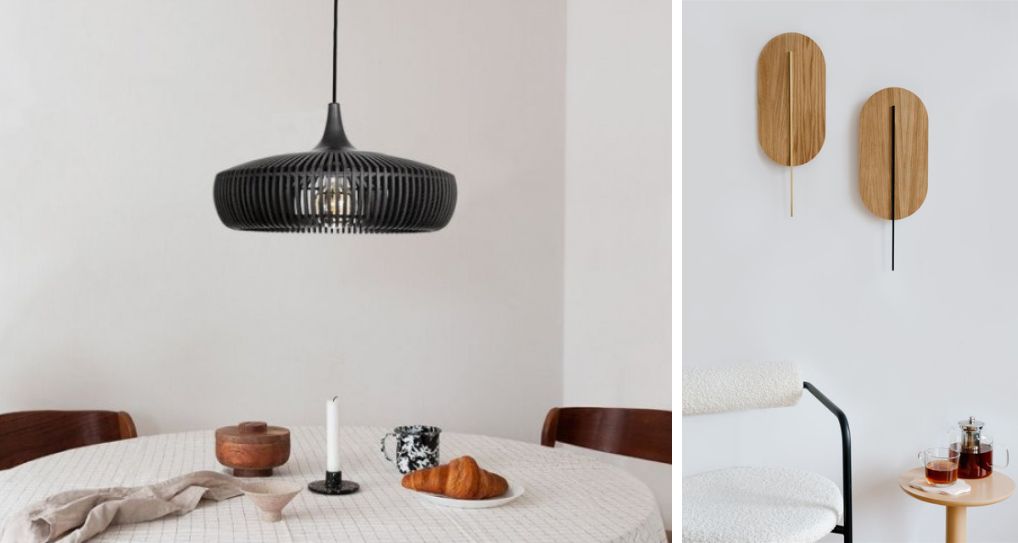
Wood brings balance to interiors. It softens sharp forms and makes the space feel more welcoming.
It works particularly well in concepts focused on authenticity – seasonal cuisine, local products, or slow food ideas.
In lighting, it most often appears as a structural or decorative element and requires proper protection against moisture and daily use.
Minimalist forms work best here. Examples include Chimes and Clava Dine by UMAGE, as well as ROKKE wall lamps by UMMO Lighting.
Fabric in restaurant lighting – soft light and comfort
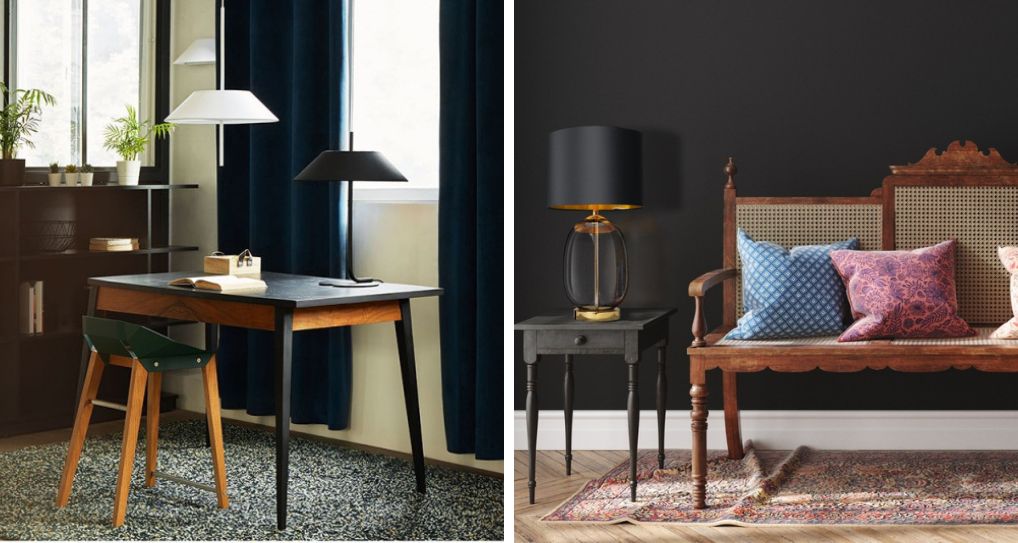
Fabric works differently on the senses than other materials. It softens light and creates a more intimate atmosphere, encouraging guests to stay longer.
Due to its sensitivity to dirt, it works best in less exposed areas.
Minimalist forms such as SAKOSI lamps by UMMO Lighting, SALVADOR table lamps by KASPA, or the COCO collection allow for a cohesive lighting setup.
Concrete and ceramics – bold and modern expression
Concrete and ceramics are materials worth considering when designing a space. They are often raw and minimalist, but can also be decorative.
Concrete lamps and ceramic designs add character and work well in modern interiors.
Due to their visual weight, they should be used as accents.
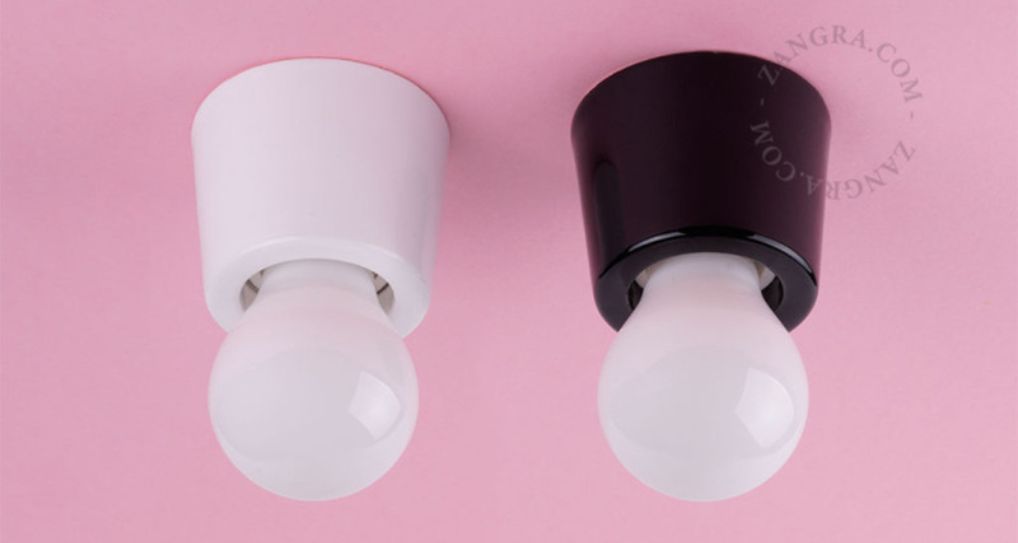
Examples include ceramic lamps by Ferroluce, such as BUMBUM or LARIAT, minimalist designs by Zangra, and concrete fixtures by Loftlight.
How to match lamp materials to the type of restaurant?
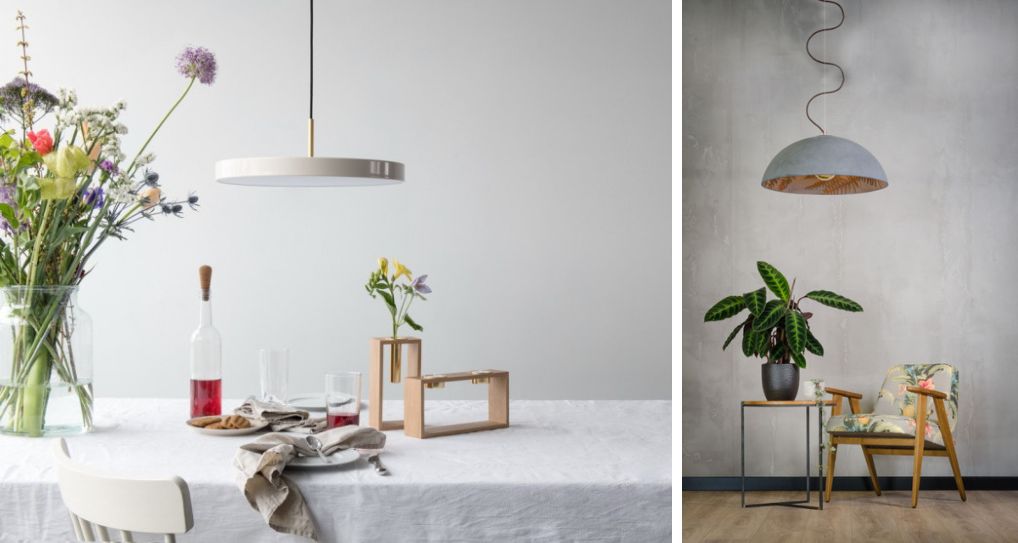
The material should reflect the concept of the space. Fine dining often uses glass, ceramics, and fabrics. Cafés lean towards wood and lighter forms.
Bars and street food venues prioritize metal and durable materials, while chain restaurants focus on consistency and ease of maintenance.
What to consider when choosing lamp materials for hospitality?
Beyond aesthetics, everyday usability matters.
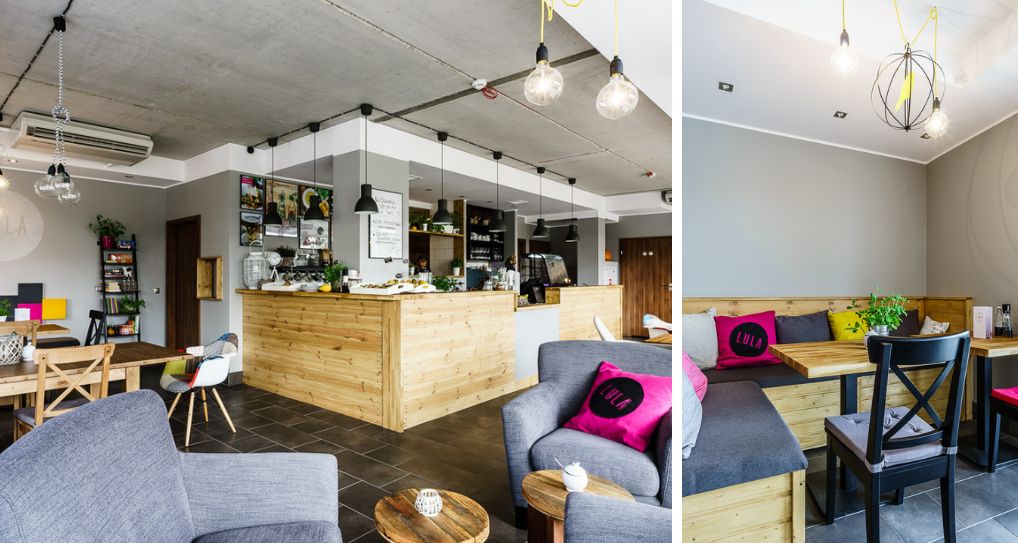
Consider ease of cleaning, resistance to temperature and moisture, and durability.
Combining materials allows for more complex and functional lighting setups.
How do materials influence atmosphere and guest experience?
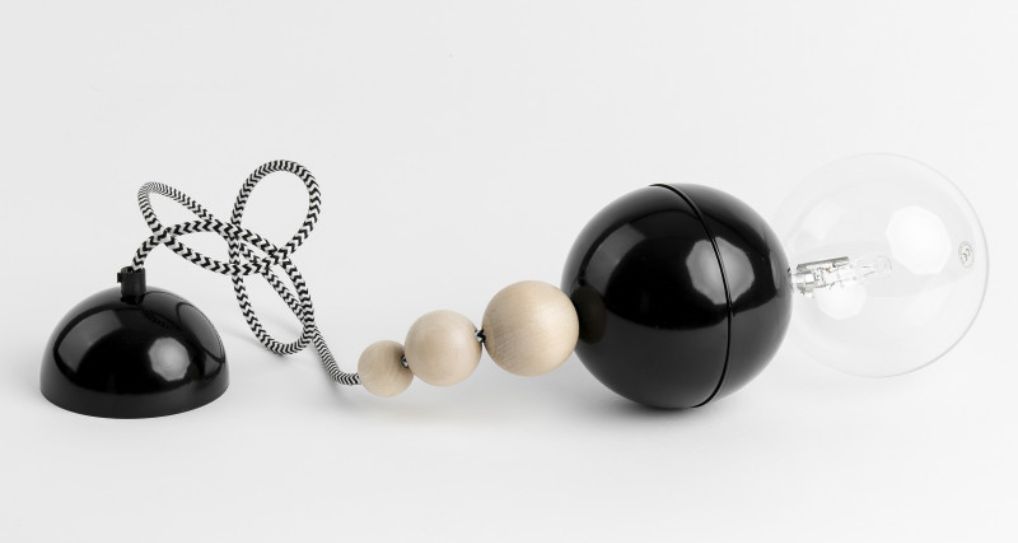
Light creates emotion. Metal and concrete bring modern energy, glass adds lightness, while wood and fabric create warmth.
These subtle differences shape how a space is perceived and how long guests want to stay.
Materials in restaurant lighting – summary
Materials used in restaurant lighting play a key role in both aesthetics and functionality. A conscious choice ensures lighting that looks great and performs reliably for years.
Explore a wide range of lighting solutions for restaurants and hospitality spaces in the KoloroweKable.pl store.
.jpg)