
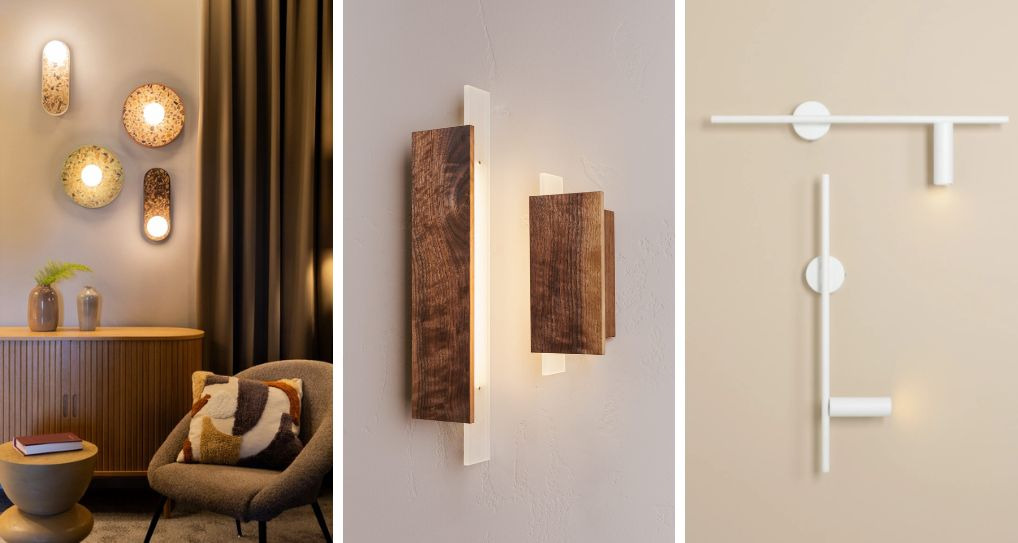
Vertical Lighting – Why Is It Worth Lighting Walls?
-
Author
Izabela Seliga -
Date added
- 334 views
When planning interior lighting, we most often think about how to properly illuminate the table, kitchen worktop, desk or floor. As a result, we tend to direct most of the light downwards. Meanwhile, walls occupy a much larger area within our field of vision. How well they are illuminated largely determines whether a room feels spacious and cosy after dark.
If the centre of the room is brightly lit while its edges remain in shadow, even a sufficient amount of light does not always create a comfortable effect. The interior may look flat, have dark corners and appear smaller than it actually is.
The solution is vertical lighting, which involves deliberately directing some of the light onto vertical surfaces. Find out why it is worth lighting walls and how to use this effect in the living room, bedroom, hallway or open-plan living area.
What is vertical lighting?
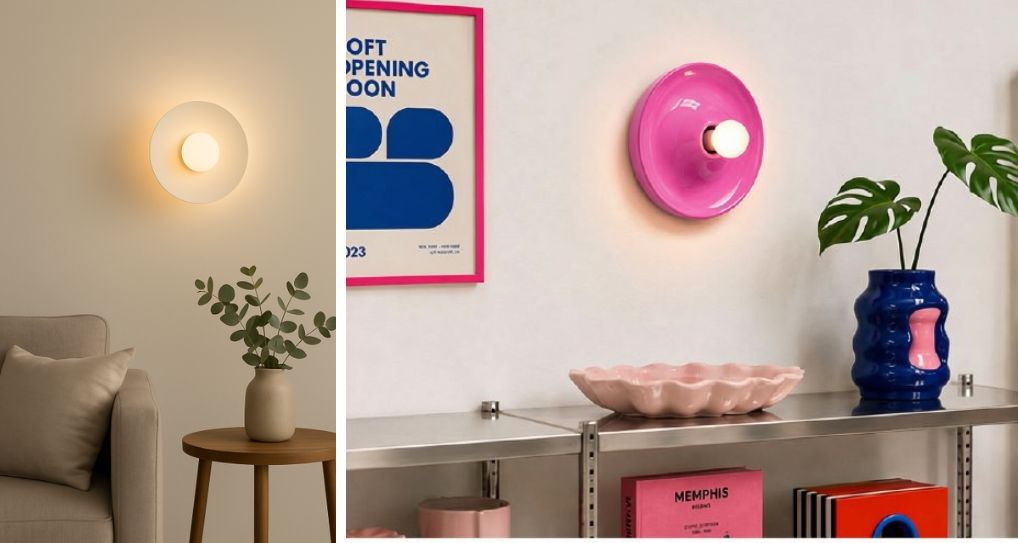
Vertical lighting is lighting designed with vertical surfaces in mind: primarily walls, but also built-in units, shelving, slats and tall architectural elements.
It is therefore not simply about installing a wall lamp. What matters most is the direction of the light. A wall can be illuminated by a lamp mounted directly on it, a ceiling-mounted spotlight, a track light, a floor lamp or a concealed LED strip.
With conventional ceiling lighting most of the light is directed towards the floor, furniture and worktops. With vertical lighting, some of the light reaches surfaces at eye level. This makes the boundaries of the room more visible and can make the entire interior feel brighter and more spacious. This principle is used in wallwashing, which involves evenly illuminating a larger area of a wall.
Why is it worth lighting walls?
Light on a wall is not purely decorative. It can change the way an entire interior is perceived just as much as the colour of the paint, the arrangement of the furniture or the size of the lamps.
The interior feels brighter
One powerful lamp in the centre of the ceiling does not always make a room feel sufficiently bright. If it mainly illuminates the floor while the walls and corners remain in shadow, the eye still perceives a strong contrast between the bright centre and the dark edges of the room.
Illuminating the walls reduces this effect. Light reaches surfaces within the field of vision, making the interior feel more open and evenly lit.
This is why, in a small living room, adding a wall lamp or a spotlight directed towards the wall can sometimes produce a better result than replacing the central light bulb with a more powerful one.
Light creates depth
A room in which every surface is illuminated in the same way can appear flat. By contrast, the right balance of lighter and darker areas creates different visual layers.
Imagine a living room with a sofa positioned against a wall. A ceiling lamp alone will mainly illuminate the centre of the room. If you also brighten the wall behind the sofa, the seating area gains a distinct backdrop. A similar effect can be created behind a chest of drawers, shelving unit, table or bed headboard.
You do not need many lamps to achieve this. Sometimes one or two well-positioned light sources are enough to change the way the entire space is perceived.
Wall lighting highlights colour, texture and materials
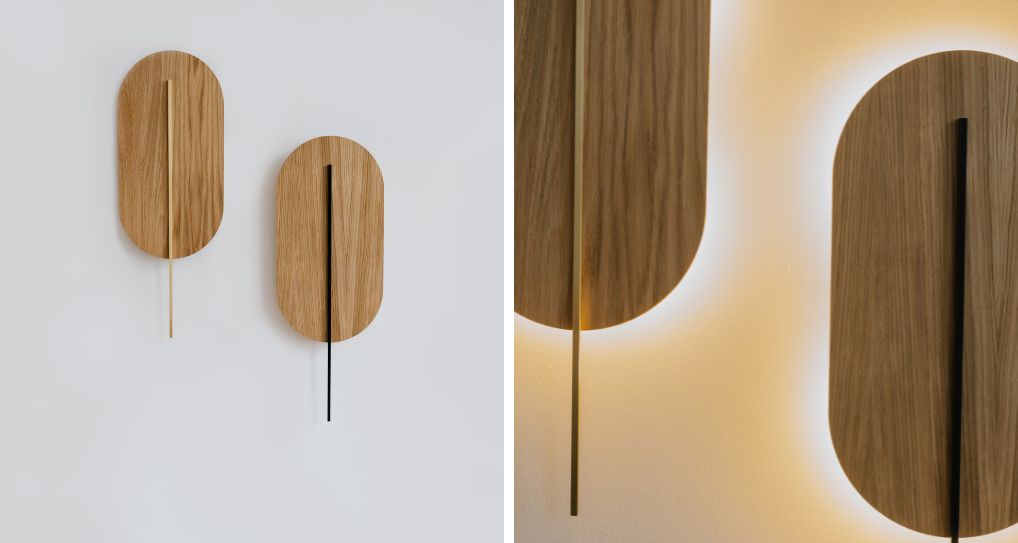
A wall is increasingly more than just a neutral background. Decorative plaster, brick, slats, stone, wallpaper, artwork and bold colours are often used to give it character. If the wall remains in shadow, many of these elements lose their impact after dark.
Light can bring out the colour and texture of a material. However, the way the light is directed should be matched to the effect you want to achieve.
Wallwashing involves illuminating a larger section of a wall as evenly as possible. It works well when your main aim is to brighten the room, highlight a large surface or create a calm backdrop for the interior.
Light falling at a shallow angle close to the wall creates a different effect. It makes raised areas, recesses and irregularities more visible. This can be used to emphasise brick, stone, slats or textured plaster. In professional lighting design, a similar technique is known as grazing light.
Remember, however, that this type of lighting will reveal not only decorative texture but also imperfections in the surface. With a very smooth wall, it is therefore worth checking the effect from different angles beforehand.
Light on the wall helps organise the space
Vertical lighting also works particularly well when one room serves several different functions.
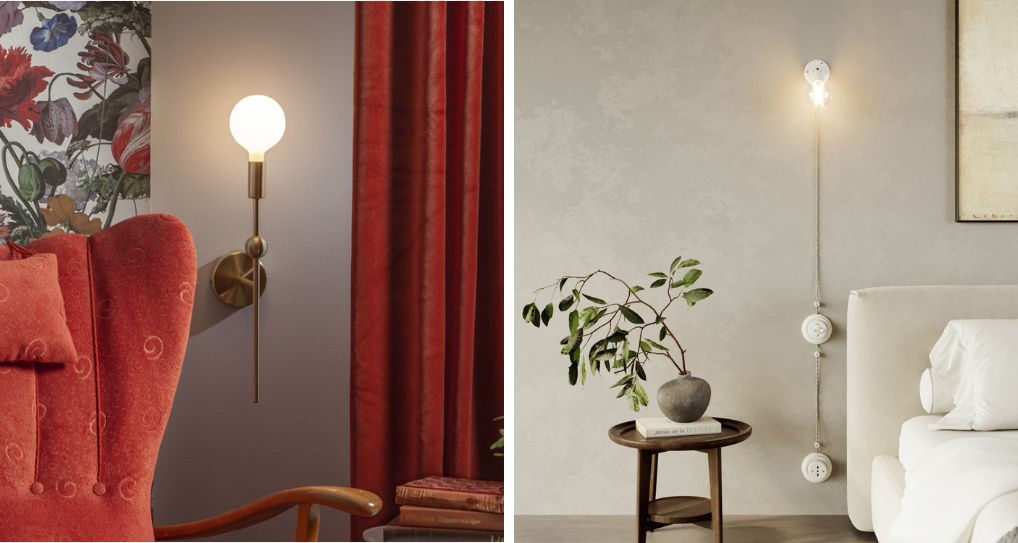
In an open-plan living room with a kitchen and dining area, you can illuminate the wall next to the sofa while keeping more functional lighting directed towards the kitchen worktop. Above the table, a pendant lamp can take centre stage, while a wall lamp or decorative lighting can highlight artwork near a chest of drawers.
This way, different parts of the interior are distinguished not only by furniture but also by the way they are illuminated. Instead of trying to brighten the entire space with a single fixture, you create several interconnected lighting zones.
This is exactly what good layered lighting is about – ambient, task and decorative lighting complementing one another.
Where does vertical lighting work best?
In fact, vertical surfaces are worth considering in almost every room. Depending on the space, however, the light can serve a slightly different purpose.
Living room – brighten the wall
The living room is one of the best places to use vertical lighting. The large number of pieces of furniture, decorations and different functions means that a single central lamp is rarely enough.
You can direct light towards the wall behind the sofa, a bookcase, a chest of drawers or an area displaying artwork. If the living room is small, illuminating the surface furthest from the main seating area can also help reduce dark corners.
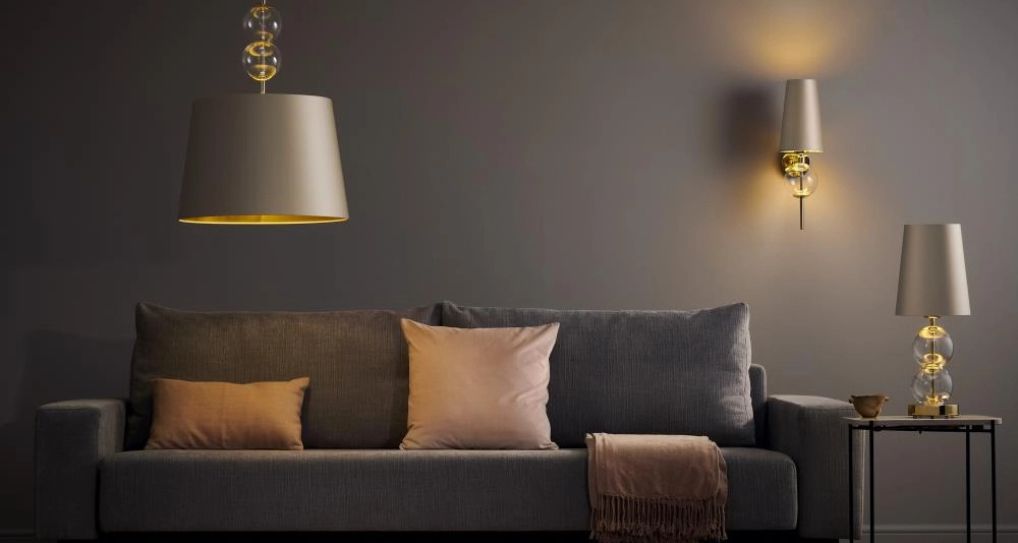
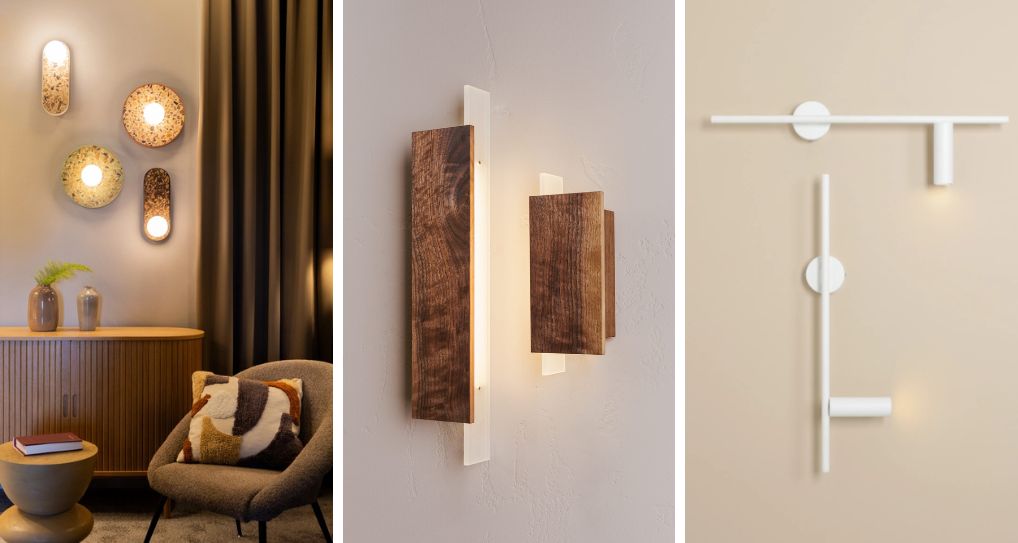
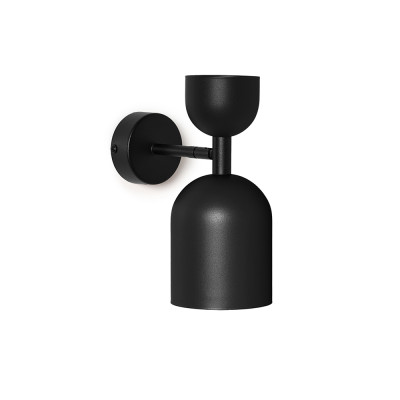
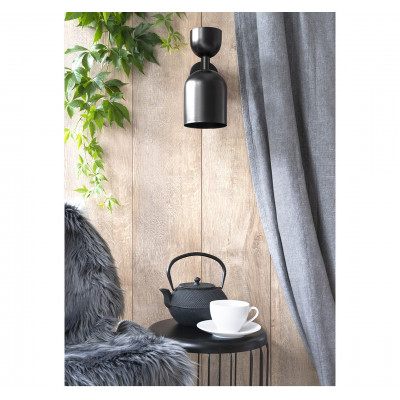
Adjustable wall lamps are a good solution because they allow you to change the direction of the light depending on your needs. One example is SUPURU W by UMMO Lighting, whose shade can be positioned so that the light falls on a selected area of the wall.
Hallway – make use of long walls
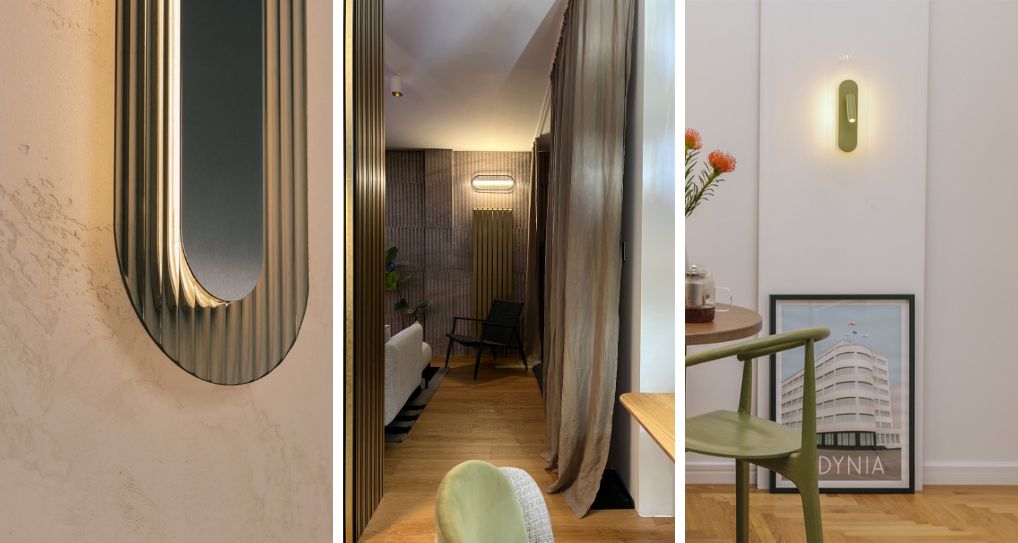
A narrow hallway is often illuminated with a row of ceiling lights or spotlights arranged in a straight line along the ceiling. This solution provides good visibility, but it can also emphasise the tunnel-like shape of the space.
An alternative is to direct some of the light towards the long side walls. Brightening them emphasises the width of the room and prevents the hallway from visually ending in nothing more than a bright patch on the floor.
In this type of space, you can use wall lamps, adjustable spotlights or linear lighting.
Bedroom – instead of strong central lighting
In the evening, we usually do not need uniform, intense lighting throughout the bedroom. Several softer light sources create a much more pleasant effect.
Wall lamps on both sides of the bed are practical for reading, while additional light falling on the wall behind the headboard creates a softer backdrop.
If you want to create a relaxing effect, choose fixtures that limit direct visibility of the bulb. This allows the wall to be illuminated without the light source causing glare while you are resting.
Dining room and kitchen – vertical lighting as a second layer
Above the table and kitchen worktop, downward-directed light is the most important because it ensures comfort while preparing and eating meals.
This does not mean, however, that the rest of the room should remain in shadow.
If a powerful pendant lamp illuminates only the table, the surrounding walls can appear very dark. A single wall lamp, illuminated shelving unit or spotlight directed towards a picture can make the dining area feel much cosier.
Vertical lighting complements task lighting and helps connect a brightly illuminated worktop with the rest of the interior.
Which lamps are best for lighting walls?
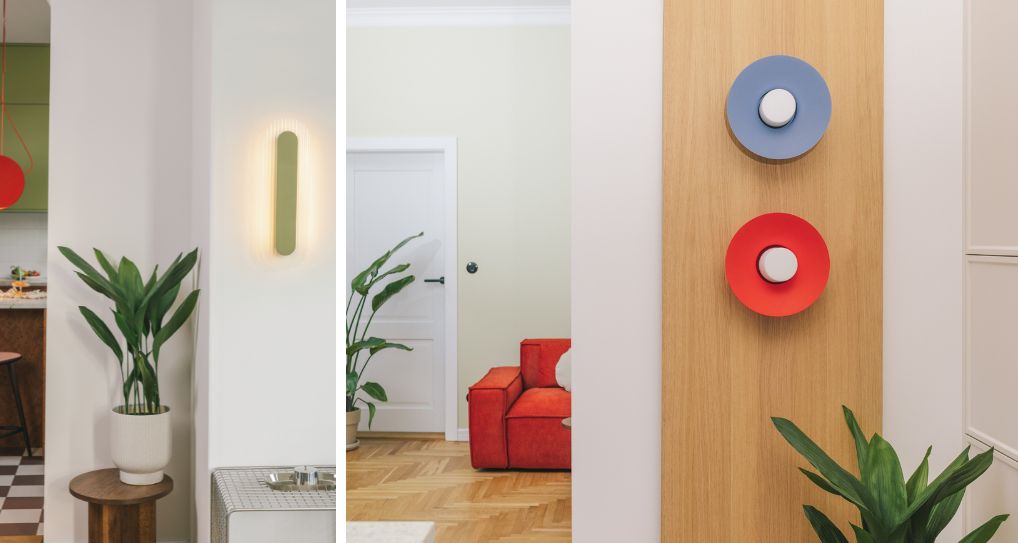
There is no single type of fixture designed exclusively for vertical lighting. It all depends on whether you want to brighten a large surface, highlight a decorative feature or emphasise the texture of a material.
Adjustable wall lamps
Wall lamps with an adjustable shade or arm are among the most versatile solutions. They allow you to direct the light upwards, sideways or directly towards a selected section of the wall.
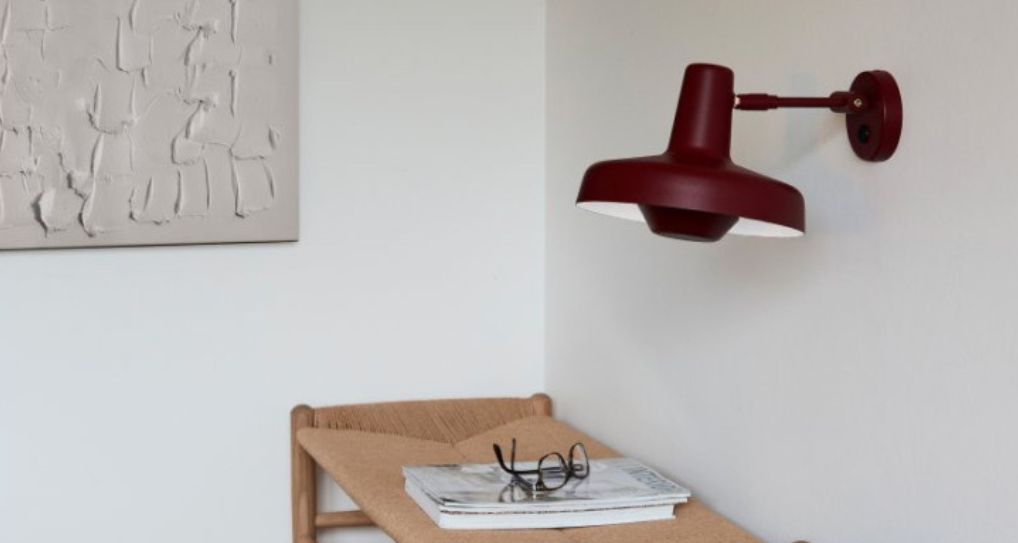
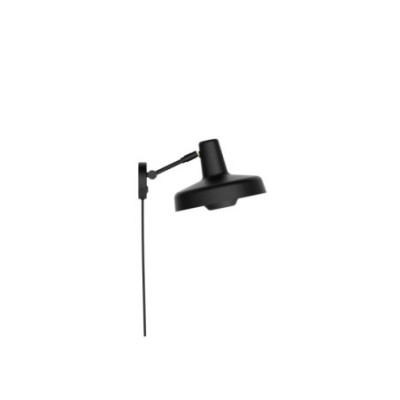
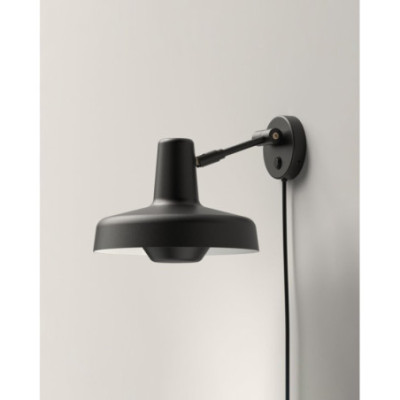
ARIGATO WALL by Grupa Products offers a great deal of flexibility. Its adjustable construction allows you to change both the position of the arm and the direction of the shade, so the lamp can illuminate a wall, artwork, a table or a reading area. The collection also includes the ARIGATO WALL LONG version with an extended arm.
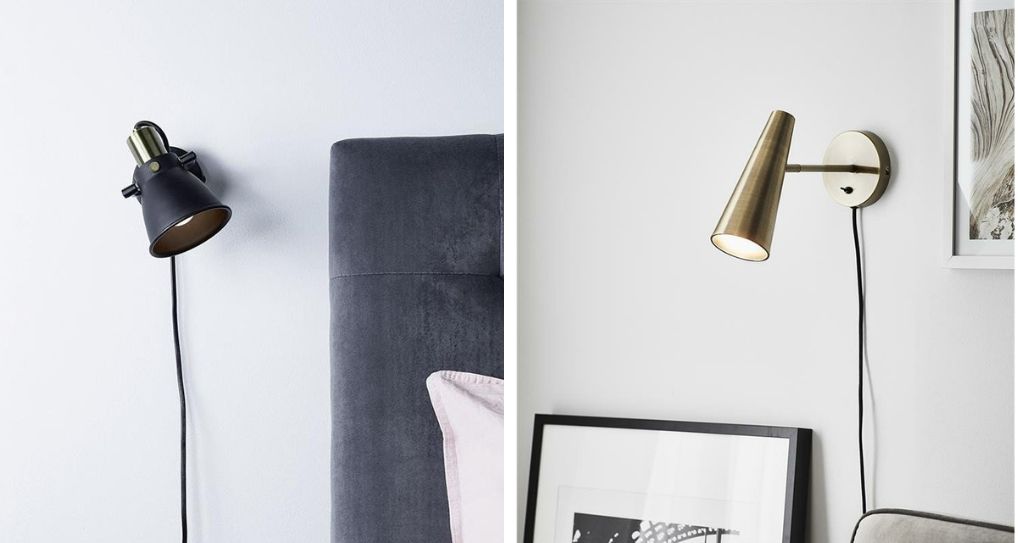
Adjustable wall lamps by Zangra and Creative-Cables have a simpler form. A small fixture with a movable holder can be an interesting solution where the light needs to be directed precisely and the lamp itself should not dominate the rest of the interior.
Spotlights and track lighting systems
If you want to illuminate several different sections of a wall, consider ceiling spotlights or a track lighting system.
The greatest advantage of track lighting is its flexibility. One spotlight can highlight a picture, another can direct light towards a shelving unit, while another can illuminate a larger surface more evenly.
This solution works particularly well in living rooms, long hallways and open-plan interiors where the position of furniture may change over time.
Concealed LED lighting
If you want the lighting itself to remain almost invisible, choose LED strips. Concealed behind built-in furniture, a mirror, decorative panel or near the ceiling, they can illuminate a surface without exposing the light source itself. This solution creates a particularly atmospheric effect after dark.
Do you need to illuminate every wall?
You do not have to illuminate every wall to achieve a satisfying effect. Vertical lighting works best when it is used intentionally.
Lighting every surface equally will cause the interior to lose contrast and depth. A much more interesting effect can be achieved by selecting one or two walls to highlight.
This could be:
- the wall behind the sofa,
- a wall with a picture or gallery,
- a bookcase,
- a surface finished with brick, stone or slats,
- the wall behind the bed headboard,
- the longer side of a hallway.
Think about where your eyes naturally go when you enter the room. This is usually the surface worth starting with.
What colour temperature works best for wall lighting?
The colour temperature should reflect both the function of the room and the colours of the surface being illuminated.
In the living room, dining room or bedroom, warm light of around 2700–3000 K is usually the best choice. It brings out the warm tones of wood, beige, brick and fabrics and helps create a cosier atmosphere.
In work areas, you can use neutral light, but consistency is important. If a wall is illuminated by several light sources at the same time, noticeably different colour temperatures can create a random, incoherent effect.
Colour rendering is also very important. If the light is intended to highlight a painting, wallpaper, a bold paint colour or a natural material, the right light source will allow its colours to appear more natural.
The most common mistakes when lighting walls
Vertical lighting offers many possibilities, but incorrectly positioned lamps can produce the opposite effect to the one intended.
- Directing all the light exclusively towards the floor and worktops – the interior may be functional, but after dark its walls and corners can still feel visually heavy.
- Using too much light on one small surface – a very bright patch surrounded by darkness creates a strong contrast instead of a calm backdrop.
- Lighting every wall in the same way – without darker and lighter areas, the interior loses depth.
- Positioning the light source within the field of vision – an adjustable spotlight aimed at a wall should not simultaneously shine directly into the eyes of people sitting on the sofa or at the table.
- Highlighting texture unintentionally – light falling at a shallow angle will emphasise both decorative plaster or brick and any imperfections in a poorly prepared wall.
- No separate controls – wall lamps and decorative lighting are worth planning on a separate circuit. This way, in the evening, you can leave only the wall lighting on without switching on all the main lighting.
- Mismatched colour temperatures – several different colour temperatures directed at the same surface can unnecessarily alter its perceived colour.
Vertical lighting – look at light from a different perspective
When planning lighting, it is easy to focus on what is directly below the lamp. Yet what we see in front of us is just as important.
An illuminated wall can make a small room feel more spacious, make a hallway appear less tunnel-like and give a living room greater depth. Light can also bring out the texture of materials, highlight artwork or decorations and help organise the different zones of a room.
You do not have to give up pendant lamps or task lighting. The best effect comes from combining light sources positioned in different directions.
Discover wall lamps, spotlights, track lighting systems and other lamps available at KoloroweKable.pl to bring out the best in your interior.
Related products
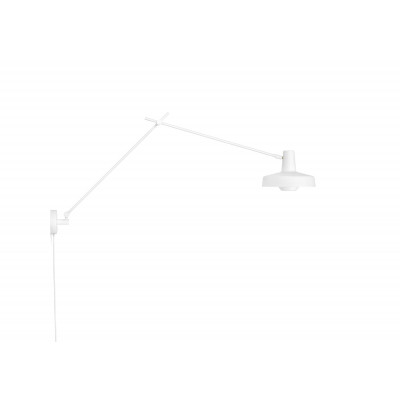
ARIGATO WALL LONG white wall light with extended arms and detachable cable – Grupa Products


- -15%
ROKKE WOOD wooden wall lamp with a white decorative element UMMO


- -15%