
Spider lamp – what is it and where does it work best?
-
Author
Joanna Bitowt -
Date added
- 1195 views
You don’t always need multiple ceiling connection points to enjoy well-balanced lighting throughout the entire room. A spider lamp, also known as a multi light, allows you to distribute light across several areas at once. Its name is no coincidence – the cables spread out in different directions like the legs of a spider. Where does the popularity of this solution come from and where do spider lamps work best? Read our guide!
From factories to homes – a brief history of spider lamps
Although spider lamps are mainly associated with modern interiors, their origins lie in industrial spaces. In old factories and warehouses, this type of lighting was primarily functional: it had to provide a lot of light and distribute it across several areas of the room. Hence the simple sockets, long cables and exposed bulbs.
Over time, this technical aesthetic began to influence interior design. Converted industrial buildings, lofts and interiors inspired by industrial style embraced raw lighting forms. Cables were no longer something to hide – they became part of the ceiling composition.
The emergence of decorative bulbs also played an important role. Filament models with a warm glow and visible filaments made the exposed bulb a visual feature rather than just a functional element. As a result, multi light fixtures quickly moved beyond loft interiors and started appearing in various types of spaces – from modern to minimalist.
What makes spider lamps different from other pendant lights?
The biggest difference compared to a classic pendant light lies in the way light is distributed. In a typical fixture, all light sources are concentrated in one place. In spider lamps, individual light points can be placed further apart, allowing light to spread more evenly throughout the interior.
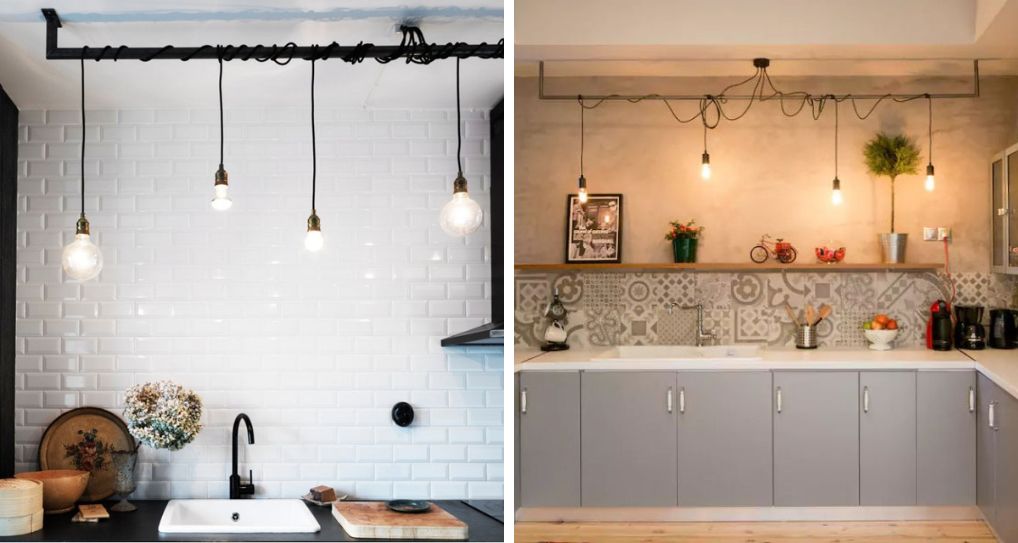
Another important aspect is the way cables are arranged. In many interiors, they don’t run straight from the ceiling canopy to the bulb, but are guided across the ceiling using special cable holders. These small accessories allow you to fix the cable at selected points and guide it further, for example above a table, along a wall or in several directions at once.
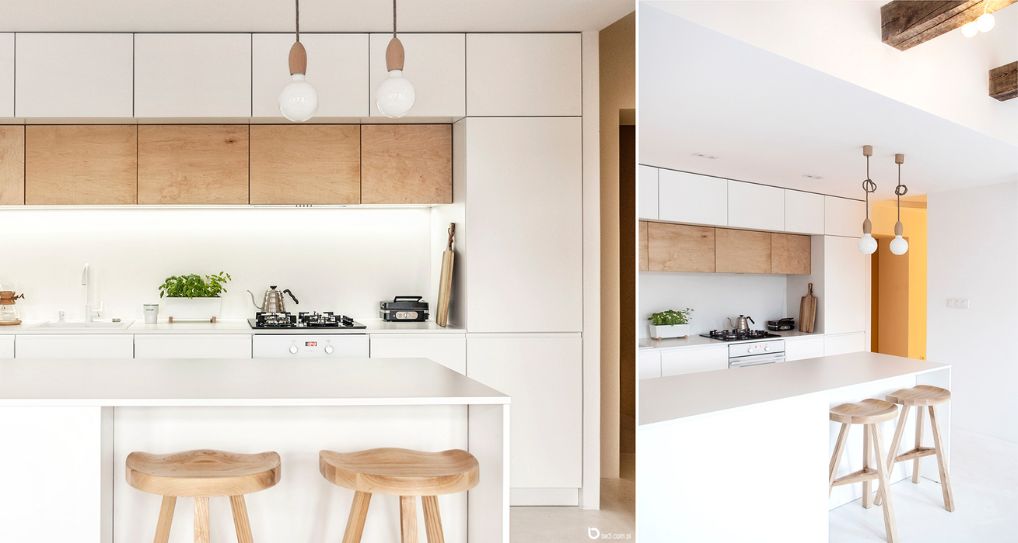
Cables can also be suspended using special lamp rails. These are simple metal bars mounted to the ceiling that allow multiple cables to be arranged in a straight line, helping to organize the layout. This solution works especially well above a dining table or kitchen island, where light points should be evenly distributed along the surface.
Light bulbs also play a key role. In many models they remain fully visible, so their shape and color temperature influence the overall look of the lamp. Decorative filament bulbs often serve not only as a light source, but also as a design element that enhances the character of the interior.
How to choose a multi light for your interior?
When choosing a spider lamp, pay attention to several elements that affect both the appearance of the fixture and the functionality of the overall interior lighting.
One of the key parameters is the number of light points. In smaller interiors, two or three bulbs are often enough, while in larger living rooms or above long tables, models with more sockets work better.
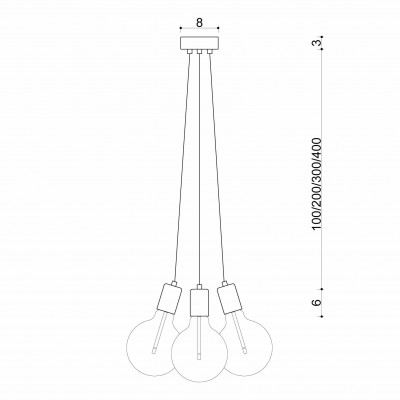
The length of the cables is equally important, as it determines how far the light sources can be spread from the ceiling canopy. In taller interiors, this allows you to better use the room height, while in lower spaces it helps adapt the lighting layout to specific zones.
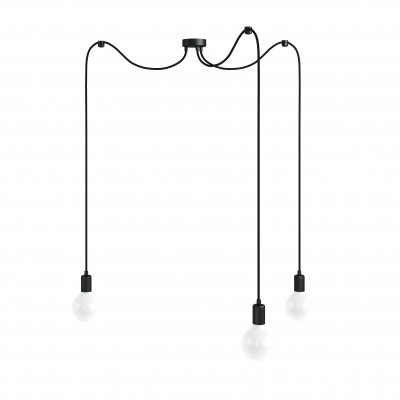
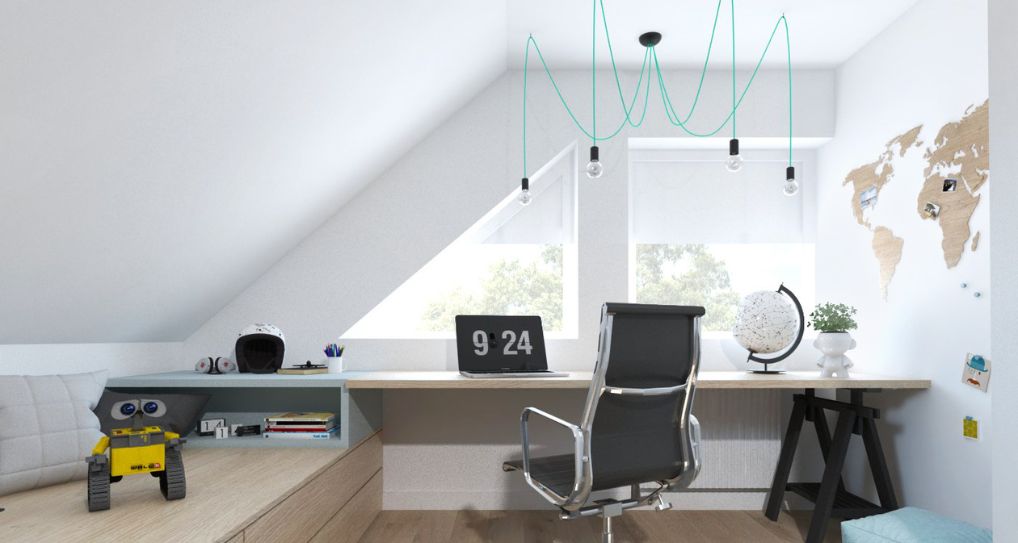
The overall look of the lamp is also influenced by decorative bulbs and the color of the cables and sockets. Black cables fit well into loft and modern interiors, while lighter colors work better in softer, minimalist spaces.
The final effect is also shaped by the way cables are arranged on the ceiling. Depending on the design, they can form a symmetrical layout around the canopy, run along a table or spread out in different directions.
Where and how to use spider lamps in interiors?
Multi light fixtures most often appear in living rooms, dining areas and bedrooms. In each of these spaces, they can be used in slightly different ways.
Living room
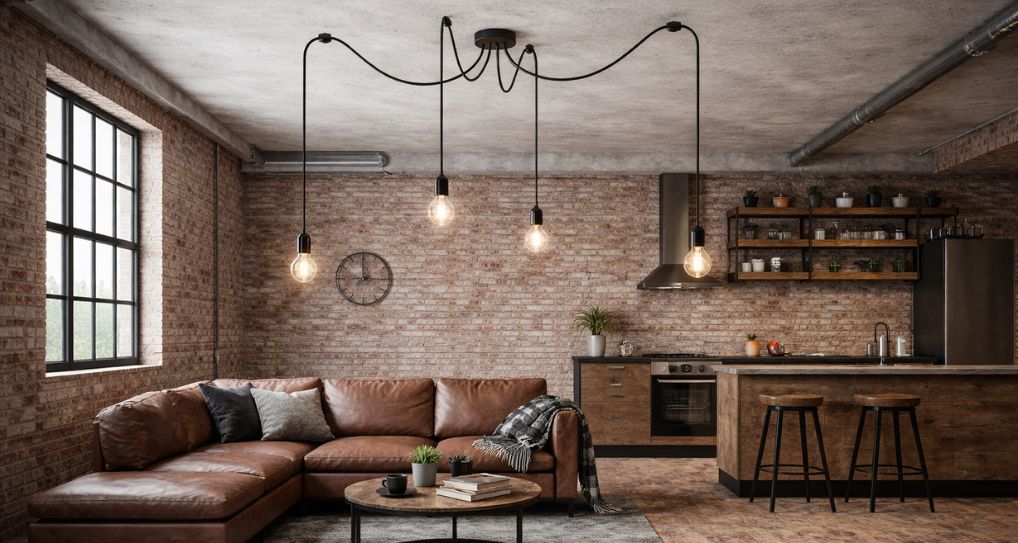
In the living room, spider lamps often serve as the main light source. Multiple light points help evenly illuminate the space while giving it a lighter, less formal feel than a traditional chandelier. An interesting effect can be achieved by hanging one or two bulbs slightly lower above the coffee table. This way, the light naturally focuses on the seating area and creates a cozy atmosphere in the evening.
Dining room
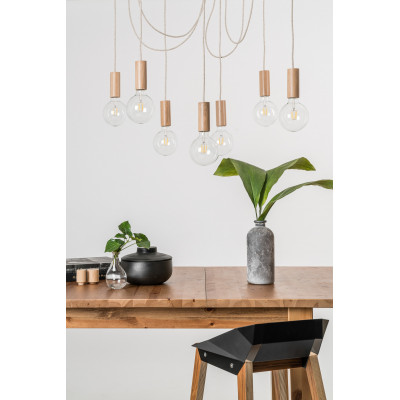
The dining area is one of the most common places for multi light fixtures. Several bulbs suspended above the table allow you to evenly illuminate the entire surface, even for larger tables. The bulbs can be arranged in a straight line or slightly offset. This makes the composition feel lighter than a single large pendant. Such a layout clearly defines the dining zone and makes the table a natural focal point of the space.
Bedroom
Spider lamps are also increasingly used in bedrooms. Instead of traditional table lamps, cables can be run along both sides of the bed and bulbs hung at the same height. This solution provides soft, focused light for evening reading while adding an interesting decorative element above the bed.
High ceilings and open spaces
Multi light fixtures also work well in taller interiors. In spacious living rooms or open-plan areas, cables can be spread across a larger ceiling area, allowing light to reach different parts of the space. In such arrangements, lighting not only brightens the interior but also helps visually organize it, for example by highlighting seating or dining zones.
Spider lamps in the Kolorowe Kable offer
The growing popularity of spider lamps means they are now available in many variations: from raw, technical forms to more decorative compositions. In our store, you will find both minimalist models inspired by industrial style and more decorative lighting solutions.
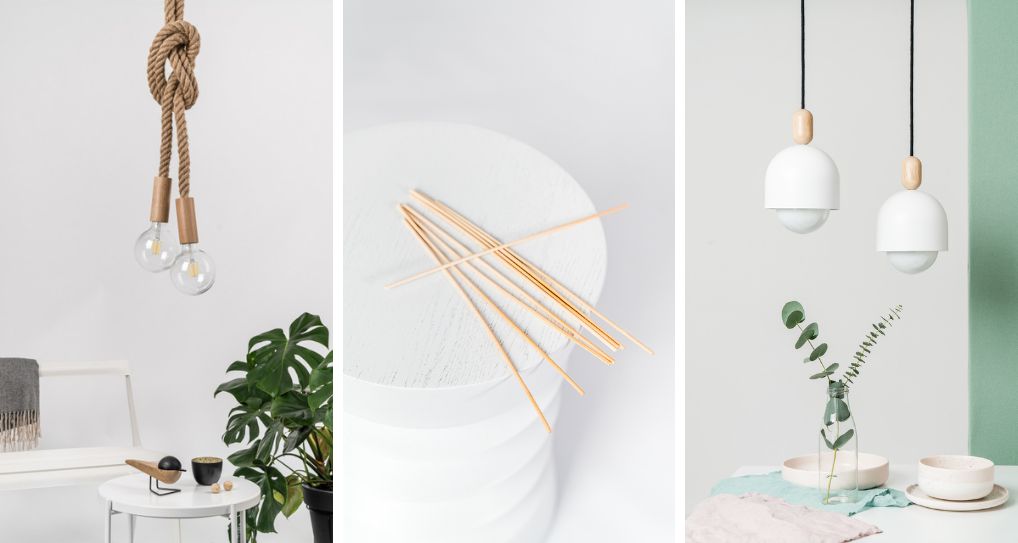
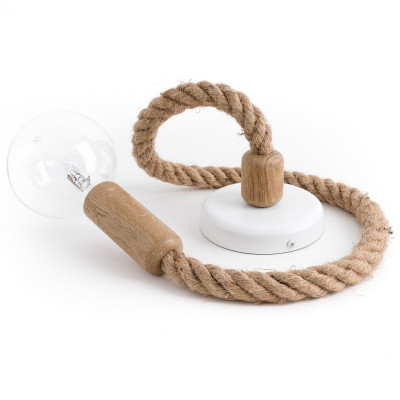
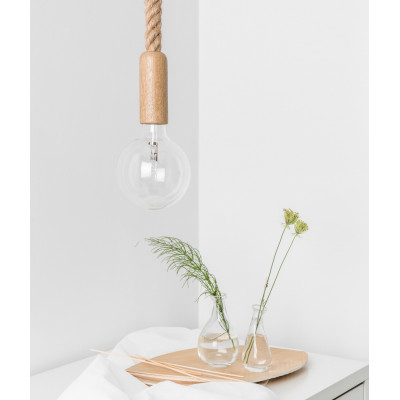
The most classic option is our loft lamps, inspired – as the name suggests – by loft aesthetics. Their construction is reduced to a fabric cable, socket and decorative bulb, which gives the whole design a simple, technical form. Universal collections such as Loft Multi Eco Line and Loft Multi Metal Line can be easily adapted to different interiors.
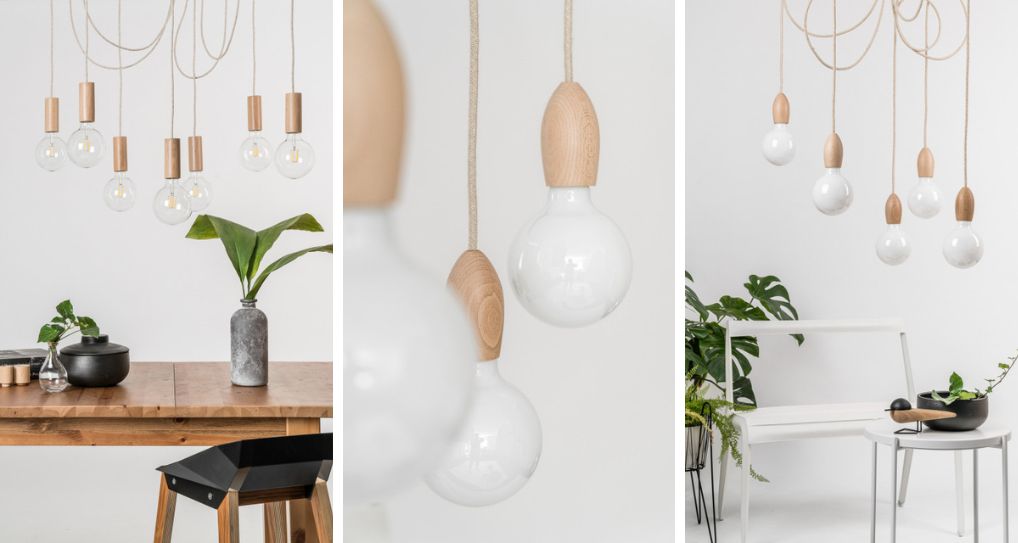
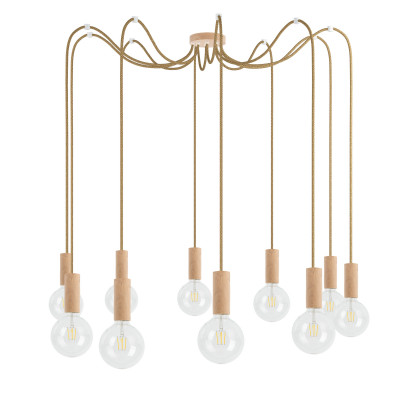
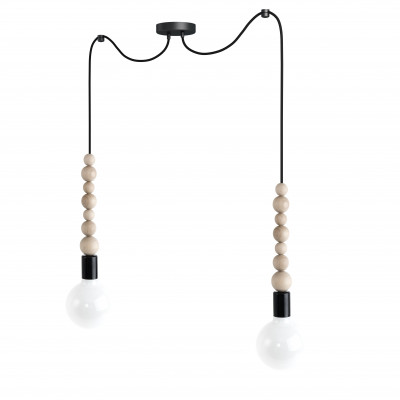
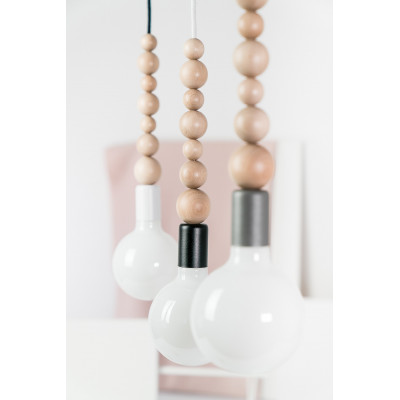
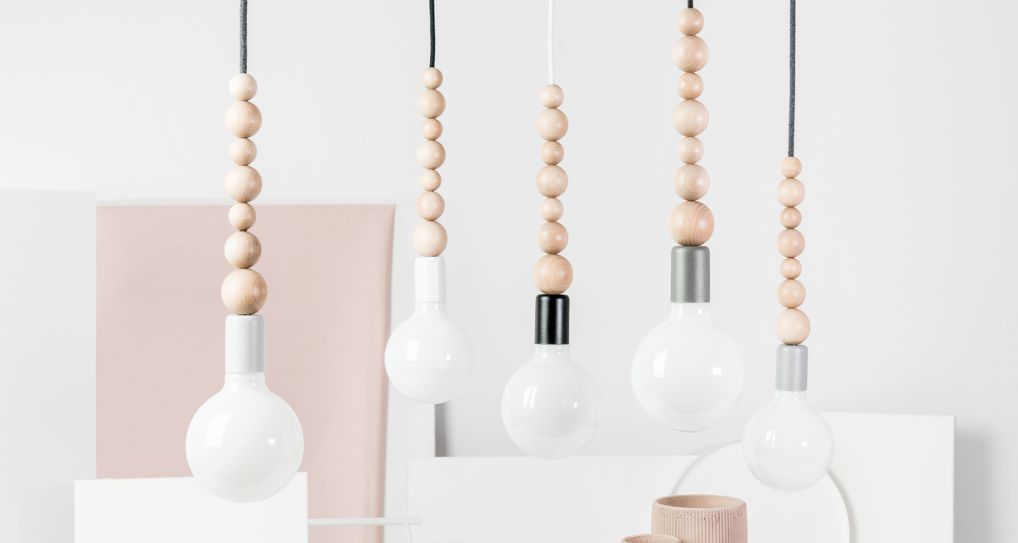
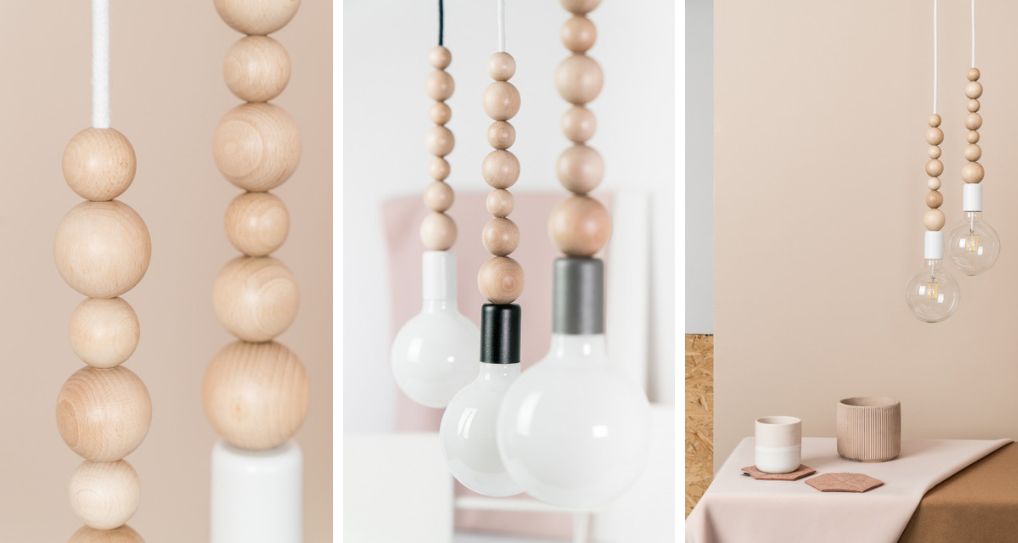
Another interesting direction includes models with decorative elements. In collections such as Loft Bala, Loft Ovoi or Loft Sfarer, cables are complemented with wooden beads that introduce a warmer, more natural feel. When grouped together, they really catch the eye!
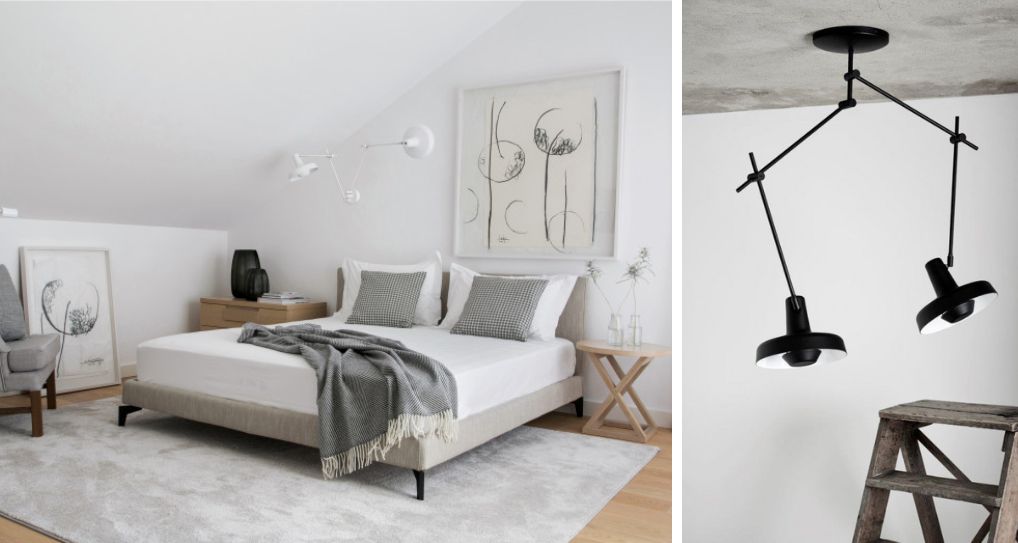
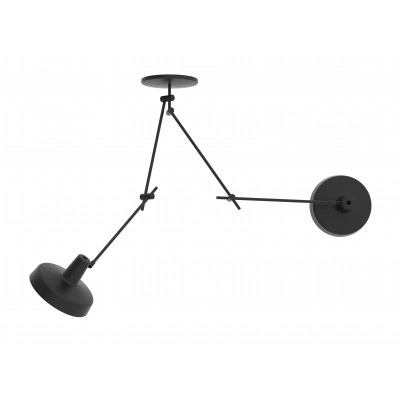
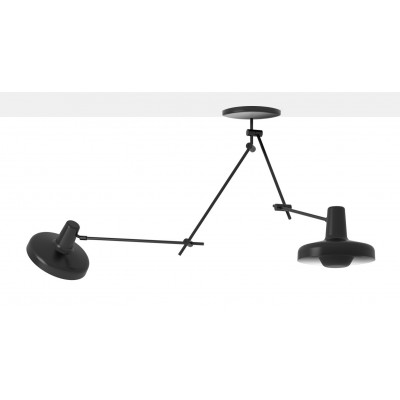
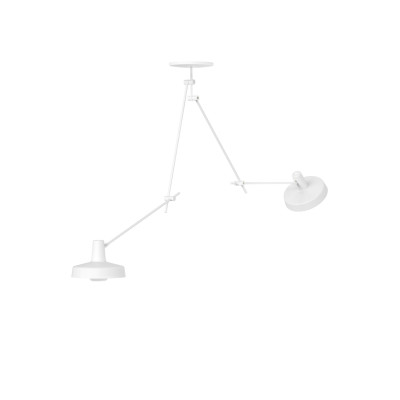
In some designs, the free cable layout is replaced by a clear structure with metal arms. A similar idea in a more structured form is developed in the Arigato collection by the Croatian brand Grupa Products.
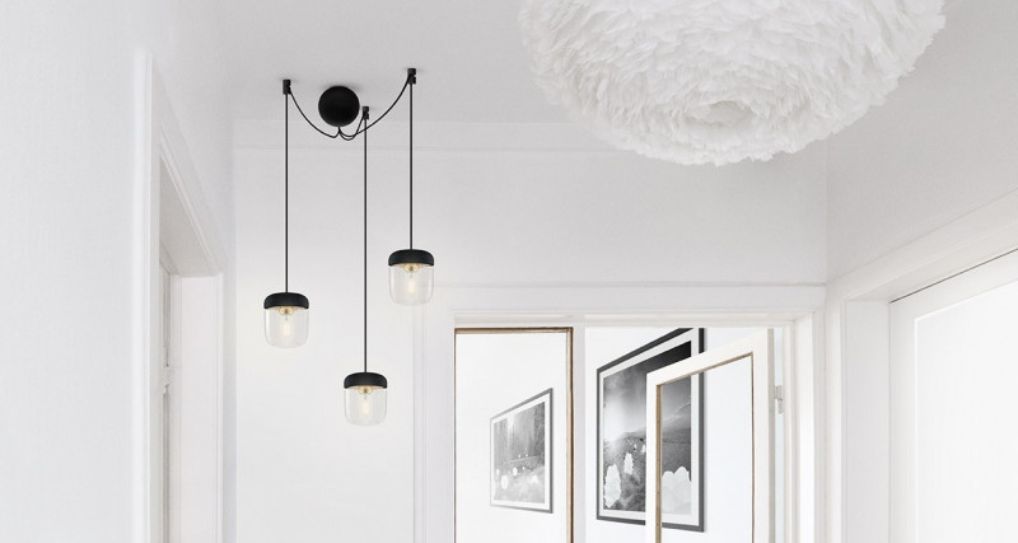
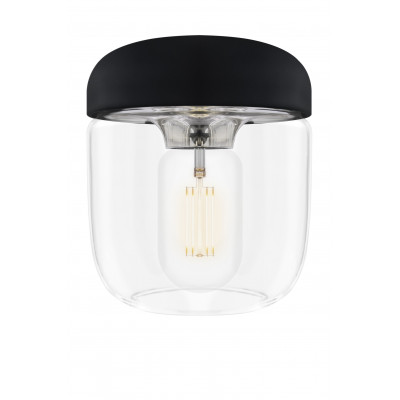
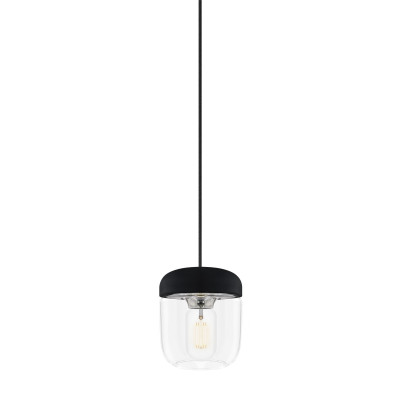
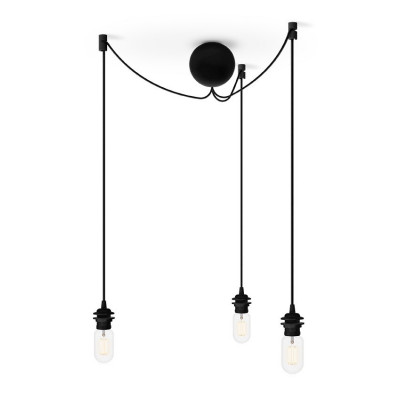
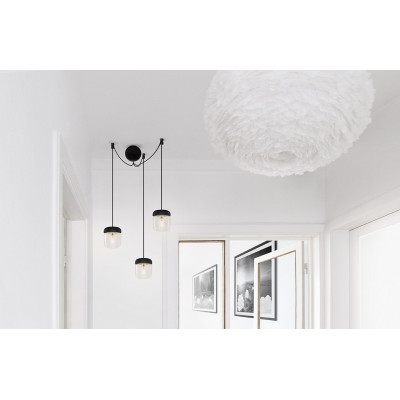
Another variation of spider lamps are suspension systems that allow you to create multi-point compositions from several cables. A good example are fixtures from the Danish brand UMAGE, such as Cannonball Cluster, which enable multiple light points to be connected from a single ceiling canopy. These can be paired with different lampshades, making it easy to create a more decorative multi light setup. This solution works particularly well in interiors where soft, diffused lighting is desired.
All these examples show how flexible multi light fixtures can be. The same concept can be used in many different ways!
Summary
Spider lamps offer a wide range of design possibilities. Depending on the chosen model, they can take the form of a minimalist installation with exposed bulbs or a more decorative composition with lampshades or wooden beads.
If you are looking for such a fixture for your interior, explore spider lamps available in the Kolorowe Kable store.
Related products
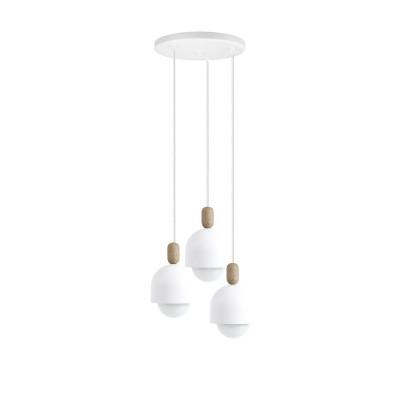
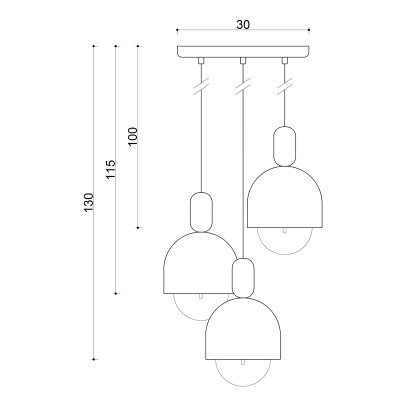
Ceiling lamp Loft Ovoi 3P white KOLOROWE KABLE
- On sale!
- -20%