
Long ceiling lamp – How to style It and where It works best
-
Author
Joanna Bitowt -
Date added
- 908 views
A long ceiling light can bring order to an entire interior — or completely ruin it if chosen at random. Proportions, hanging height and the quality of light it provides after dark all matter. If you’re wondering where and how to use it to genuinely improve both comfort and aesthetics, this article will help you make the right decision. Enjoy reading!
What is a long ceiling light and what is its function?
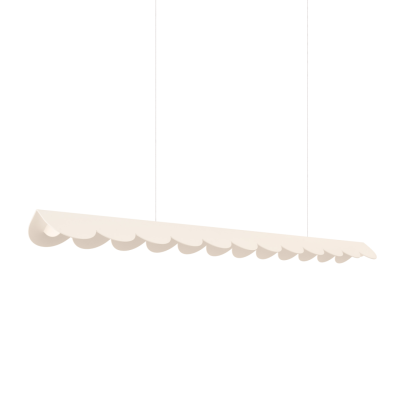
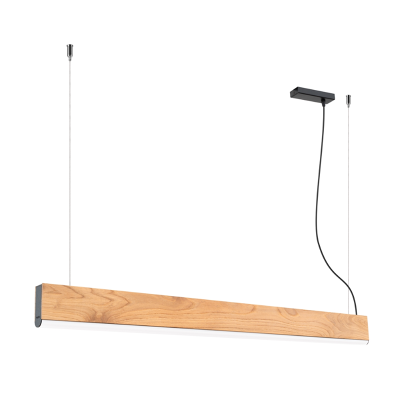
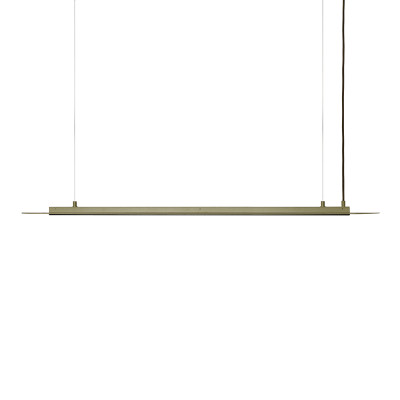
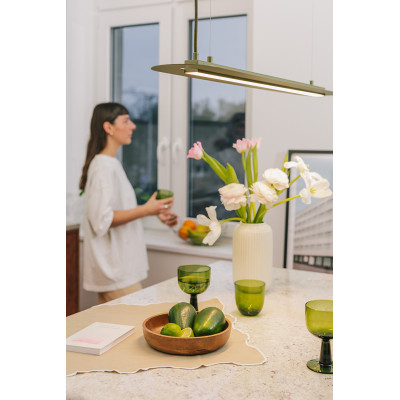
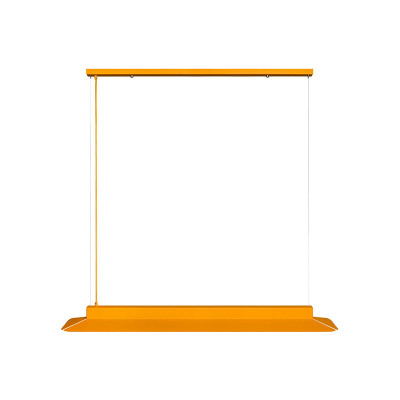
A long ceiling light is a fixture with a clearly elongated, most often horizontal form. It can take the shape of a linear LED profile, an elongated light beam, or a modern pendant light above a dining table or kitchen island. Its purpose is not to illuminate a single point, but to distribute light evenly and visually organise the space.
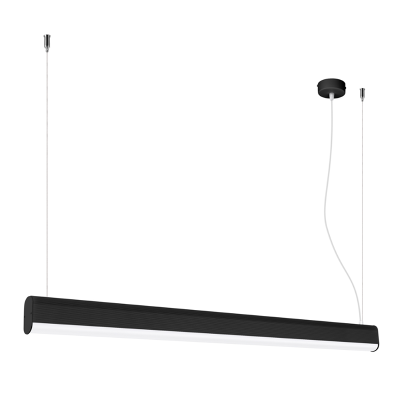
In practice, these are increasingly models with a very flat, minimalist form, without a traditional shade. Instead, they use an integrated LED panel that provides even, soft light and helps maintain the visual lightness of the fixture.
Where does a long ceiling light work best?
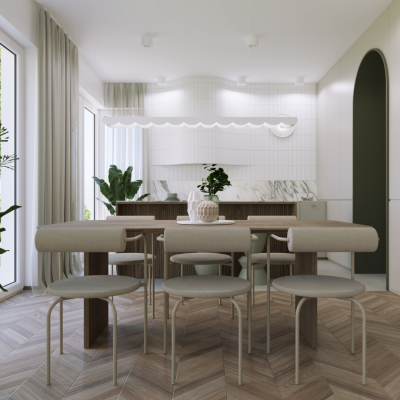
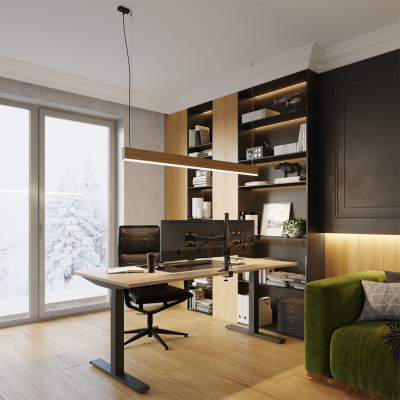
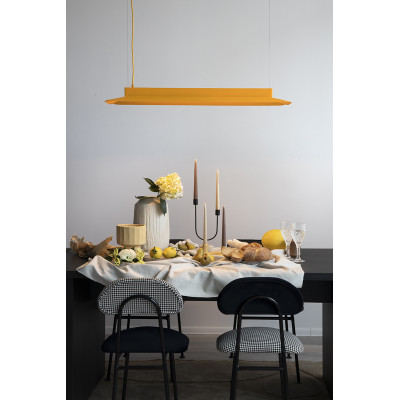
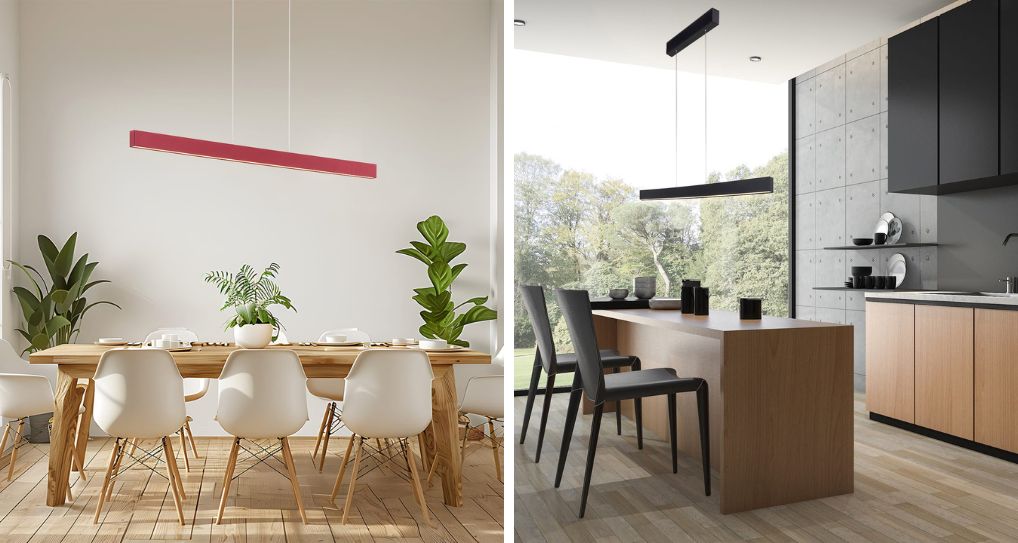
Most often, it is installed above a dining table, where it naturally defines the centre of the space and focuses light exactly where it is needed most. Another obvious location is above a kitchen island. In this case, a long ceiling light combines functionality with aesthetics and helps visually organise the kitchen, especially in open-plan interiors connected to the living area.
Such lights are also increasingly used in living rooms and open spaces, serving as a modern alternative to classic chandeliers. Instead of dividing interiors with walls or furniture, light subtly marks boundaries between zones and brings visual order to the whole.
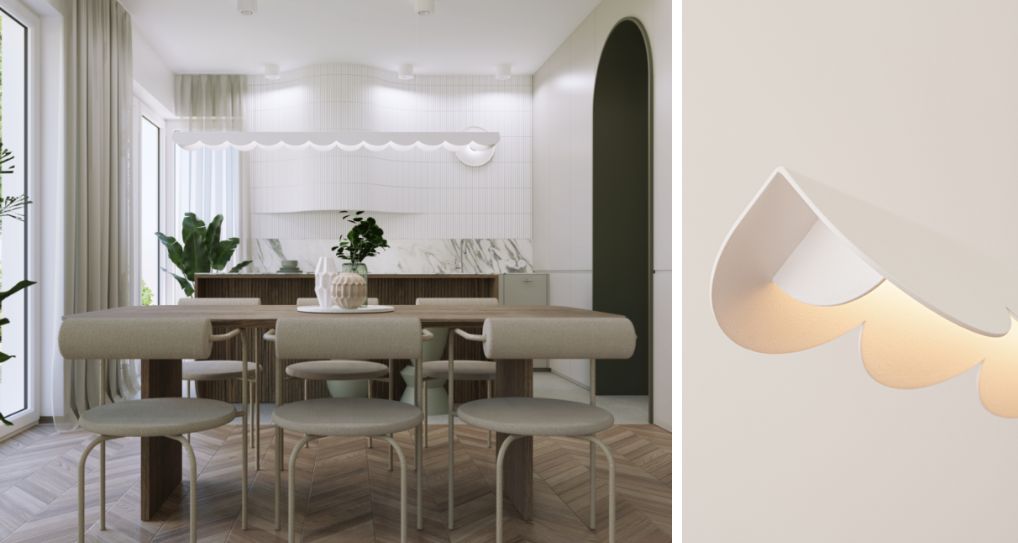
Proportions and height — what really matters?
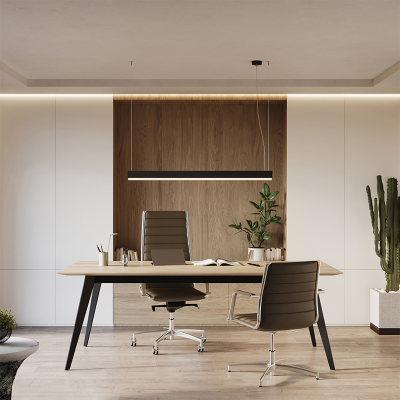
The most common mistake is choosing a light that doesn’t match the scale of the interior. With flat LED fixtures, length and width are crucial — a beam that is too bulky can visually weigh down the space, while one that is too narrow may disappear against a larger table or island. A fixture that is too short looks accidental, while one that is too long overwhelms the interior. The best result comes from a light that is clearly shorter than the furniture beneath it, maintaining visual balance on both sides.
Hanging height is just as important. Above a table or island, the light should be suspended low enough to effectively illuminate the surface, but not so low that it interferes with everyday use. In circulation areas, maintaining freedom of movement and a sense of lightness is key.
How does light affect the perception of an interior?
In long, flat lights without shades, light plays a particularly important role because it isn’t filtered through additional elements. Integrated LED panels create a uniform line of light, without point reflections or harsh contrasts.
The form of the fixture is one thing, but it’s the light that defines the atmosphere. Long ceiling lights typically provide diffused light that fills the space evenly and doesn’t strain the eyes. Warm light works well in dining rooms and living areas, while neutral light suits kitchens and work zones. The effect after dark largely depends on which decorative bulbs you choose for a given fixture.
The way the light source is shielded also plays a major role. Frosted shades and enclosed fixtures help avoid harsh contrasts and make the interior look calmer and more cohesive after dark.
This is why so many modern lighting models are available in several colour temperature options — warm for relaxation zones and neutral where the light also serves a functional purpose.
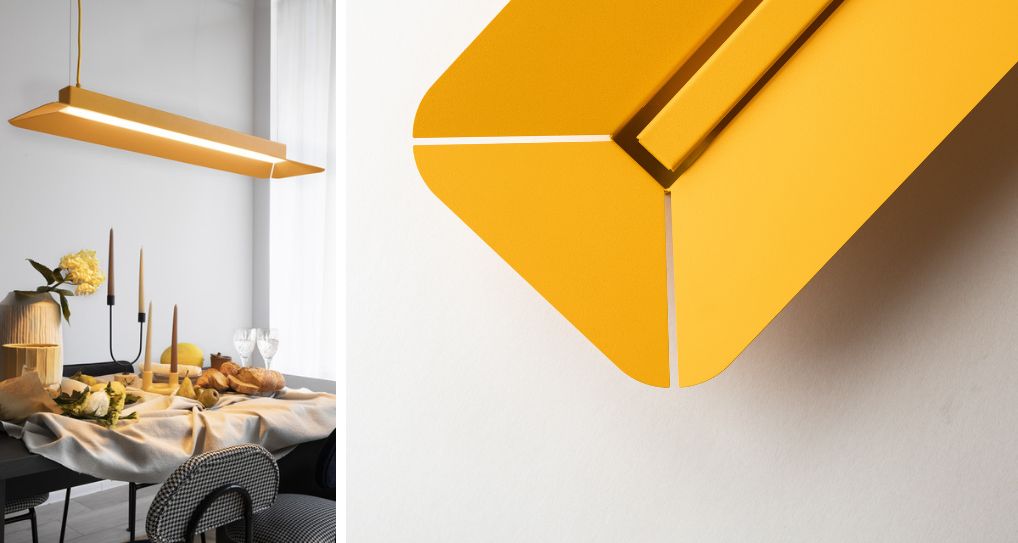
Why is it worth combining it with other lighting?
Although a long ceiling light often acts as the main source of light, it should rarely be the only one. Wall lights, floor lamps or spotlights allow you to build different lighting scenarios and adapt the interior to the time of day and current needs.
Layered lighting is what prevents a space from feeling flat and one-dimensional, allowing light to truly enhance everyday comfort.
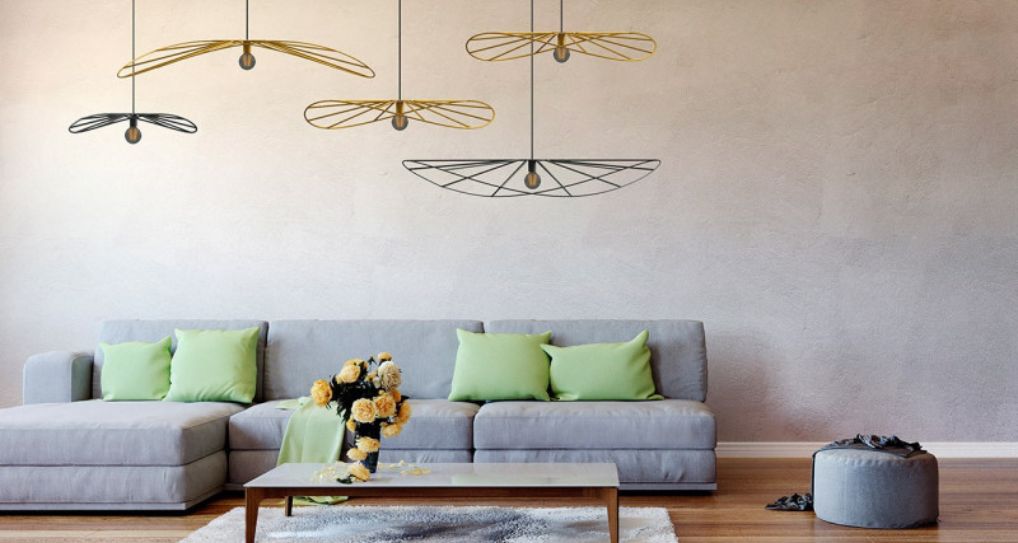
In our range, you’ll find both very restrained, linear LED lights and more decorative interpretations of elongated forms — from subtle light beams and asymmetric constructions to models with soft, flowing lines.
Our selection of long ceiling lights
Among long, minimalist ceiling lights without shades, there are several proven collections worth highlighting, as they clearly demonstrate the potential of this form.
In the UMMO lighting range, these include the Senkei and Yottsu collections — linear lights with integrated LED panels designed for modern interiors. Their simple, flat form works perfectly above dining tables and kitchen islands, where light should be even and unobtrusive.
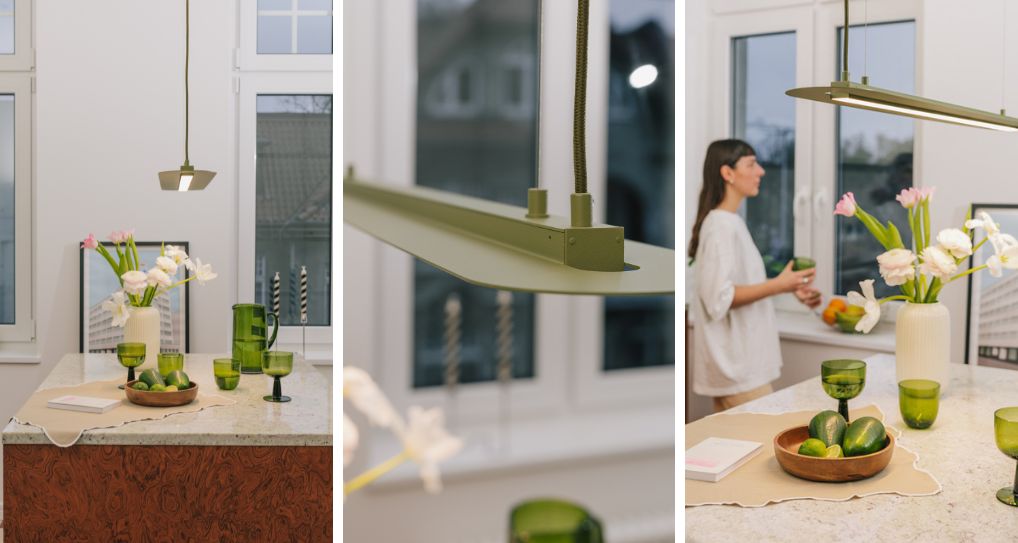
A similar approach can be seen in collections by THORO. Models such as Biscuit 131, Farge or Lykke are long light beams available in various lengths and colour temperature options (3000K and 4000K), making it easier to adapt the light to the function of the interior.
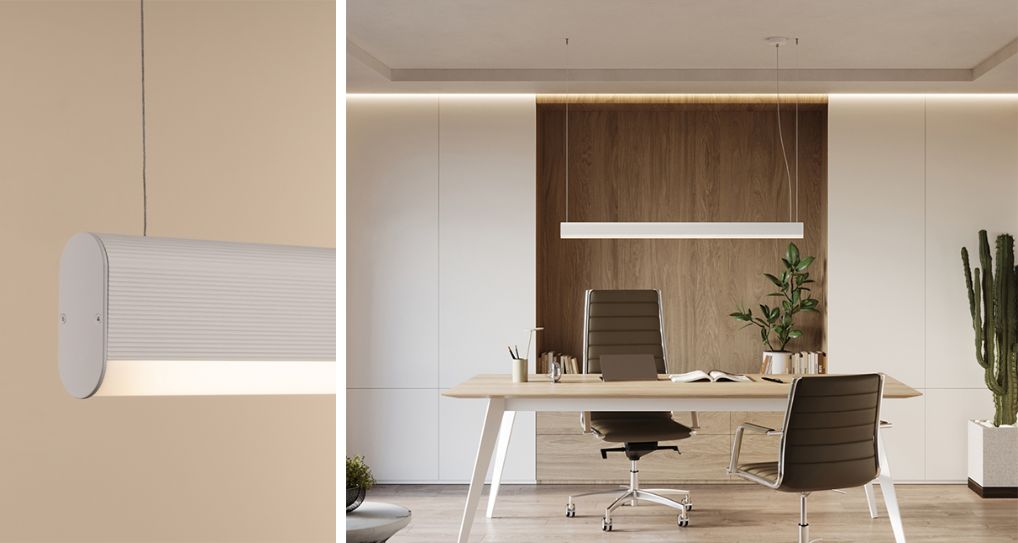
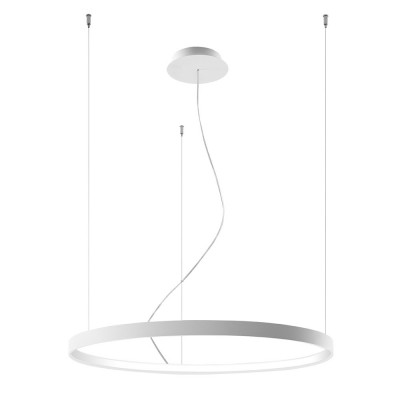
Meanwhile, in the Argon range, models such as Balans and Rio stand out — minimalist, slim LED pendant lights that fit perfectly into modern and slightly industrial interiors. In these designs, light is an integral part of the structure, while the form remains deliberately restrained.
Summary
A long ceiling light is a solution that requires a moment of consideration, but when well planned, it can completely change how an interior is perceived. It organises space, improves proportions and provides light exactly where it’s needed. If you care about conscious interior design and functional indoor lighting, it’s worth treating it as a design element rather than just a decorative accessory.
If you’re looking for a starting point for further decisions, explore the options available in our store!
Related products