
How to match a lamp to your fixtures? Style, proportions and functionality
-
Author
Joanna Bitowt -
Date added
- 985 views
There are interiors where everything works… until you look at the lamp. Too big. Too shiny. Pretty on its own, yet next to the faucet it looks like it belongs to a different story. And yet it’s the combination of fixtures and lighting that creates the very first impression: harmony or chaos. In this article, we explain how to choose a lamp that complements your fixtures not only visually but also in terms of scale and functionality.
What do we mean by “fixtures”?
Let’s start with the basics. By fixtures, we mean primarily bathroom fittings: basin, bathtub and shower faucets, as well as valves, handles, spouts and shower heads. All those elements that—beyond their function—impact the overall look of the interior.
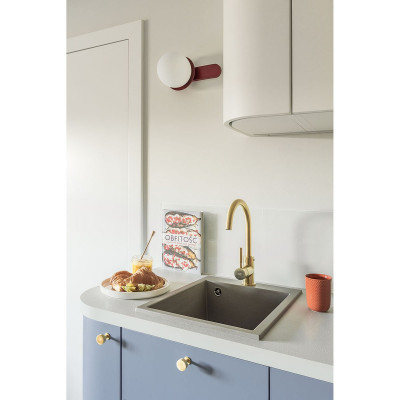
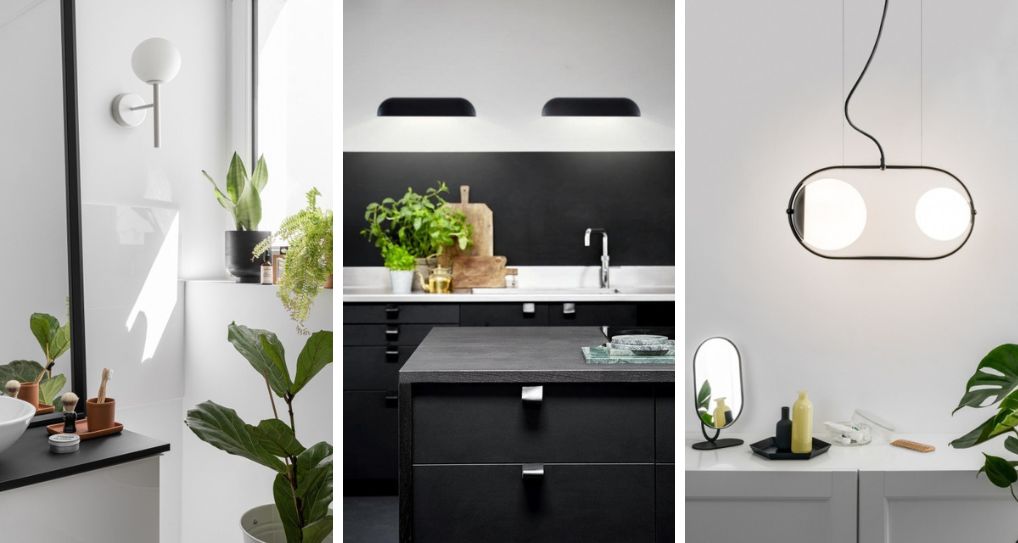
And what about the kitchen? Fixtures here can be equally expressive: black pull-out faucets, models in gold or copper. If your kitchen and bathroom share a consistent stylistic direction, it’s worth maintaining that coherence in lighting too.
Style and finish: How to coordinate your lighting with your fixtures
It’s not about making your lamp and fixtures identical. What matters is that they speak the same language—through form, finish or detail. Sometimes one shared element is enough: a metal tone, a material texture or a type of glass.
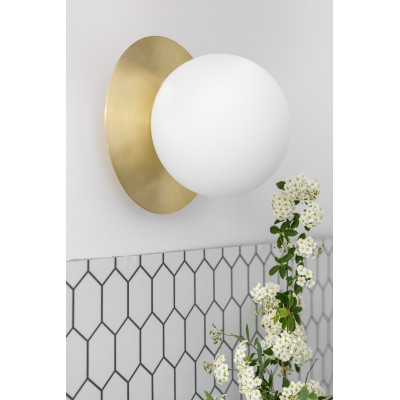
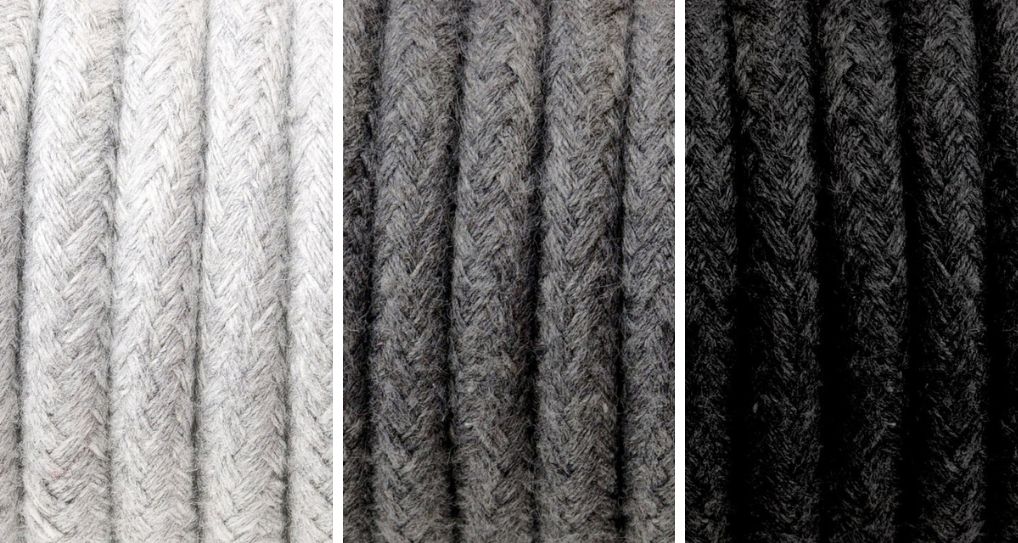
Brushed steel pairs beautifully with opal glass, while gold works well with warm-toned accents—like amber-tinted LED bulbs. Designers are also increasingly drawn to less obvious finishes: copper, antique gold, bronze. When thoughtfully planned, they create a bold yet harmonious dialogue with fixtures. And black? Timeless and adaptable as ever. It works especially well with black fixtures, particularly when complemented with texture—for example, a cotton-braided cable.
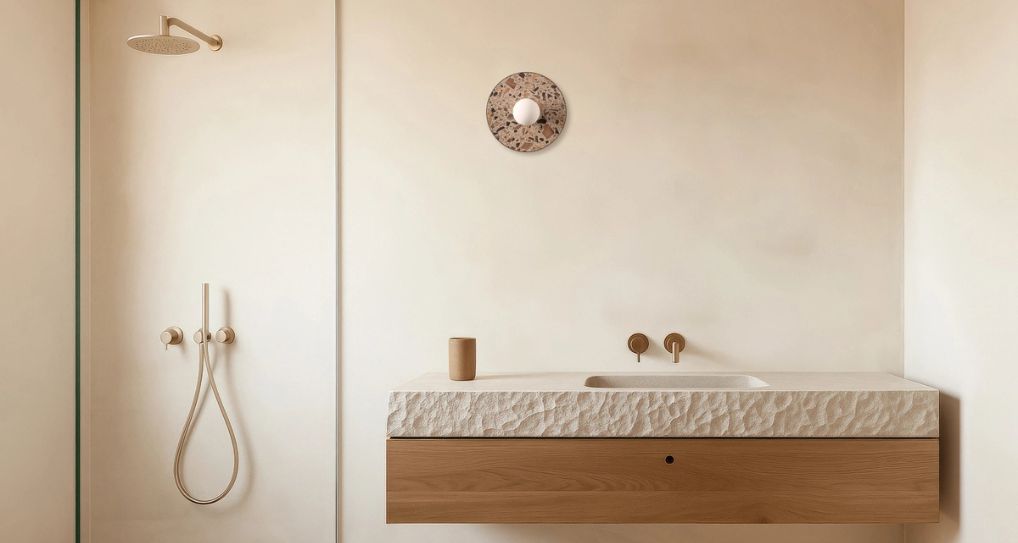
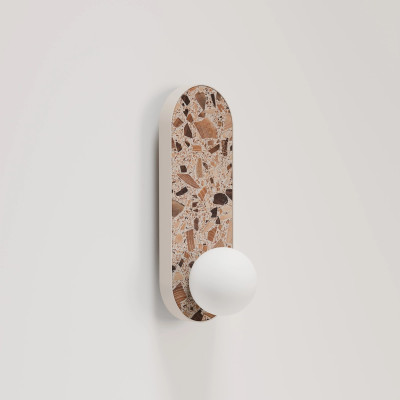
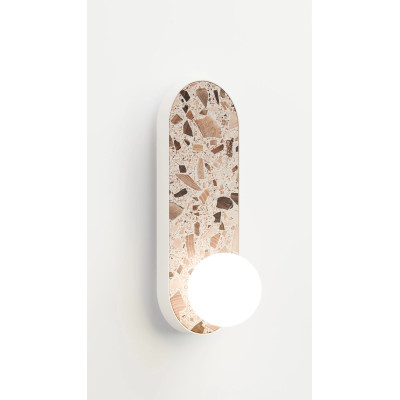
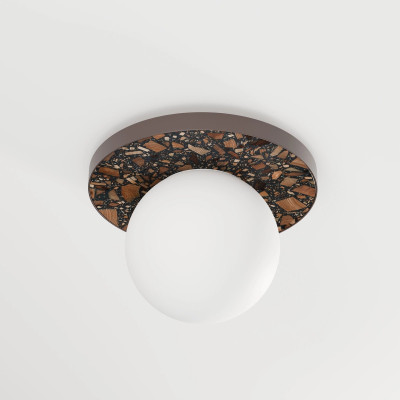
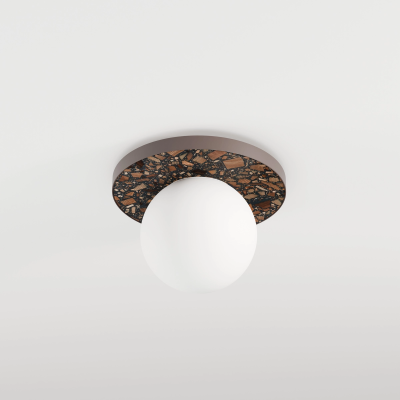
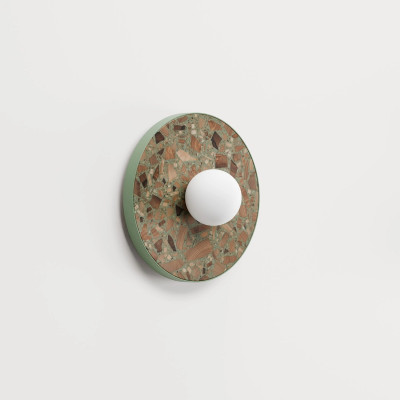
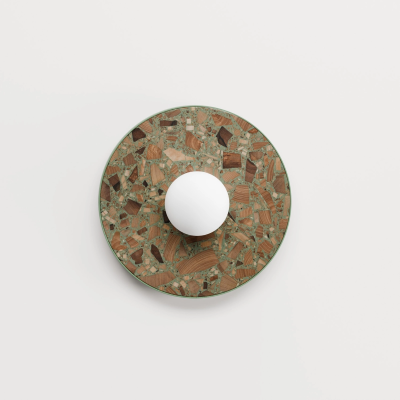
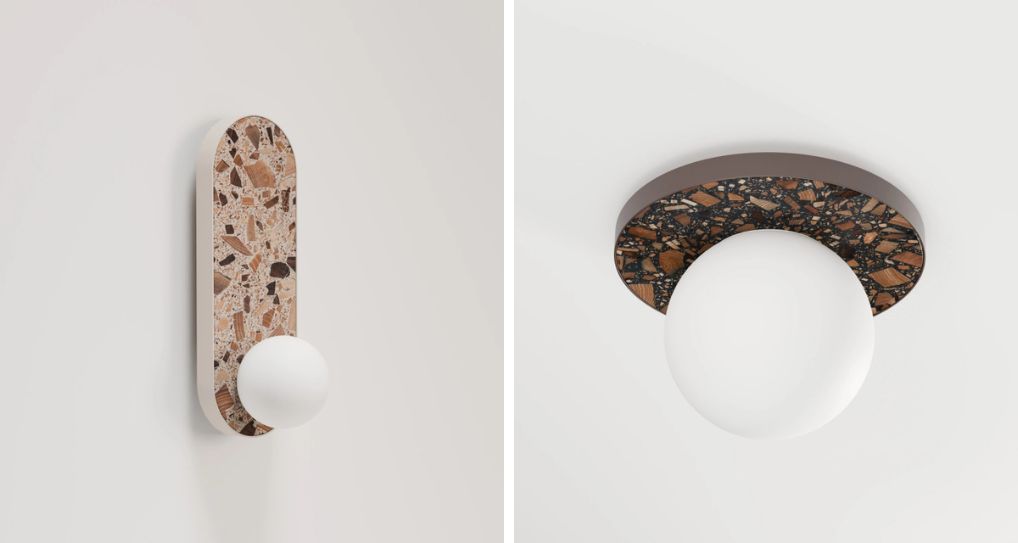
Material and finish harmony is not just about aesthetics. It shapes how we perceive the entire space. Think of the lamp as part of the same composition as the fixtures, not a separate element. This approach works across styles. A great example is the new LEGRA collection by the Polish brand KASPA. These consciously designed terrazzo-and-opal-glass luminaires fit seamlessly into both minimalist and more decorative interiors, forming a cohesive whole with the fixtures.
Proportions: A game of balance
When your fixtures have a delicate silhouette, an oversized lamp placed above them can feel overwhelming. Conversely, a tiny bulb above a large two-handle faucet may get visually lost. Balance is key.
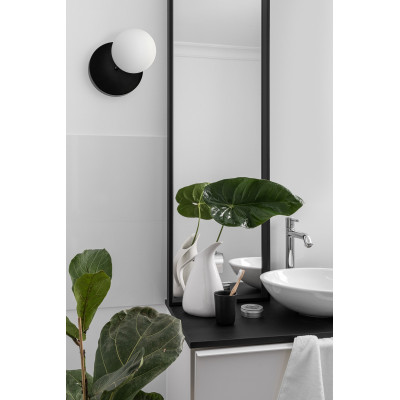
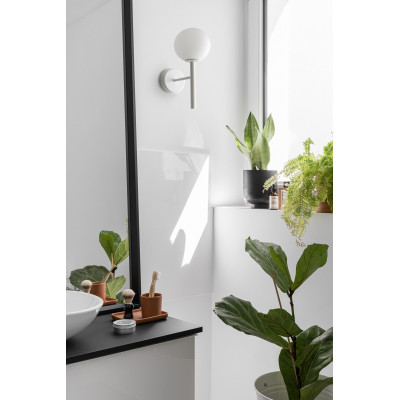
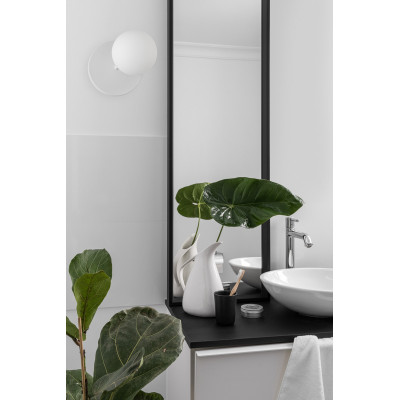
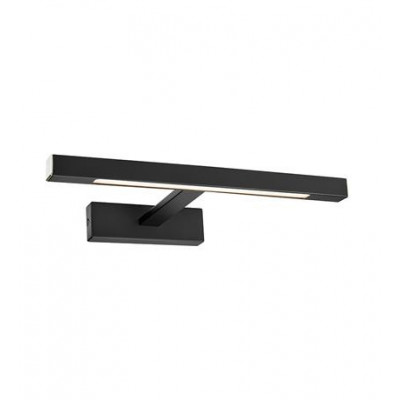
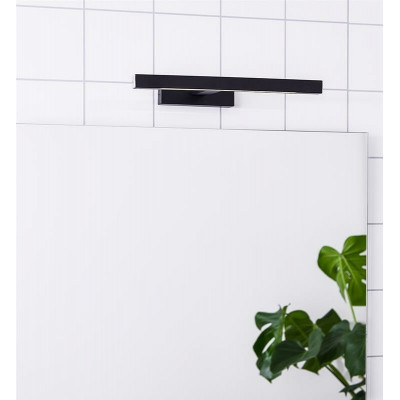
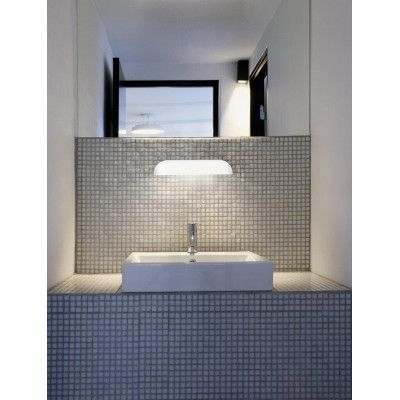
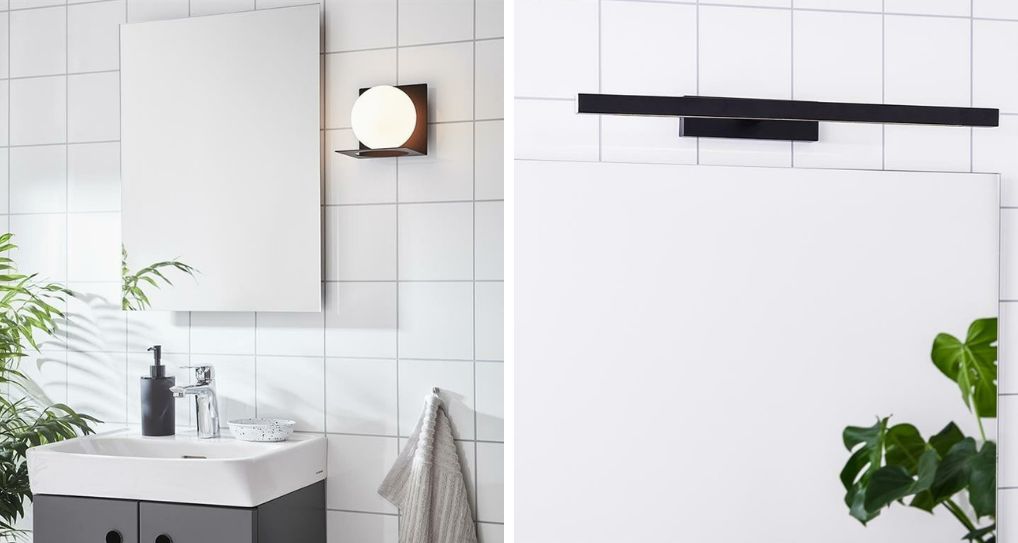
If you’re installing sconces beside a mirror, choose models proportional to the width of the basin and faucet. This keeps everything looking natural—and ensures the light falls where it’s needed.
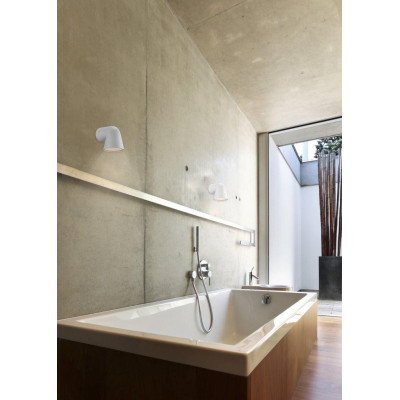
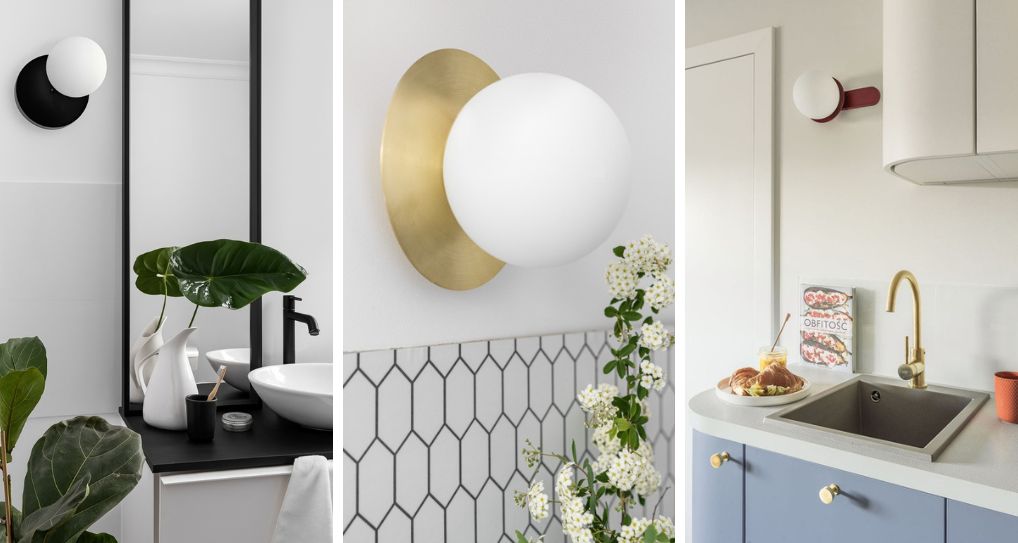
In small bathrooms, ceiling flush lights work wonderfully—they don’t take up visual space but illuminate the room evenly. Wall lamps are also a smart choice and can be placed beside or above the mirror, keeping an appropriate distance from the fixtures.
In larger interiors, you can be more daring: a chandelier or a statement pendant light can become the main focal point of the bathing area.
Planning a kitchen? Think in zones. A single ceiling lamp won’t properly light the sink or countertop, especially with expressive fixtures. Directional lighting—like spotlights or under-cabinet fixtures—will do the job far better.
How light shapes mood and functionality
What you see is one thing. What you feel is the work of light. The right color temperature and diffusion of LED bulb can turn a bathroom into a relaxing haven—or into a space where nothing feels right.
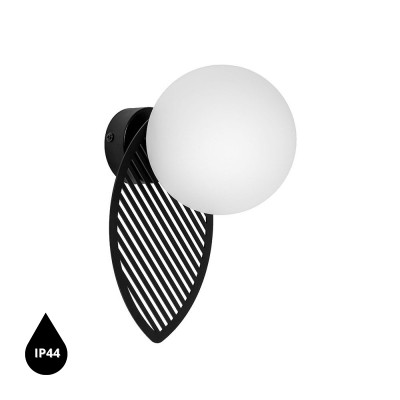
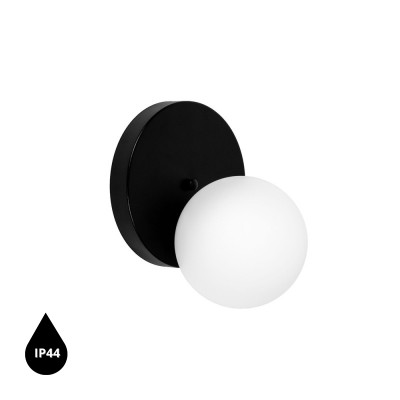
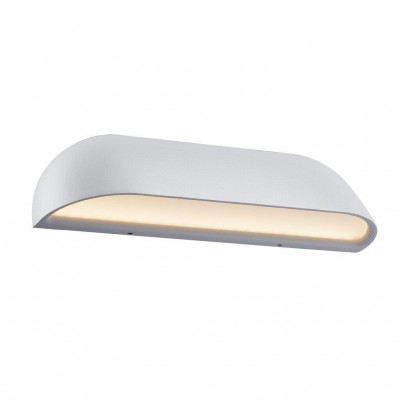
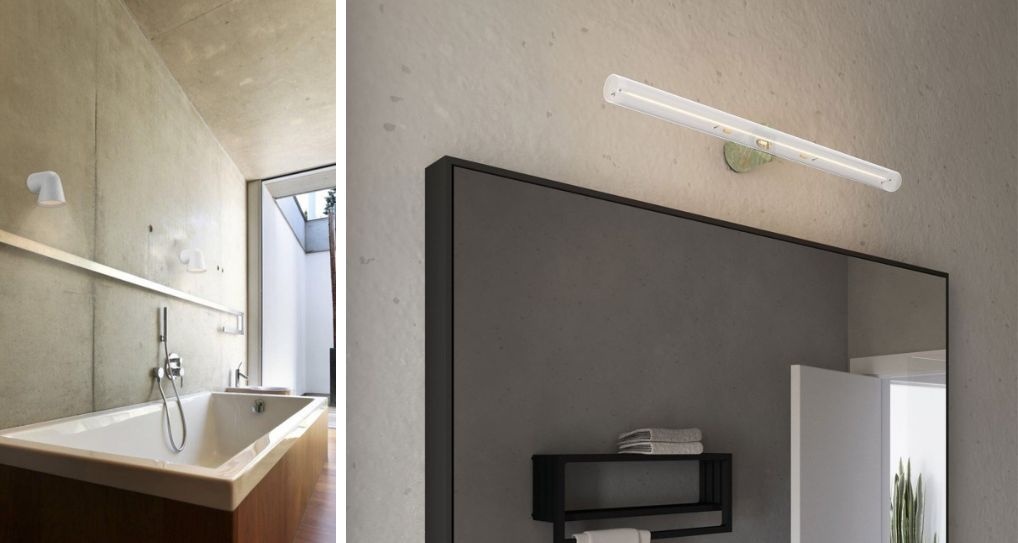
Want soft, even lighting? Choose opal-glass fixtures, such as those from UMMO Lighting, Zangra, or Markslojd. They offer gentle, non-glare illumination with no harsh shadows—perfect for mirrors, above the bathtub or around the washbasin.
If your fixtures have a retro, loft or industrial character, consider a simple lamp holder with a decorative bulb—one that looks striking even without a shade. Warm light (2700 K) creates a cozy ambience, while neutral tones (3000–4000 K) are ideal for everyday grooming tasks.

Safety and practicality
If the lamp is located in a wet zone, style must go hand in hand with safety. Keep these principles in mind:
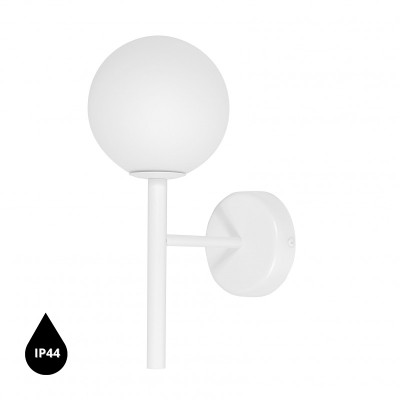
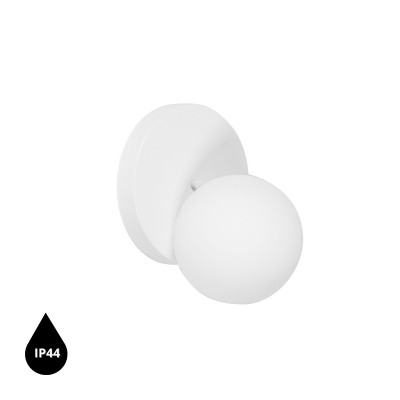
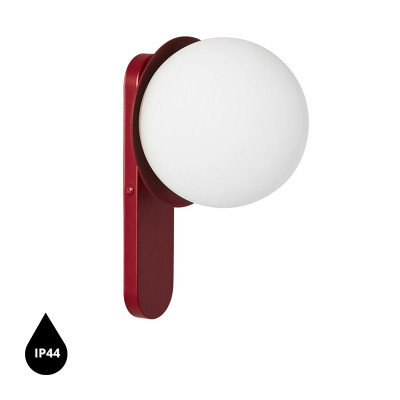
- near the shower, bathtub or water sources, choose lights rated IP44 or IP65,
- in zones 0 and 1, use only low-voltage (12 V) fixtures,
- pay attention to materials—choose those easy to clean and moisture-resistant.
Looking for ready-to-use models with the right IP rating? Visit our bathroom lighting category for options that are both safe and stylish.
Most common mistakes when pairing lamps with fixtures
It’s not always about major design errors. Sometimes one small mismatch can throw off the entire composition. Watch out for:
- glossy lamps paired with matte fixtures,
- weak lighting next to dark faucets (creating a “visual void”),
- oversized lamps overwhelming delicate fixtures,
- color chaos: gold, chrome, black and copper all at once.
If you’re unsure about your choices, do a simple test: gather finish samples and compare tones and textures. It’s an easy way to avoid clashing combinations.
Summary
A lamp and fixtures aren’t accidental neighbors. In a well-designed space, they work together—visually, functionally and safely. When choosing lighting to pair with your faucet or shower set, consider not just the style, but proportions, color, light temperature and placement. This way, even the simplest fixture can take on a new life thanks to its surroundings.
If you’re looking for inspiration or a specific solution for your interior, visit our store. At KoloroweKable.pl, you’ll find indoor lighting that suits various styles, fixtures and needs—from ready-made sets to products you can configure yourself.