
How to Improve Room Proportions with Lighting?
-
Author
Joanna Bitowt -
Date added
- 561 views
A low ceiling, a narrow hallway or a small living room do not always require renovation to feel more spacious. Well-chosen lamps and the way light is distributed can change how we perceive the proportions of an interior by brightening its boundaries, guiding the eye in the right direction or creating more intimate zones.
In this article, we explain what lighting to choose to make a room appear larger, add a sense of height or make better use of a large space.
How does light affect the perception of interior proportions?
When we enter a room, our eyes first register its boundaries: the walls, ceiling, floor and corners. Which areas are illuminated and which remain in shadow affects how we perceive the entire space.
That is why a brighter light bulb in a central lamp will not always make a small room feel larger. If the centre of the room is bright while the walls and corners remain darker, the boundaries of the space are still clearly defined. You can achieve more by distributing light appropriately across different surfaces and heights.
So instead of asking only how much light a room needs, it is also worth considering where that light should be placed.
How can you make a low ceiling appear higher?
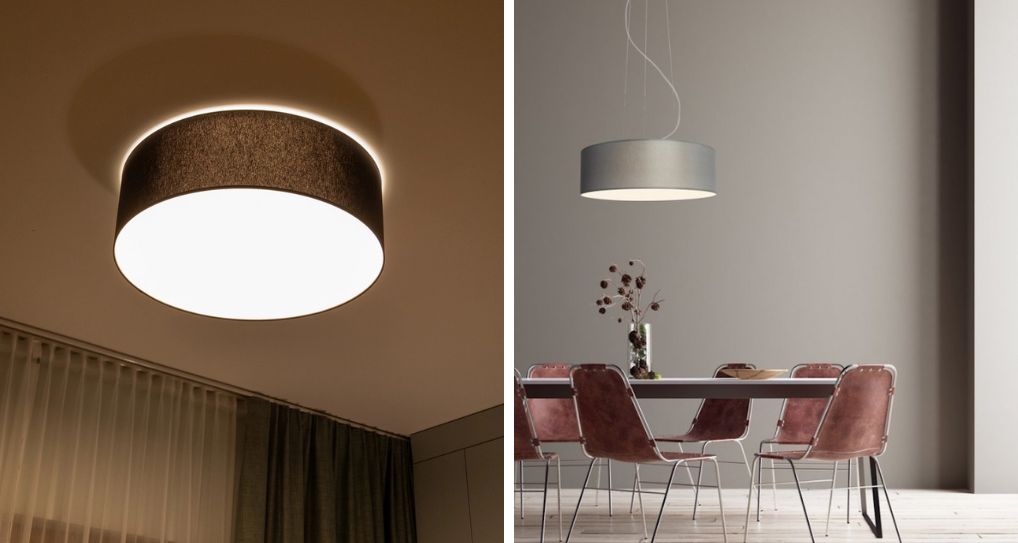
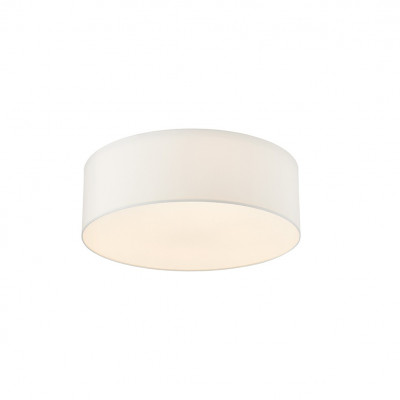
With a low ceiling, every additional element overhead draws even more attention to the room’s limited height. That is why, in areas where you move around freely, it is better to limit long pendants and leave as much open space as possible between the lamp and the floor. Flat ceiling lights such as VERO S or SPACE S by KASPA. If you prefer rounded forms, a similar function can be served by KUUL C by UMMO Lighting with a milky glass shade.
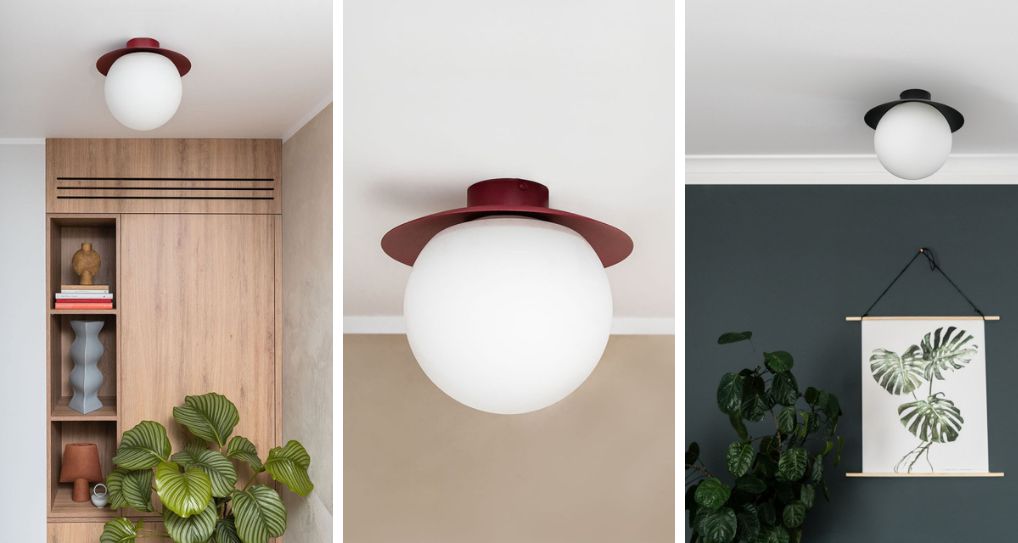
A ceiling light alone will not automatically make a room feel taller. A much stronger effect comes from brightening the upper parts of the walls and the ceiling, which reduces contrast. Instead of directing all the light towards the floor, use a wall light or an adjustable fixture and direct part of the beam upwards. For example, you can use SUPURU W by UMMO Lighting. This works particularly well with a light-coloured ceiling, which can reflect the light and softly brighten the highest part of the room.
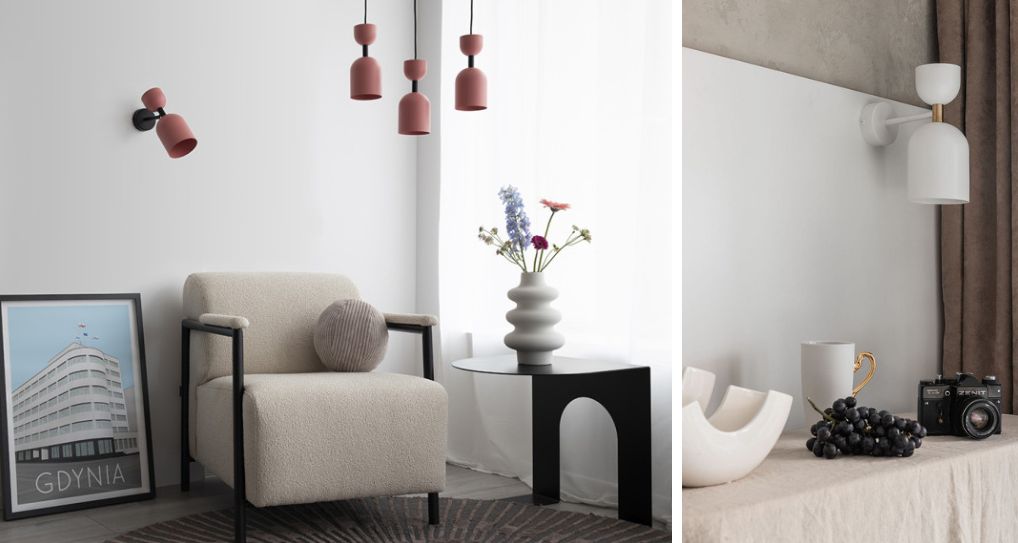
It is also worth using a vertical direction of light. Wall lights placed on the walls or adjustable spotlights aimed high guide the eye from furniture level towards the ceiling. This strategy works much better than relying on a single strong central light source that leaves the upper parts of the walls in shadow.
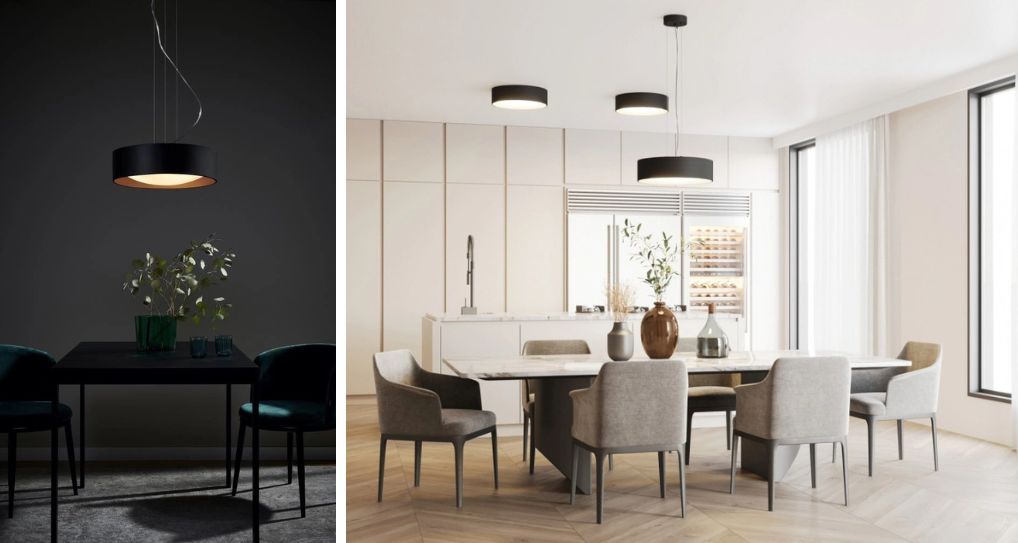
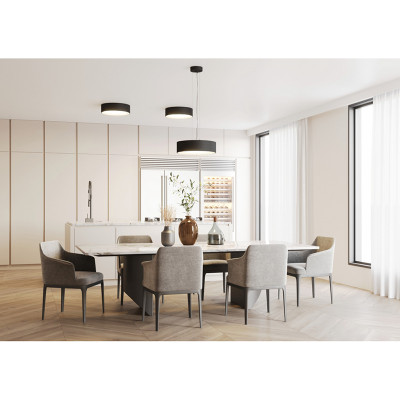
What about pendant lights? You do not have to give them up in a room with a low ceiling. They work best where their lower edge does not interfere with movement and is clearly related to a piece of furniture, for example above a dining table, kitchen island or bedside table. This way, the pendant defines a specific zone without visually lowering the entire room.
How can you visually "lower" a very tall room?
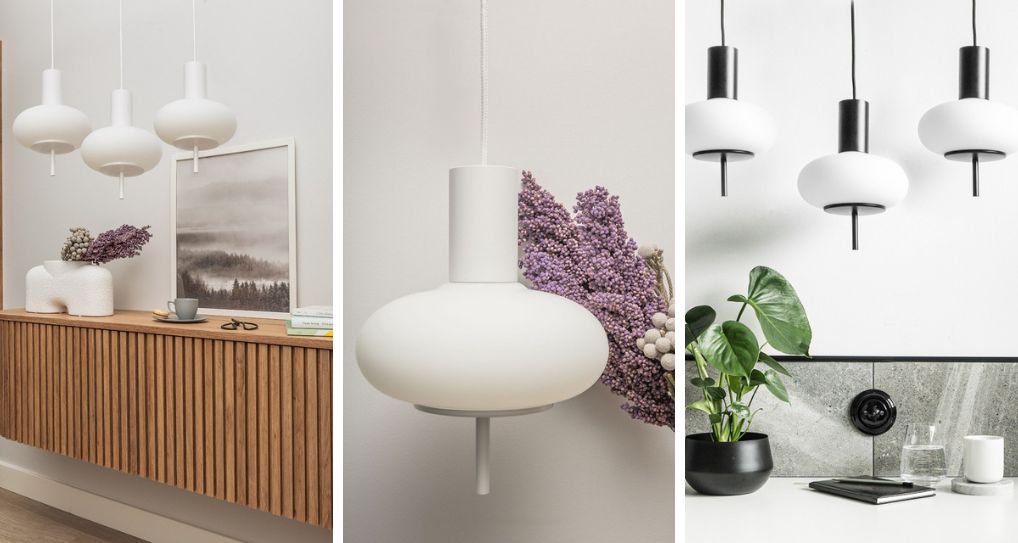
In a tall interior, it is worth bringing the light closer to furniture level instead of leaving all light sources close to the ceiling. Longer pendants, larger fixtures and lamps with several light points help fill the empty vertical space and give the interior a more comfortable sense of scale.
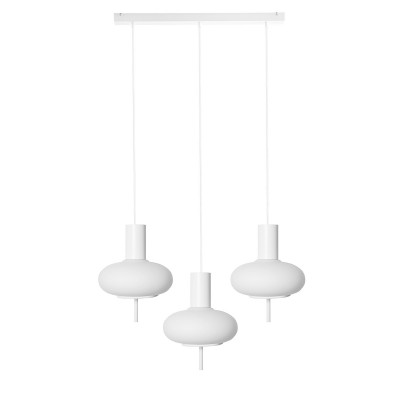
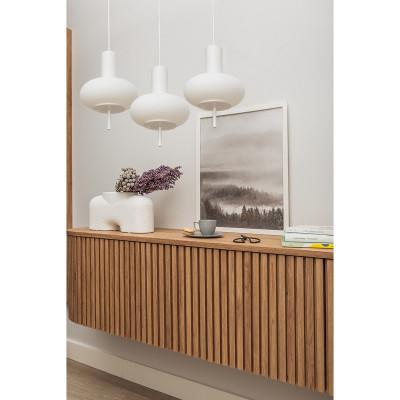
This is where cascade pendant lights work particularly well, such as Loft Ovoi 3P by Kolorowe Kable or TORNI A 3L by UMMO Lighting. Several shades suspended at different heights create a smoother visual connection between the high ceiling and the lower part of the room.
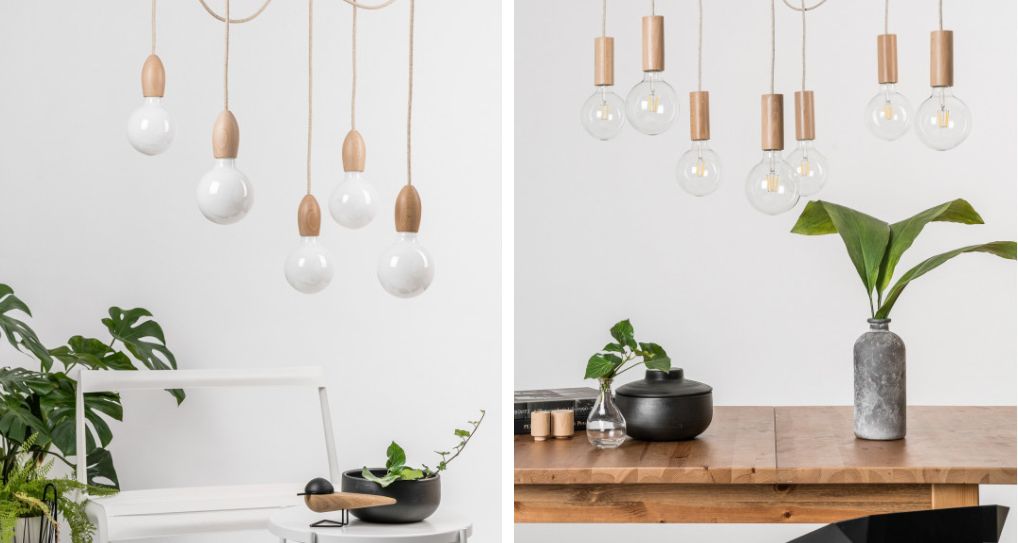
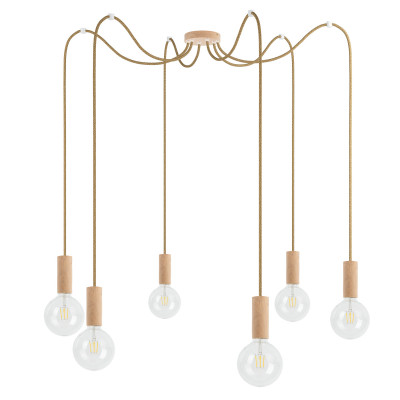
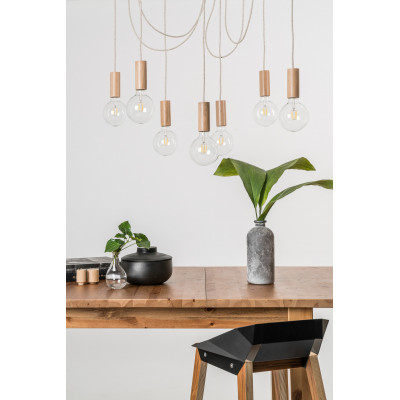
For a mezzanine or a particularly high ceiling, you can also choose a spider pendant light, such as Loft Multi Eco Line X6 by Kolorowe Kable. Spreading several cables across a larger area allows you to adapt the composition to the scale of the interior.
In a tall room, there is no need to shy away from large fixtures or long cables. What matters is that their size and suspension height match the proportions of the entire space.
How can you make a long, narrow room appear wider?
In a narrow hallway or an elongated room, the eye naturally travels towards the opposite wall. A row of lights placed along the centre of the ceiling can emphasise this perspective even more, so it is worth directing some of the light towards the long side walls.
Brightening them draws attention away from the length of the room and makes its width more noticeable. You can use wall lights or adjustable fixtures directed towards the walls, such as Arigato Wall Long by Grupa Products or the more budget-friendly fixtures from Zangra. Another good solution is to illuminate a larger section of the wall evenly, creating an effect similar to wallwashing*.
Be careful, however, not to make the wall at the end of the room the brightest focal point. It will draw the eye deeper into the space and may further emphasise its tunnel-like shape.
*Wallwashing is a lighting technique that evenly illuminates a larger area of a wall. This way of directing light helps reduce strong contrasts and can make an interior feel more spacious.
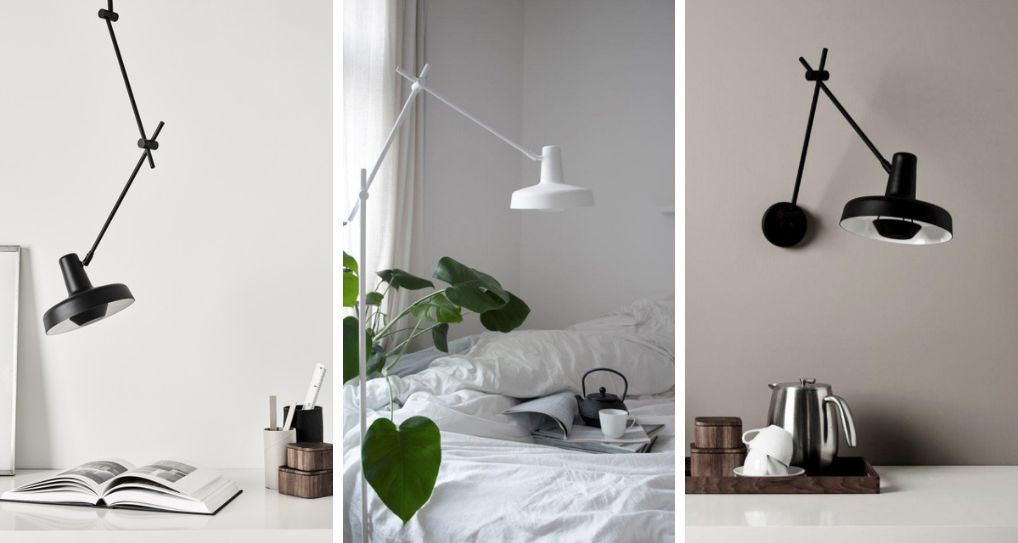
How can you use light to make a small room feel larger?
A single bright light in the centre of the ceiling may serve a practical purpose, but it is not always enough to make a small room feel more spacious. If the walls, corners and lower parts of the interior disappear into shadow, the room can still feel cramped. That is why, in small interiors, it is worth building up the lighting in layers.
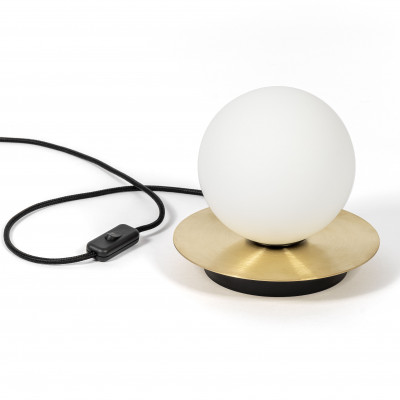
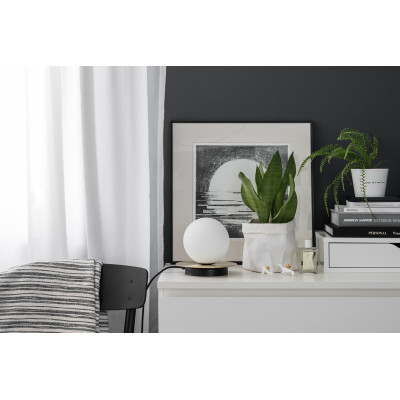
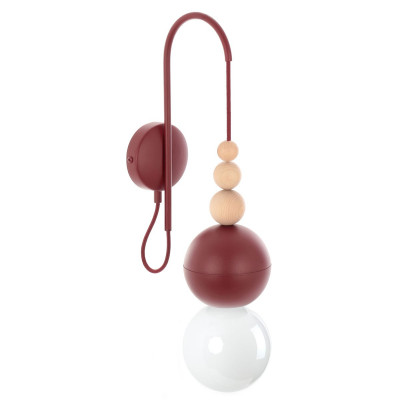
A ceiling light can provide general illumination, a wall light can brighten a wall, and a small table lamp can illuminate a sideboard or a table next to the sofa. It is also worth using places that do not take up any additional floor space. For example, you could place Loft Bala by Kolorowe Kable on the wall and BORRA ST by UMMO Lighting.
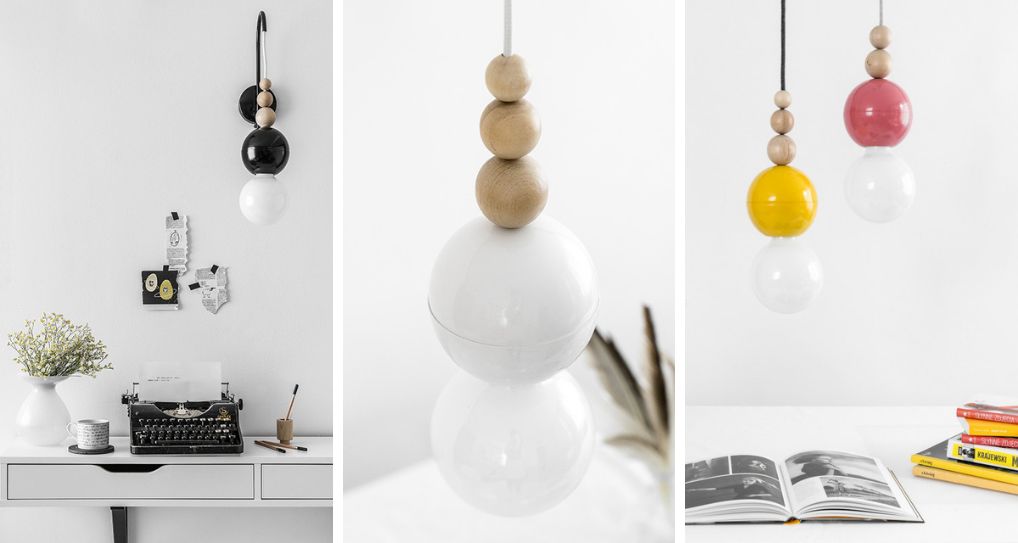
The aim is not to place a lamp in every corner. In a small room, two or three well-positioned light sources that brighten not only the centre but also the walls and more distant parts of the interior are usually enough. This makes the space feel more open without adding more large pieces of furniture.
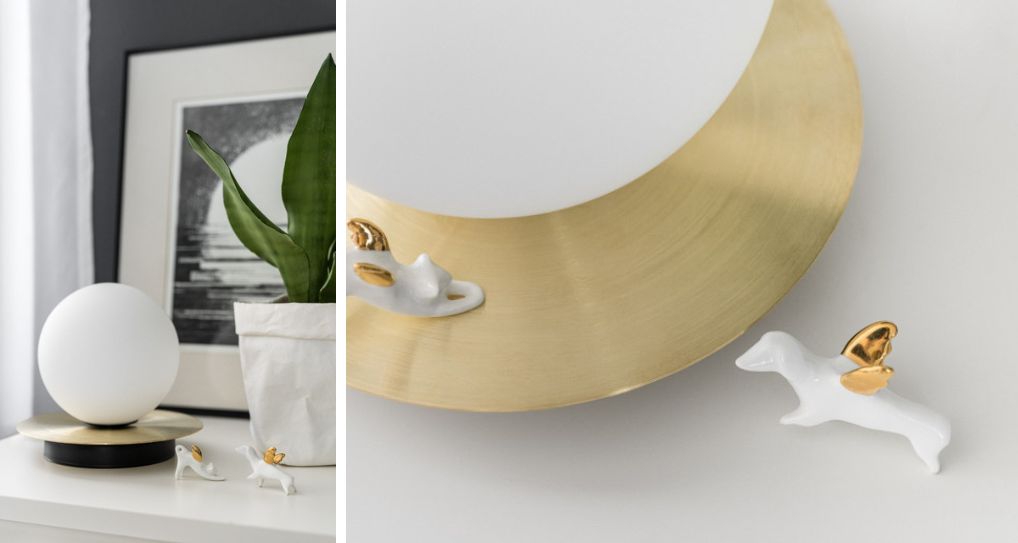
How can you give a large interior the right sense of scale?
We do not always want to make a space appear larger. In a large living room connected to the kitchen and dining area, the opposite can be the problem: individual functions blend into one expansive whole, especially in the evening.
Light can then help define smaller zones and direct attention towards furniture level and the areas we actually use. A pendant light can define the dining table, a table lamp the sideboard, and a floor lamp can create a more intimate spot next to a sofa or armchair. It is also worth choosing fixtures whose size matches the space, as ones that are too small can simply disappear in a large room.
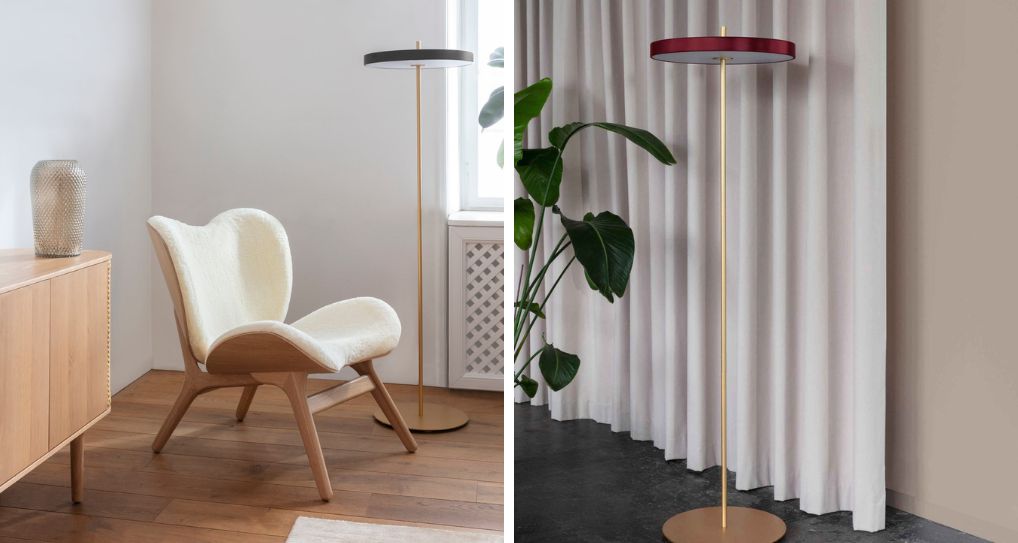
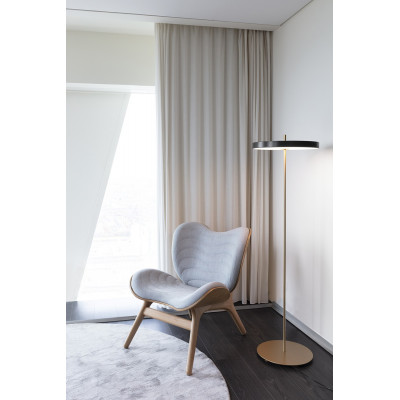
For a lounge area, a good option is, for example, Asteria Floor by UMAGE with a wide shade that casts soft light around it. Another example is Talma FLOOR by Loftlight with a large, 40-centimetre shade. A distinctive fixture like this can visually anchor the lounge area in a larger living room.
Several independent points like these create islands of light. The room still feels spacious, but its individual areas become more clearly defined and more intimate.
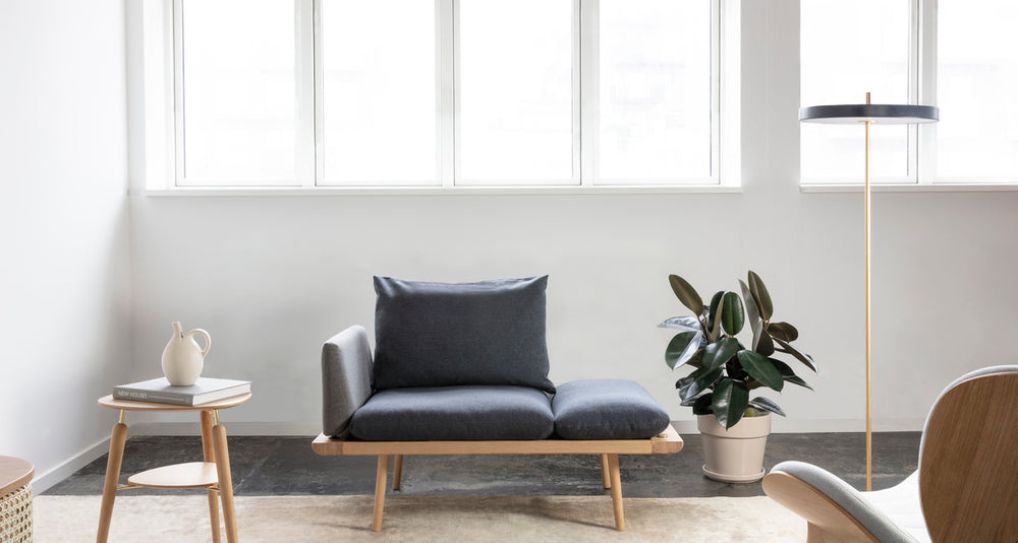
Do the shape and size of a lamp matter too?
The direction of light is not everything. The fixture itself also affects how we perceive proportions. A slim pendant can emphasise the vertical axis, while an elongated lamp above a table can highlight the width of the entire zone.
Scale is equally important. A large, heavy-looking fixture can overwhelm a small, low room, while a lamp that is too small may look out of place in a spacious living room or above a large table. Its size should therefore be matched not only to the floor area, but also to the ceiling height and the size of the furniture.
There is no simple rule that a vertical form will always make an interior feel taller and a horizontal one wider. The shape of a lamp can support this effect, but the perception of proportions also depends on suspension height, the direction of light and the placement of the other light sources.
How can you match lighting to the proportions of an interior?
When choosing lighting, pay attention to the suspension height, size of the fixture, direction of light and the area you want to emphasise. By planning your lighting carefully, you can make a low ceiling appear higher, a narrow room wider and a large space feel more organised and inviting.
At KoloroweKable.pl, you will find pendant lights, ceiling lights, wall lights, table lamps and floor lamps from a range of brands, allowing you to arrange lighting that works in favour of your interior and its proportions.
Related products
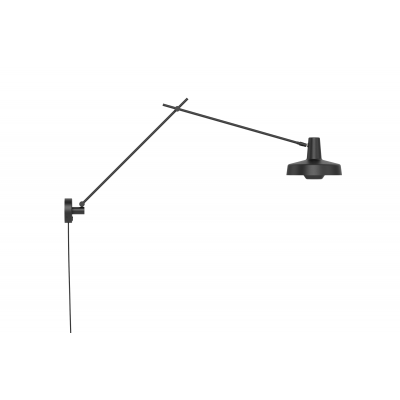
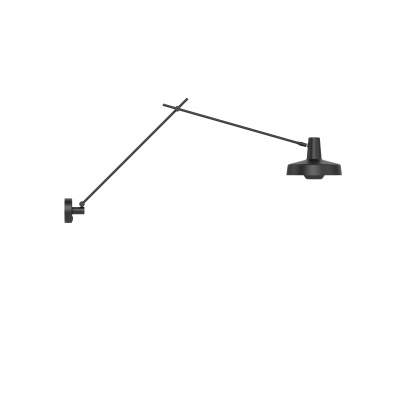
ARIGATO WALL LONG black wall light with extended arms and detachable cable – Grupa Products
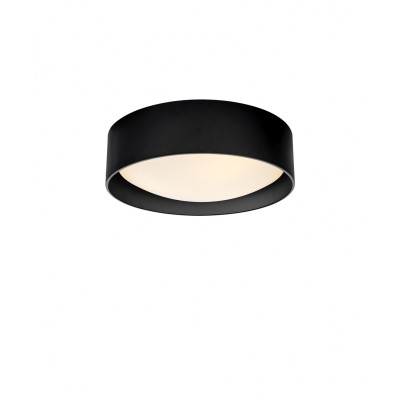
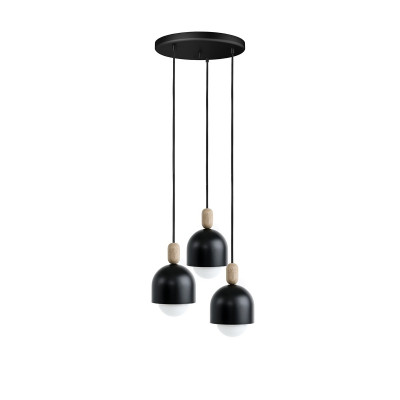
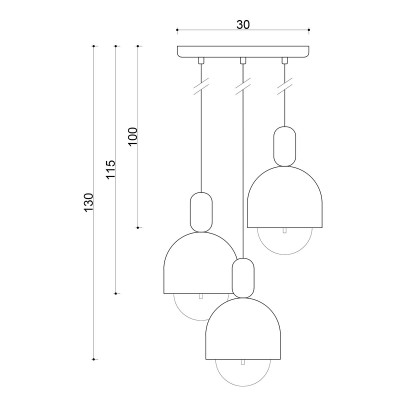
Ceiling lamp Loft Ovoi 3P black KOLOROWE KABLE
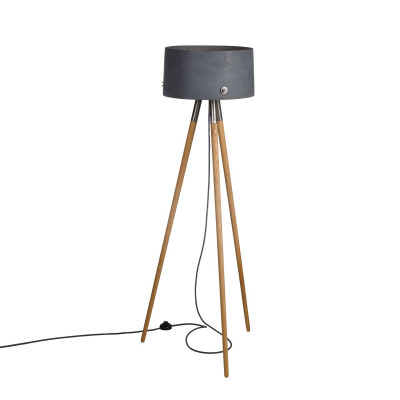
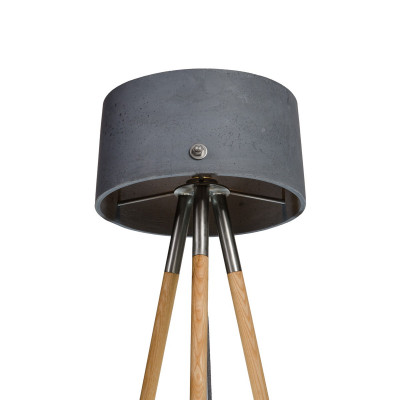
Concrete floor lamp Talma FLOOR LOFTLIGHT
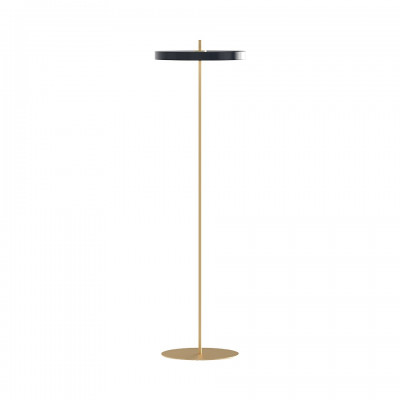
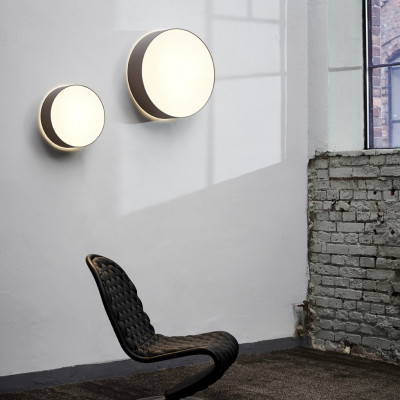
SPACE S white ceiling light – KASPA

- On sale!
- -20%
Wall lamp Loft Bala a burgundy structural wall lamp KOLOROWE KABLE