
Fabric cables for lamps – How to choose colour, type and length?
-
Author
Izabela Seliga -
Date added
- 1976 views
Well-designed lighting can change the way an entire interior is perceived. It builds atmosphere, highlights selected zones and affects how we use the space every day. However, the final effect depends not only on the lamp itself or the bulb. Details also matter: the lamp holder, ceiling rose, suspension method and cable that completes the whole composition. That is why you should treat fabric cables as part of the lighting design. With them, you can subtly connect the lamp with the interior, warm up the arrangement or add more character to it.
In this article, we explain how to choose the colour, type and length of a fabric cable to create lighting polished down to the last detail.
Why does a fabric cable matter?
Not so long ago, the cable was the part of a lamp that was best hidden. Today, the opposite is often true. In many arrangements, the cable is intentionally visible because it forms a cohesive whole with the lamp. This applies especially to pendant lamps on long cables, single drops with decorative bulbs, wall lamps with cables, bedside lamps and DIY projects.
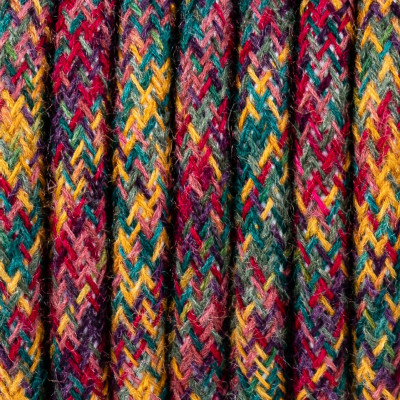
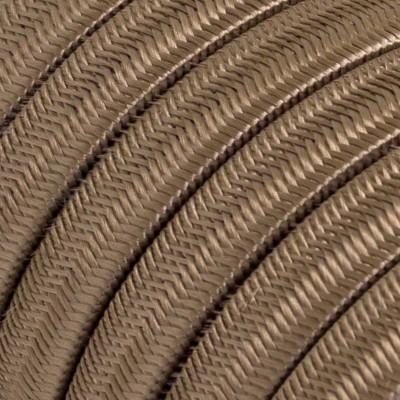
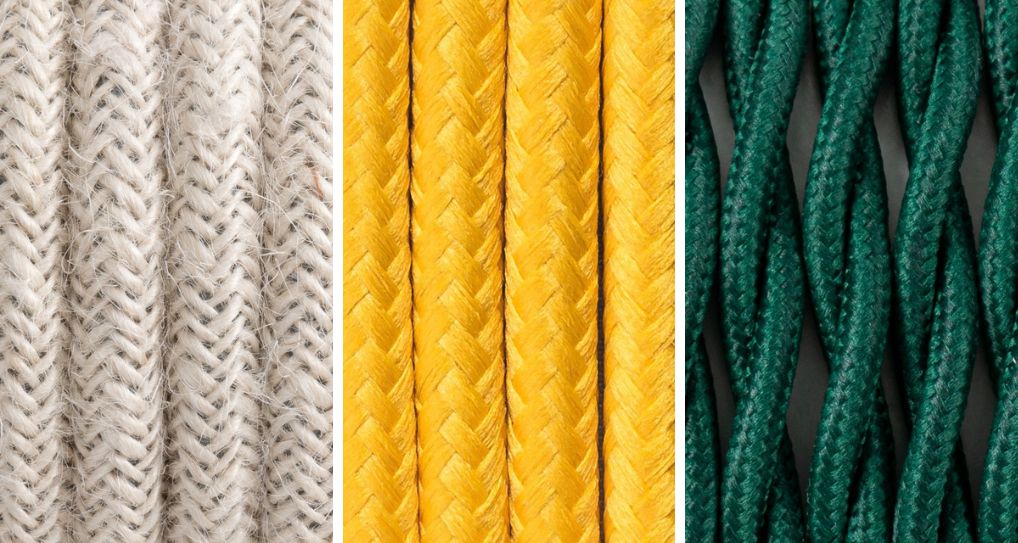
A fabric cable offers far more possibilities than a standard plastic cable. It has texture, colour or pattern, so it can be matched to the other elements of the lamp. Such a detail can change the way the whole lamp is perceived. A black cable will add a graphic touch. A linen or jute cable will warm up the arrangement. A colourful cable will bring energy. A twisted one will highlight a retro mood. A flat cable run along the wall, in turn, can become an important decorative element in the interior.
.jpg)
How to choose the colour of a lamp cable?
The colour of the cable is worth treating just as carefully as the colour of the lampshade, lamp holder or metal elements of the lamp. The easiest way to start is with one question: should the cable blend into the arrangement or become a visible accent?
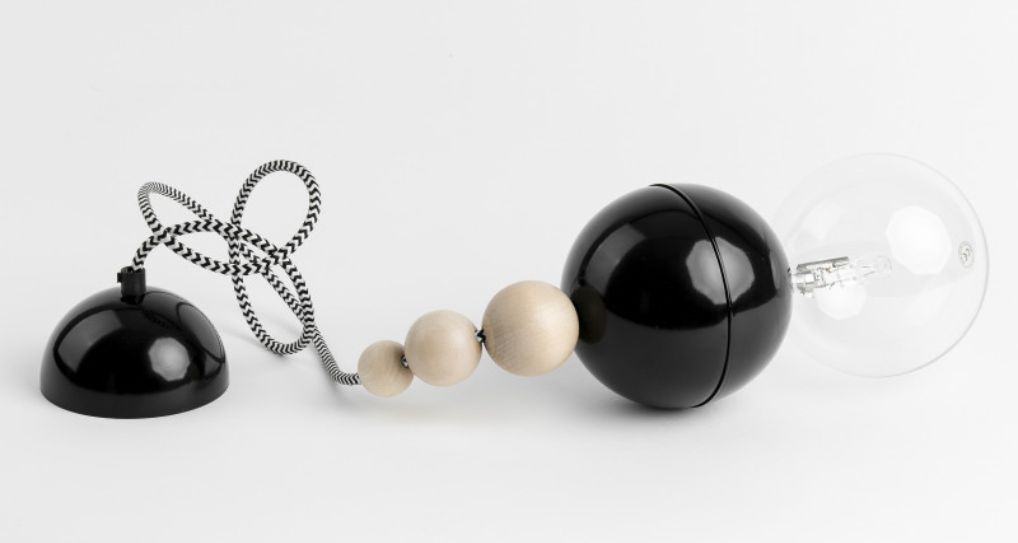
The first option is matching the cable to the lamp or background. This type of solution is safe if you want a cohesive and orderly effect. A light cable against white walls will be almost invisible. A black cable combined with a black lamp holder and a black ceiling rose will create a minimalist, graphic whole. A beige or linen cable will go well with wood, ceramics, rattan and light walls.
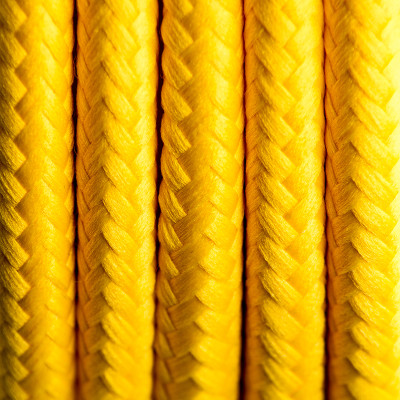
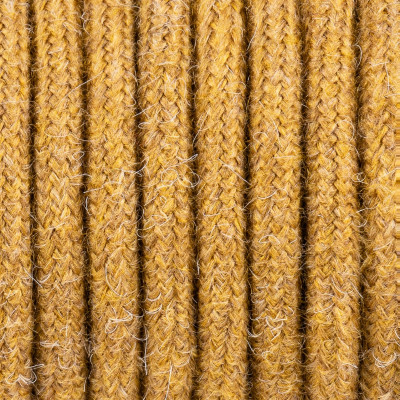
The second option is contrast. In this case, the cable does not blend into the arrangement; quite the opposite, it becomes part of the interior decoration. A red cable can enliven a simple lamp above a kitchen island. A mustard one will add warmth to the room. Bottle green will work well in arrangements with wood and plants. Navy blue, burgundy or olive will suit interiors where colour is desired, but in a more elegant, muted version.
The third option is natural cohesion. In japandi, boho, rustic, Scandinavian and organic modern interiors, cables in shades of sand, linen, jute, écru, warm grey and brown look great. In such interiors, colour does not have to be in the foreground. It is enough for it to work well with textures: wood, fabrics, stone, milky glass or woven details.
Remember that the cable should match not only the lamp, but also the place where it is located. The same cable will give a different effect against a white wall, a different one against concrete and another next to colourful wallpaper. If the cable is meant to be visible, it is worth looking at it as a line that will appear in the space.
Cable colour and interior style
For Scandinavian interiors, white, grey, beige and linen cables are usually the best choice. They are visually light and do not compete with the simple form of the furniture. In japandi style, earth colours work well: sand, brown, natural linen, muted green and sometimes also black as a calm counterpoint.
In loft arrangements, you can allow yourself stronger combinations. Black, graphite, zig-zag, red or twisted cable will work well with metal, brick, concrete and decorative bulbs. In retro interiors, it is worth reaching for twisted cables, burgundy, olive, mustard, brown or patterned braids. In glamour arrangements, deep colours can work beautifully: burgundy, bottle green, navy blue or black.
However, this is not about rigid rules. The best choice is the one that suits a specific lamp and interior. The cable can be neutral, but it can also become an accent that gives the whole arrangement a more individual character.
Types of fabric cables – which one should you choose?
Fabric cables differ not only in colour, but also in material, texture and purpose. A different cable will work in a minimalist drop above a table, another in a bedside lamp and yet another in a decorative installation running along a wall.
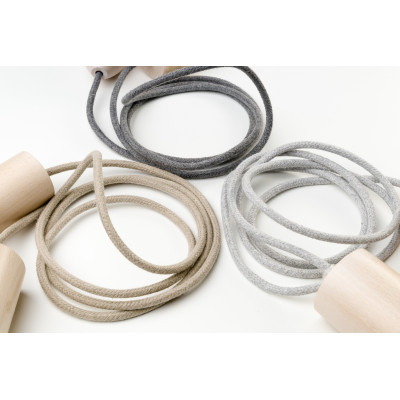
Cotton cables are soft and matte. They work well in cosy, classic, Scandinavian or retro interiors. They do not look as technical as ordinary cables, which is why they are perfect wherever the lamp is meant to look light and homely.
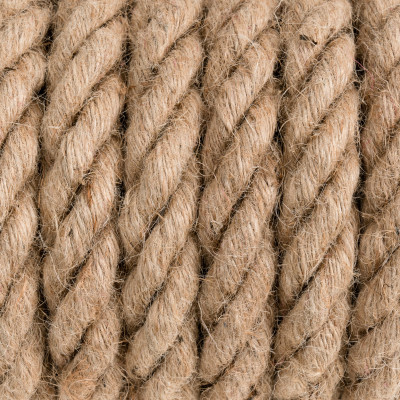
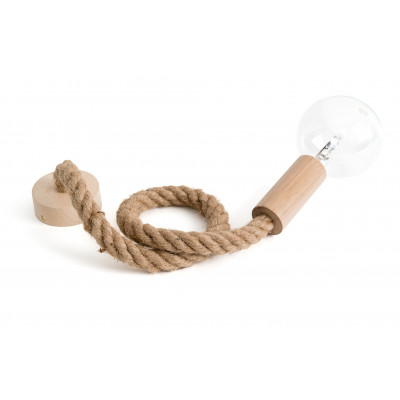
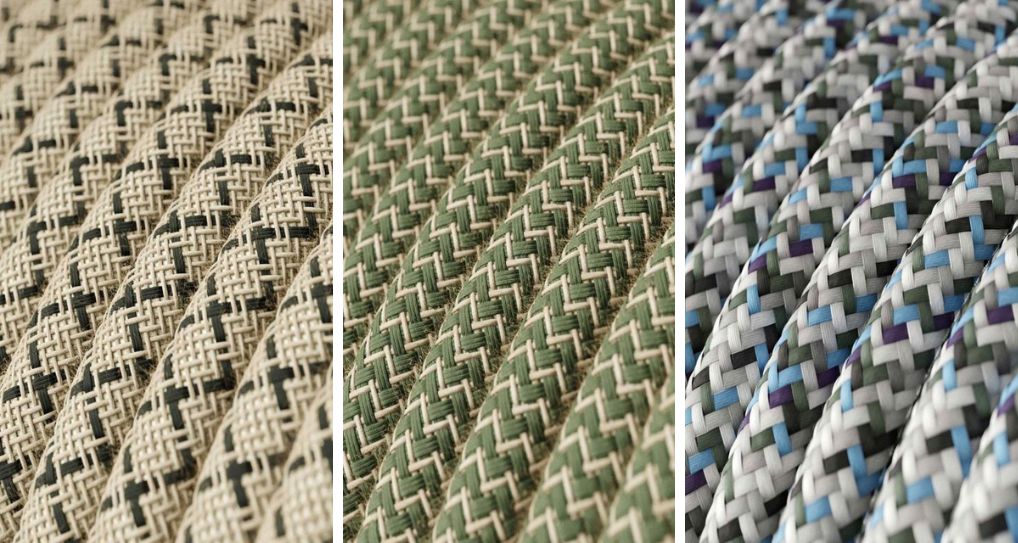
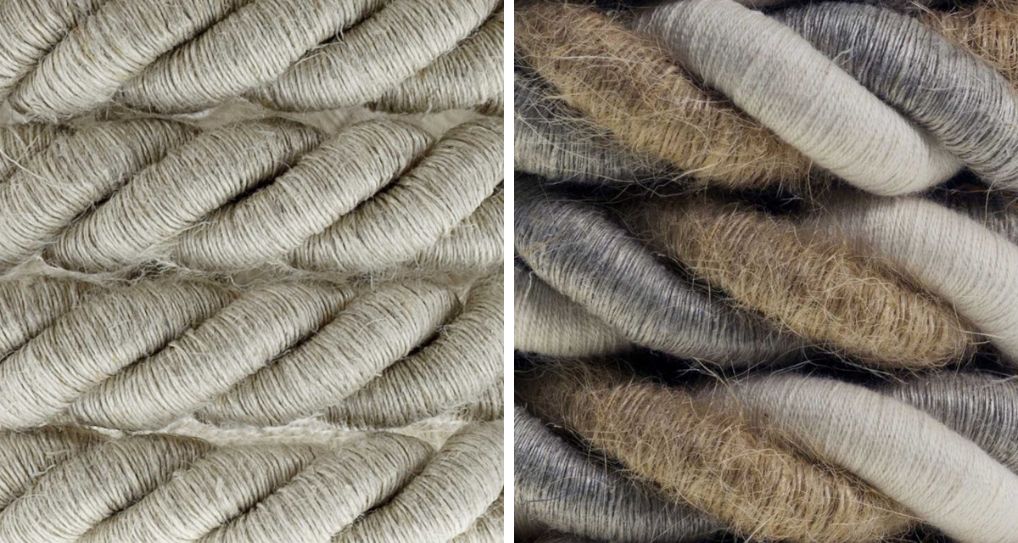
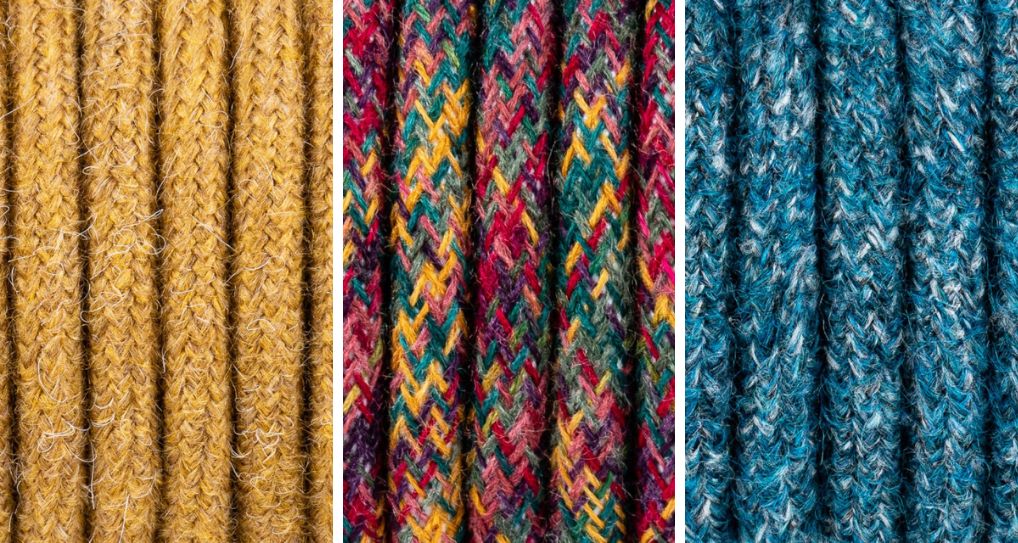
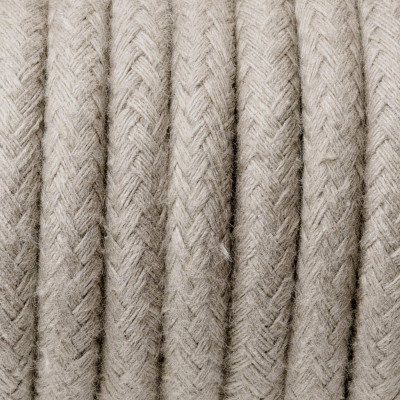
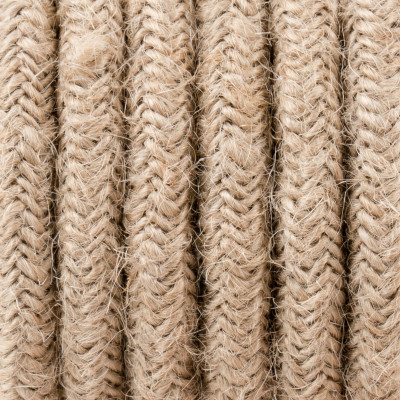
Linen and jute cables are an excellent choice for arrangements where a natural effect matters. They go well with wood, rattan, bamboo, ceramics and light fabrics. They bring warmth into the interior, but without excessive decorativeness. This is a great solution for boho, japandi, rustic and organic modern styles.
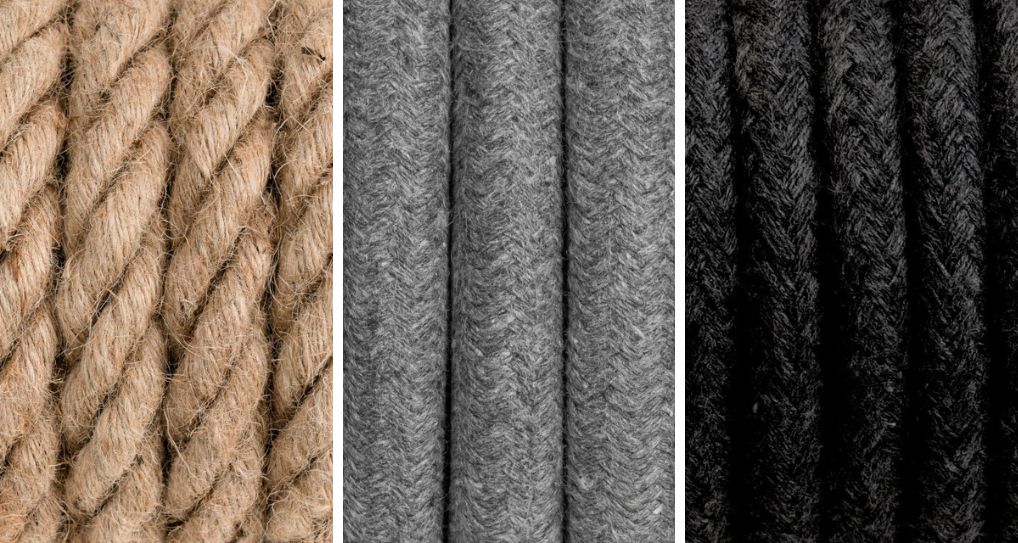
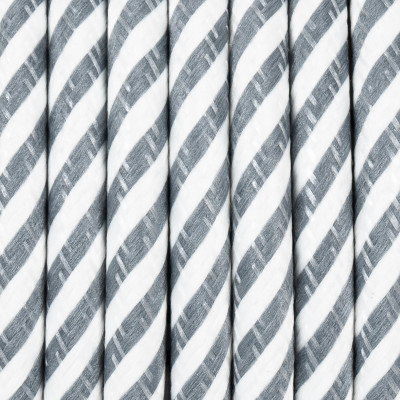
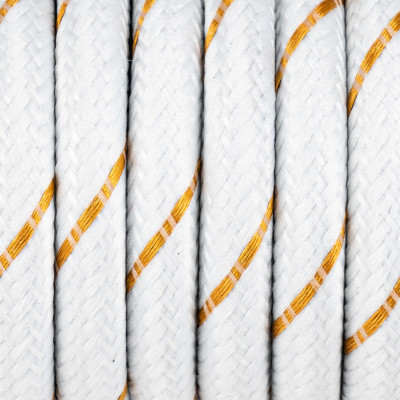
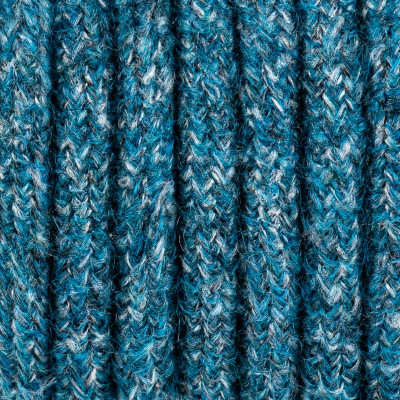
Polyester and textile cables are very versatile. They come in many colours, patterns and finishes, so they are easy to match to different projects. They will work both when you are looking for a neutral cable and when you want to introduce a stronger colour accent.
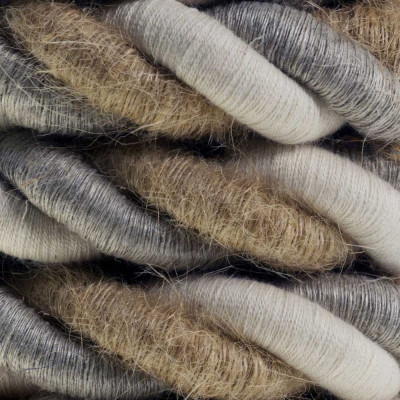
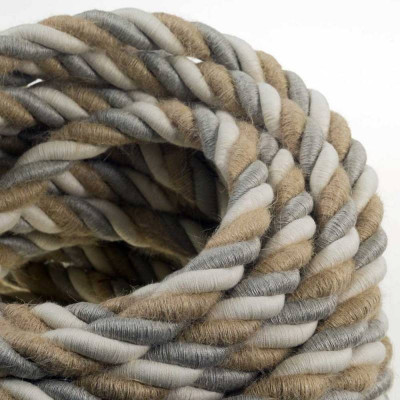
Twisted cables have a clearly decorative character. They are associated with classic installations, vintage lamps and a retro atmosphere. They look good with simple lamp holders, decorative bulbs and ceramic electrical fittings. The cable itself is the decoration here, so you do not need many additional elements for the lamp to look impressive.
Coiled cables are a proposal for those who want something less obvious. Their form is more dynamic and decorative, which is why they work well in projects where the cable is meant to be visible and attract attention.
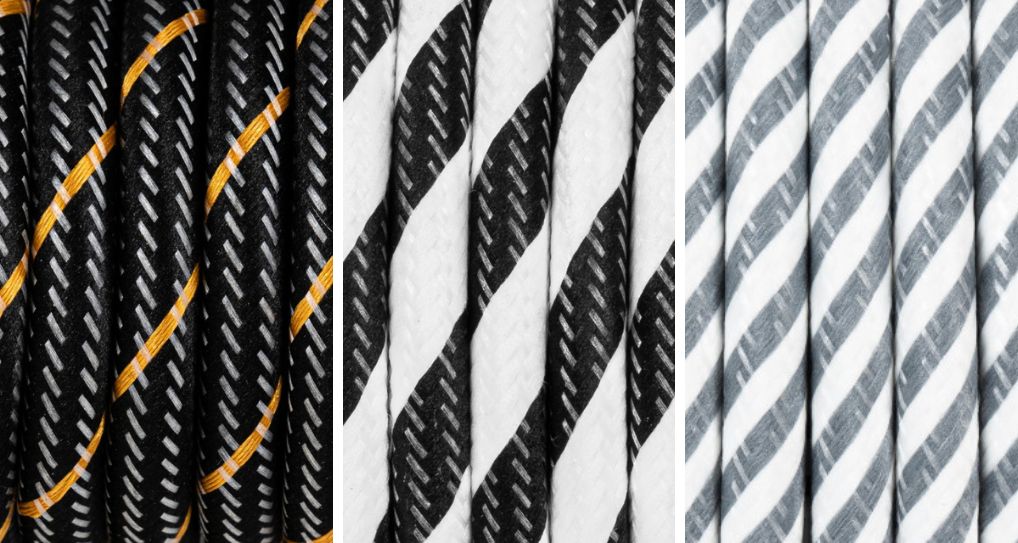
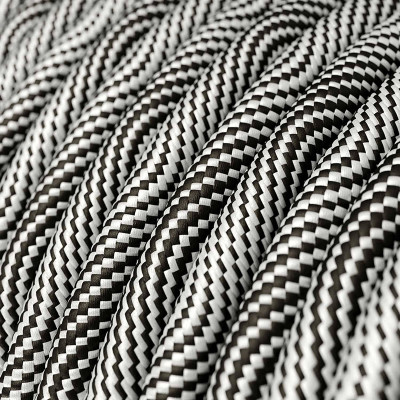
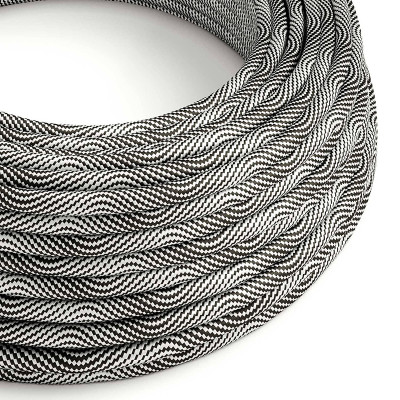
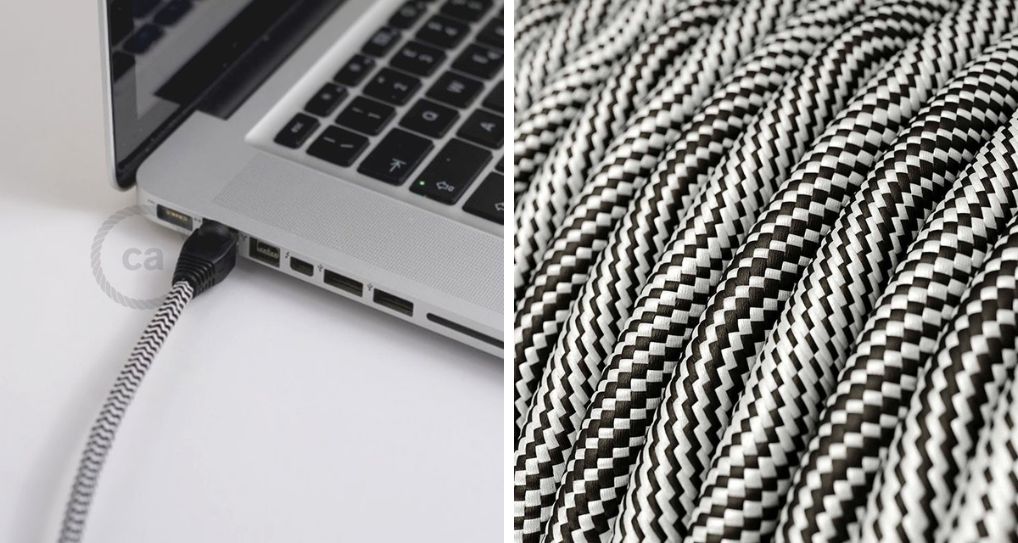
Zig-zag cables are an option for those who want the cable to emphasise the lamp. The geometric pattern adds a graphic character to the arrangement, which is why it works well with simple lamp holders, decorative bulbs and installations run along a wall or ceiling. Depending on the colour scheme, it can suit modern, loft, retro or more eclectic interiors. If you choose a zig-zag cable, it is worth combining it with simpler lamp elements so that the pattern can stand out without creating an excessive effect.
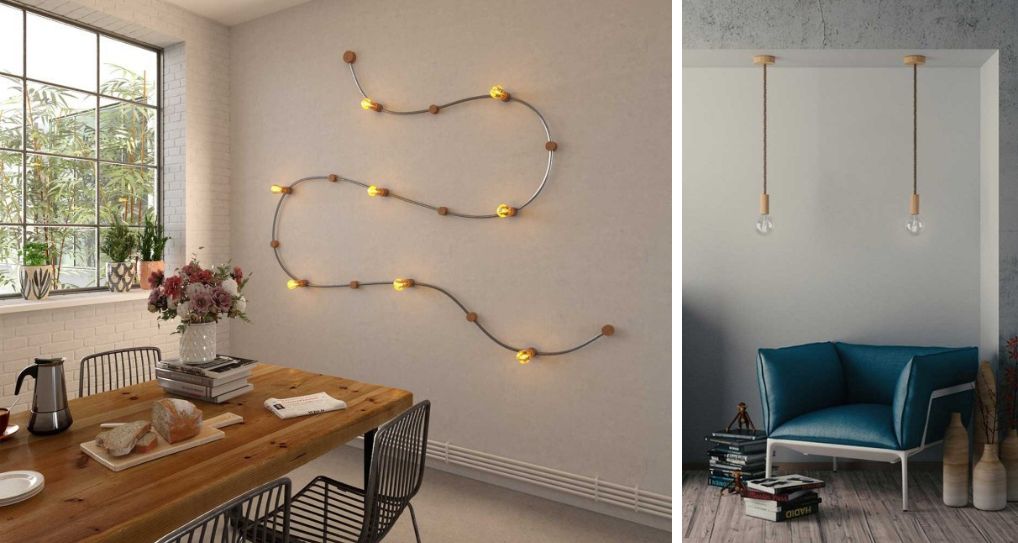
Flat fabric cables are a separate, very interesting category. Unlike classic round cables, they work well where the cable is run along a wall, ceiling or another surface. You can treat it as a graphic line that marks the route of the installation and becomes part of the arrangement. Such cables are used, among others, in decorative lighting systems such as Filé and Lumet by Creative-Cables. Choose this solution if you do not want to hide the installation, but consciously expose it: above a countertop, by a wall, in a gazebo, on a terrace or in a place where light is to be routed in a more creative way. With flat cables, compatibility with accessories is particularly important because they require properly matched lamp holders, brackets, plugs or mounting elements.
Outdoor cables should be chosen when the lighting is to be used on a terrace, balcony, in a garden or gazebo. In such places, colour alone is not enough. Resistance to outdoor conditions and matching the cable to a specific system also matter.
Two-core or three-core cable?
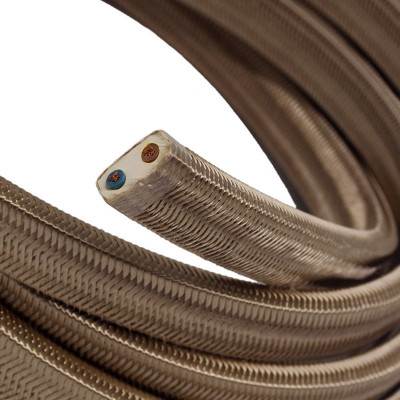
When choosing a cable, it is also worth paying attention to technical markings. One of the most common parameters is the number of cores, e.g. 2x0.75 or 3x0.75.
A 2x0.75 cable is a two-core cable. It is used in fittings that do not require connection to a protective conductor.
A 3x0.75 cable or 3x1 has three cores, including a protective conductor. It will be needed for lamps that require grounding, e.g. many metal lamps in protection class I.
If you are not sure which cable will be suitable for a specific lamp, check the manufacturer's marking or consult an electrician about the installation.
How to choose the cable length for a lamp?
The cable length affects both the appearance of the lamp and the comfort of using the space. A cable that is too short means the fitting will hang too high and will not properly illuminate the table or countertop. One that is too long may get in the way, disturb proportions or shine directly into your eyes.
For a lamp above a table, it is most often assumed that the lower edge of the fitting should be about 60–80 cm above the tabletop. This height allows you to illuminate the dining area well, while not making conversation difficult or blocking the view of people sitting opposite each other. Above a kitchen island, the rule is similar – the lighting should not get in the way when cooking, chopping or putting dishes down.
In the living room, everything depends on the function of the lamp. If the drop is located in the central part of the room, it should hang high enough not to obstruct movement. If the lamp hangs above a coffee table, chest of drawers or in the corner of the room, you can allow yourself a more decorative suspension. In the bedroom, long cables work well with pendant lamps instead of classic bedside lamps. Then it is worth placing the light source so that it comfortably illuminates the bed area, but does not shine directly into the eyes.
The simplest way to calculate the cable length is to take into account the height of the room, the height of the piece of furniture under the lamp, the planned distance from the tabletop and the height of the fitting itself. Before buying, take accurate measurements, especially as cables are usually cut by the metre.
The most common mistakes when choosing a cable
- Choosing a cable based only on colour – aesthetics are important, but the cable should also be matched to the type of lamp, mounting method and place of use. A different cable will work in a pendant lamp in the living room, another in an installation running along a wall and yet another on a terrace or in a garden.
- Mismatching the cable to the fitting – before buying, check whether a given lamp requires a two-core or three-core cable. For fittings that require grounding, a cable with a protective conductor will be needed.
- A cable that is too short or too long – the cable length affects both the appearance of the lamp and the comfort of using the space. A cable that is too short may make the lamp hang too high, while one that is too long may disturb proportions or get in the way in everyday use.
- Not taking the height of the room and furniture into account – with pendant lamps, it is worth considering not only the ceiling height, but also the height of the table, countertop, kitchen island or bedside table. This will ensure that the light source is placed at the right height.
- Treating the cable as a random addition – if the cable is visible, it becomes part of the arrangement. It should match the lamp holder, ceiling rose, bulb and interior style, or consciously contrast with them.
- Combining too many strong elements at once – a colourful cable, patterned braid, decorative lamp holder and expressive bulb can together create too heavy an effect. If the cable has a strong colour or pattern, e.g. zig-zag, the remaining lamp elements should be restrained in form.
- Choosing a regular cable for outdoor use – for a balcony, terrace, gazebo or garden, you should choose cables intended for outdoor use and compatible with the given lighting system.
- Not checking accessory compatibility – this applies especially to flat cables and decorative systems. Not every lamp holder, plug, bracket or ceiling rose will fit a specific type of cable.
How to choose a fabric cable – summary
Light creates atmosphere in an interior, but it is the details that decide whether the whole arrangement creates a wow effect. A fabric cable can subtly complete a lamp, add colour to the interior or emphasise its style. All you need to do is choose the right shade, material and cable length for even a simple lamp holder with a bulb to become a room decoration.
Explore the available fabric cables, lamp holders and accessories at KoloroweKable.pl and highlight the character of your home lighting.
Related products
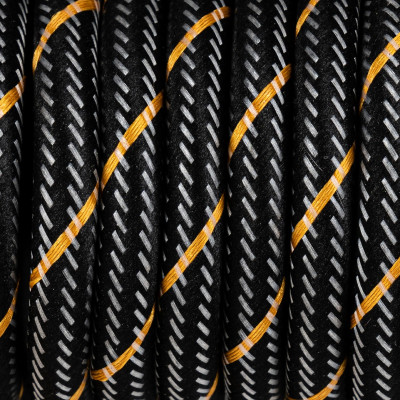
Black polyester-braided cable with gold thread, S05 Serpentine, 2 × 0.75 mm² – Kolorowe Kable
- On sale!
- -20%
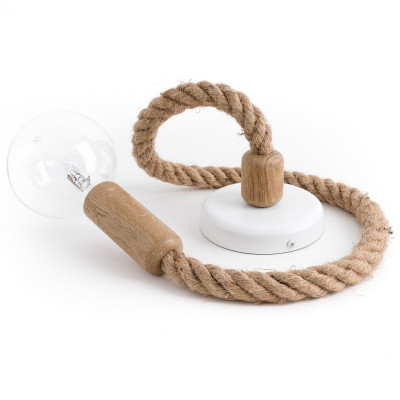
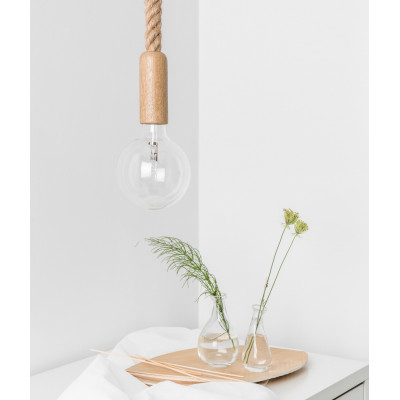
Loft Ari oak pendant lamp with hemp rope and white ceiling rose – Kolorowe Kable
- On sale!
- -20%
Loft Metal Line 15 Black Tulip pendant lamp – Kolorowe Kable
- On sale!
- -25%
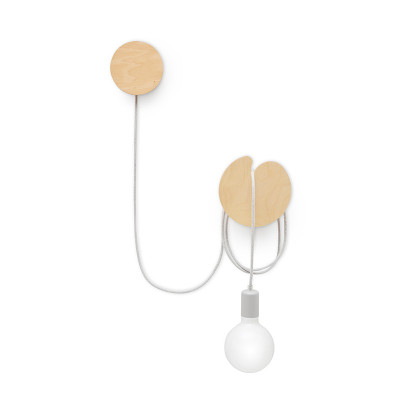
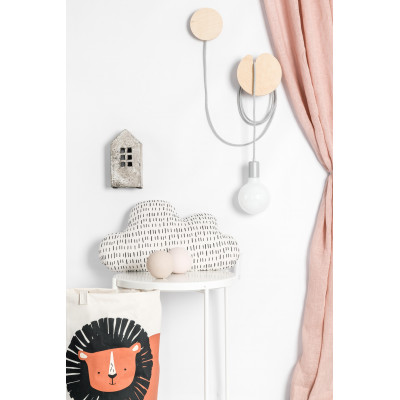
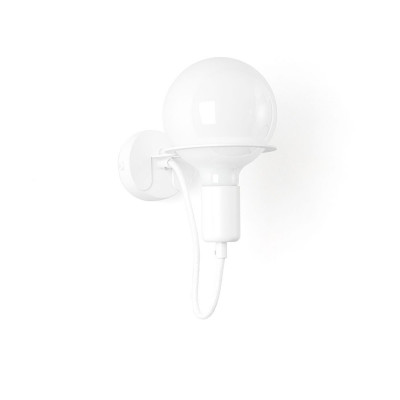
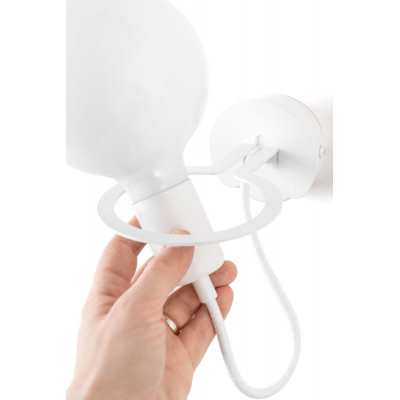
Loft Metal Wall white wall light with white cable and opal 4 W LED bulb – Kolorowe Kable